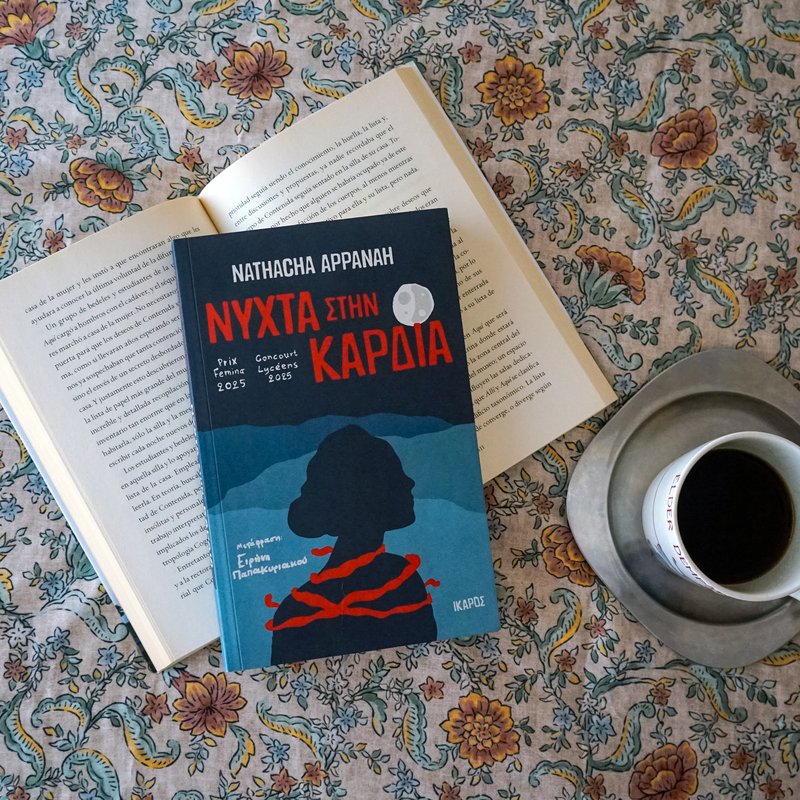
Irene Papakyriakou | Translating Nathacha Appanah’s Night in the Heart
Irene Papakyriakou is featured in our column "The Translator's Workshop," talking to us about Nathacha Appanah’s book Night in the Heart, which she translated and which was recently published in Greek—a multi-award-winning, autobiographical novel that startles with its daring and moves with its humanity.
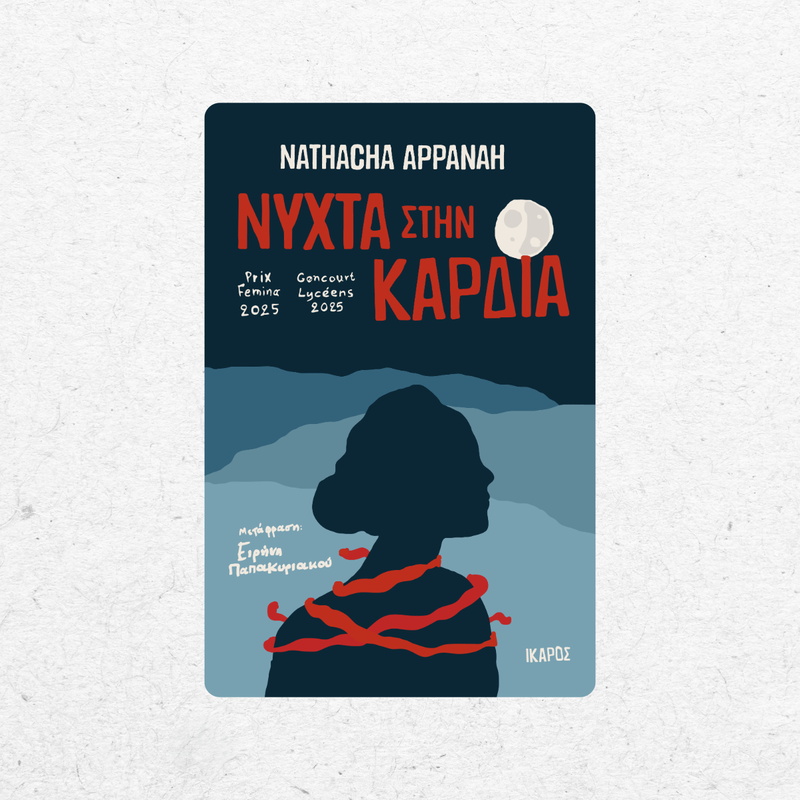
Despite the intense emotions that Natacha Appanah’s book Night in the Heart stirred in me during its reading and translation, I deeply wanted it to be published in Greek as a tribute to the wronged women of the erratic times we live in, but above all to the survivors who live marked by an abusive relationship.
The narrative unfolds as a crime investigation and resolution, featuring literarily powerful imagery and numerous flashbacks. Prompted by the recent murder of a young Algerian woman by her husband in Bordeaux, Appanah seizes the opportunity to speak about what she herself had experienced some thirty years earlier. Delving deep into the case of this young woman, she realizes that both she—who nonetheless managed to escape death—and her cousin, whose husband had murdered her twenty years prior, had for years experienced the exact same pattern of behavior from their partners as the recently murdered woman. In short, the pattern is as follows: a young woman with dreams for the future falls in love with a man who gradually and methodically subjugates her through various manipulative behaviors—he renders her physically, mentally, and emotionally enslaved; decides everything concerning her attire and appearance; isolates her from her family and friends; coerces her into various acts without her consent; subjects her to violence up to and including strangulation (in all three cases, the woman survives the attempted strangulation); and when she tries to escape or separate, he decides to eliminate her (in one instance, burning her alive). Following the murder, an attempt to assassinate the dead woman's character also ensues.
None of these three women are any different from the rest of us who have not suffered violence. They simply fell in the wrong man's arms, and the author succeeds in showing just how difficult, if not impossible, it is to escape him. Neither the society of Mauritius, where the first two stories took place, nor modern France with its social structures managed to protect the two dead women. None of these dark men feel remorse or sorrow; on the contrary, they justify their actions by shifting part of the blame onto their deceased or surviving partner.
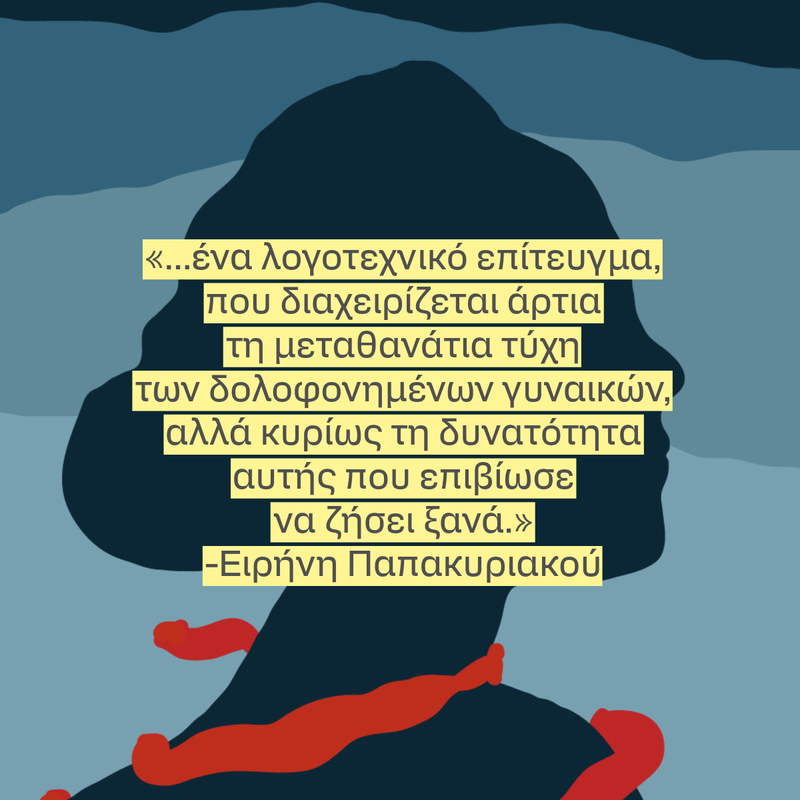
It is a literary achievement that masterfully handles the posthumous fate of the murdered women, but above all—and therein lies the light within the book's darkness—the possibility for the survivor to live again.