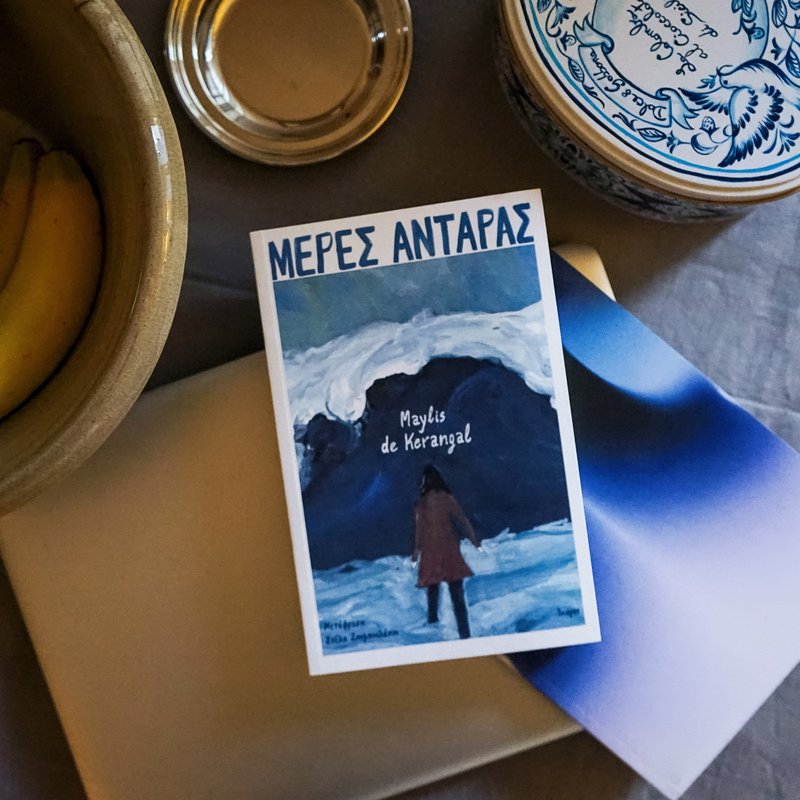
Stela Zoumpoulaki | Translating Maylis de Kerangal’s "Days of Undertow"
Stela Zoumpoulaki is featured in our column “The Translation Workshop,” talking to us about Maylis de Kerangal’s book Days of Undertow, which she translated into Greek for its recent publication. A personal urban odyssey exploring how we continuously construct ourselves upon ruins, and how we learn to move forward alongside the ghosts of the past.
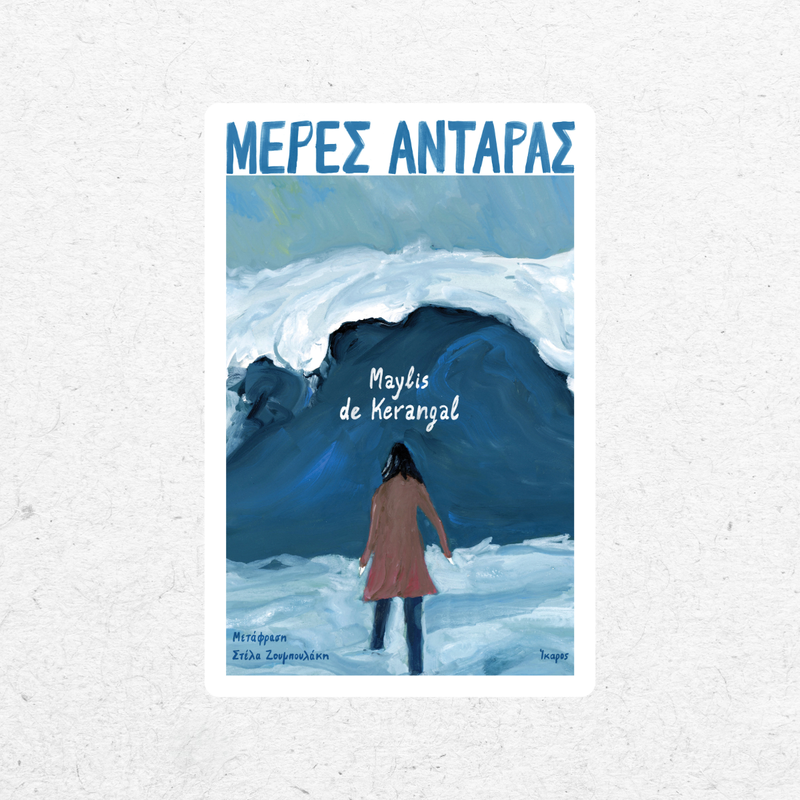
A body, a clue, a woman called in to provide explanations. At first, everything suggests we are reading a detective novel: investigations, interrogations, coroners, suspicion. Yet Kerangal does not move toward solving a crime. Instead, she opens another path: the path of return. A return to Le Havre, to childhood and youth, to everything that is lost or buried somewhere yet insists on re-emerging. The protagonist returns to the city where she grew up due to a strange connection with a deceased man identified by the police. From that moment on, the narrative transforms into a journey bridging times and spaces. The present drags the past along in its wake, the investigation becomes a catalyst for memory, and individual history meets the grand, collective history of a city scarred by wartime destruction and subsequent reconstruction.
For me, this was perhaps the most powerful element of the book: the feeling that I was not merely rendering a plot from one language into another, but conveying an entire place. Le Havre is no mere backdrop; it is vibrantly alive within the text. As I translated, I felt myself descending deeper into this oceanic city, with its tides and formidable winds.
Kerangal’s prose is dense, demanding, and deeply sensory. Her sentences do not move in a straight line; they surge, double back, open parentheses, and accumulate images and details. They observe space with surgical precision while remaining emotionally charged and full of pathos. They possess something of the movement of the sea: receding and returning, each time bringing memories, faces, and fragments of history to the surface.
In the translation, I attempted to follow this rhythm without smoothing it out excessively—to preserve its pulse, its shifts, and the sense that the narrative can glide seamlessly from Le Havre to Kharkiv, from a bombardment in the past to one in our own time, from a shelter to a harbor, from Paris to an adolescent memory, from shipping containers to a cinema hall. All these elements could easily have felt scattered; yet in her writing they cohere, as if held together by an undercurrent. That was precisely what needed to be safeguarded: the author’s almost cinematic gaze, as well as the turbulent, undulating manner in which she connects images, places, and eras.
Translating thus became a form of wandering—through Le Havre, through memory, through Kerangal’s language. I had to inhabit a place that was not my own, to know it, to understand it, and then to reconstruct it in my own language. And while I worked on the book from another city, Le Havre insisted on making its presence felt: gray, damp, windswept, gazing toward the horizon. I now feel as though I know it, even though I have never visited.