White Ravens: "The Moon’s Descent" among the Best Books of 2026
The Moon’s Descent by Chrysostomos Tsaprailis, illustrated by Kanellos COB, has been included in the annual White Ravens 2026 catalog of the International Youth Library in Munich, the most important children's and young adult literature library in the world.
This major distinction for The Moon’s Descent follows a series of significant awards in Greece (The Reader Award for YA Literary Book 2026, Greek IBBY Award 2026, and its selection as one of the best books of 2025 by Kokkini Alepou), making us very proud.
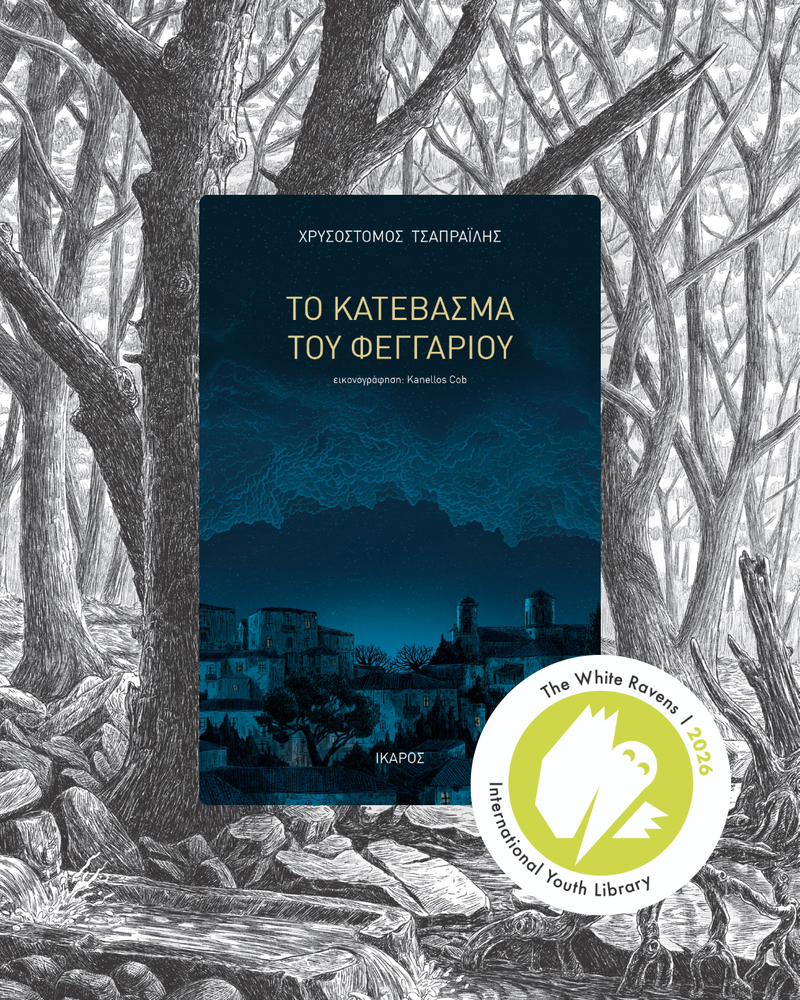
A book of folkloric horror, adventure, and mystery in the mountains of Karditsa, a mythologically textured story that combines the uncanny with social sensitivity, modern technology with folk tradition and legend.
The international White Ravens catalog is created by the International Youth Library in Munich—the largest and most important youth library in the world—and features books that deserve international readers' attention. This annual catalog includes a total of more than 200 titles of notable new children's and young adult books from roughly 50 countries and regions, in over 40 languages, selected by the library's experts with a focus on works that stand out for their literary and visual quality and/or the themes they address.
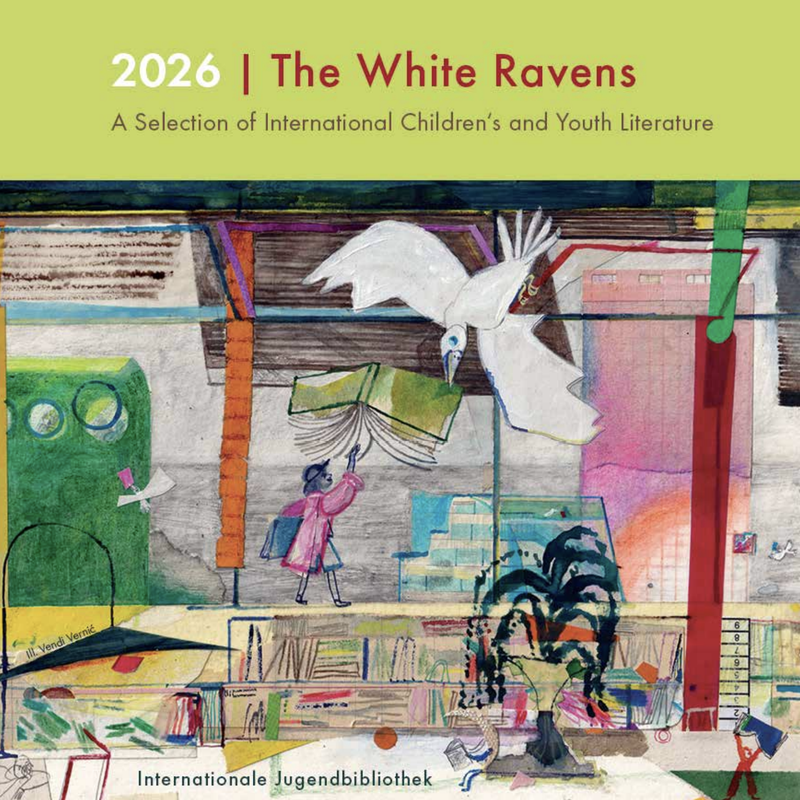
You can view the full catalog of books by country here.
Selected Reviews:
Chrysostomos Tsaprailis genuinely approaches folklore with seriousness as a "mythological" launchpad, yet carefully avoids deviations in the novella, which to a certain point functions as a pleasant surprise for contemporary Greek publishing.
–Dimitris Doulgeridis, In.gr
...The childhood horror of fairy tales becomes a terrifying reality: something between a dream and a waking hallucination. [...] Chrysostomos Tsaprailis deploys a poetic expression that imparts an unfathomable depth to the long night.
–Vangelis Hatzivasileiou, To VIMA
Tsaprailis builds his charming story with a mirror structure, masterfully involving—beyond the structures created by repetitions—descriptions of the sky and water. In general, all his work in this novella shows that he is finding his footing ever better on the path of folkloric (or ultimately popular) horror, engaging in an increasingly fruitful dialogue with literary tradition and taking a clear stance regarding the direction of its development.
–Titika Dimitroulia, I Epohi