News
News List, News Categories, Events
-
Triple exhibition on Giorgos Seferis in Kavala.
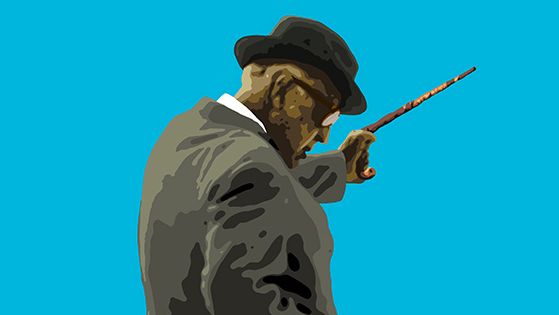
An exhibition and visual tribute to Giorgos Seferis will take place at the Municipal Tobacco Warehouse in Kavala from 2 to 28 August as part of the 59th Philippi Festival.The opening will take place on Tuesday 2 August at 8.00 pm, and the exhibition consists of the following three sections: The Photographer Giorgos Seferis, In the Style of G. S., and Yannis Moralis’s Pictorial Commentaries on the Poems of Giorgos Seferis.The first section, The Photographer George Seferis, is organised in collaboration with the National Bank of Greece Cultural Foundation, featuring an exhibition of photographs taken by the poet himself, serving as irrefutable testimony to the care with which Seferis approached every aspect of his work.The second section, In the Manner of G. S., is presented by the Ianos Art Gallery under the artistic direction of Mikri Arktos and curated by Iris Kritikou. The exhibition features scenes of life and inspiration, scenes from Greece during the two world wars and the turbulent political and social life that followed, as well as notable collaborations by the artist, present a rich tapestry of images that sketch the personality of this important Greek poet.The third section, presented in collaboration with the Zoumboulakis Gallery, features Yannis Moralis’s pictorial commentaries on the illustrations for the edition of Poems by George Seferis. Seferis himself had said of these particular works: ‘I have rarely succeeded in pairing the arts. For me, it was always something like two horses harnessed to the same cart that suddenly pull in opposite directions. So it was with great hesitation that I listened to Ikaros’s idea of asking Yannis Moralis to illustrate my poems.” Admission to the exhibition is free.Monday to Friday: 10:00–14:00 Wednesday: 19:00–21:30 Friday: 19:00–21:30 Kavala Municipal Tobacco Warehouse, Kassandrou and Averof. Telephone: 2510222706. Further information on the 59th Philippi Festival can be found here.Learn more
-

Interviews
Interview with Alexandros Adamopoulos on Ert.gr on the occasion of the play ‘Ochinelegontas’.
Following the success of the play *Simigdalénios*, which ran on the Main Stage of the National Theatre for seven months, and to mark the launch of his new play, Ochinailegontas, he gave an in-depth interview to Dora Cheiraki of Ert.gr, in which, among other things, he discusses the book’s publication abroad as well as the story behind its original title. Following the acclaimed Simigdaleno, which ran for seven months on the Main Stage of the National Theatre, Alexandros Adamopoulos presents his new play, entitled Ochinailegontas, which has already been published in Turkish and English translations.The writer-translator recounts, in his own poetic, dreamlike manner, the hidden facets of his brand-new story—which, though it has endured for centuries, remains relevant—, reveals the origin of his work’s original title and takes us on a journey through magical fairy-tale stories spanning from the Middle Ages to the present day.-Mr Adamopoulos, *Ochinelegontas* comes twenty years after *Simigdaleno*. Beyond their vast differences, they share one common point: this too is written poetically. Why? Although I do not consider myself a poet, poetic language came and imposed itself on me of its own accord, quite naturally in both works, which deal with something so general, so archetypal, as love; human relationships, if you prefer. If we consider that literature deals with simple events but makes them remain ever relevant, poetic language, in this particular case, makes every word resonate more truly; it illuminates it further, giving special weight even to the slightest syllable, to every breath, to every pause. Poetry is the most condensed form of writing and conveys a greater charge of energy to the reader-spectator, and that is very important.-Does this also apply to theatre? For this particular genre, I think so; I would say absolutely yes. Simigdaleniou’s experience taught me: In his eighty productions, almost entirely different from one another, over the past twenty-five years, not a single person – spectator, director, musician, choreographer, critic, actor – has ever been puzzled and asked me why it is written poetically. For me, precision matters greatly; in the sense that I strive to write exactly what I mean; as simply as possible and with the greatest possible clarity. From this perspective, poetic language – and indeed the perfectly measured kind, with all its possible rhythms and rhymes – is the only way forward. The verses are crafted so that each has its own music, so that they laugh, hesitate, run, gasp, weep; so that they flow effortlessly. And this has appealed to important figures in the theatre. If Simigdalénios hadn’t been written poetically, it would have been a schoolteacher’s little story and the narrative a old-fashioned melodrama; whereas it isn’t like that.-Where did you draw inspiration for the distinctive title you gave your book? From an old, stray verse of mine: ‘whispering horribly with boundless ease…’. I used to write it mechanically on sheets of white paper. I wrote it whilst reading the newspaper, doing crosswords. I often recited it to Margarita Karapanou when she was writing ‘YES’; wanting to show her that she never actually says ‘yes’ but always says ‘no’.-So, how would you describe your work in a nutshell? That’s very simple: There was a man and there was a woman…-Contemporary themes, which you set, however, in a bygone era…-Yes; why not? Once upon a time, then; there was a man and there was a woman… It suits me, I like it. I live very intensely in our own time and amidst the sad problems that spring up like mushrooms every day everywhere, in our society that is so comfortable, free, sensitive and democratic, that at times—without denying reality in the slightest—I like to withdraw in order to say things that are entirely contemporary, as if they weren’t happening in the present day. Perhaps I am doing the opposite of some current approaches. Instead of, for example, having Orestes speak on his mobile with Pylades, I prefer to show a young woman weeping and writhing in agony at her realisation, in a deserted inn by the light of torches, rather than leaving unscathed from a psychoanalyst’s couch. I believe it is more cathartic—both for her and for the audience. —But now, in the midst of this crisis? —Precisely… As we said: literature is news that always remains news. Obviously, the whole country is dragging itself along, groaning and gasping dangerously. We are living on a knife-edge and our lives have become unliveable. But no one, when they pick up a book to read, or when they come to the theatre, expects me to tell them whether the public debt is sustainable or not, or to tell them where they will find work. To each his own. Just because we have a public voice, there is no need to pretend to be wise by dabbling in matters we know nothing about. But everyone, even in the midst of the greatest disaster, looks for a glimmer of hope, seeks a little light; they want something alive and warm by their side. Everyone feels the need at some point to find something genuine, something true. Perhaps to look deep within themselves, to see what is going on, what is wrong with themselves. If you manage, even for a moment, to truly touch another person’s soul, that is by no means insignificant.-And isn’t the Chorus you use an anachronism?-Not at all; why? I needed a common denominator; a voice of the people, so to speak, that says things we could all think of, without any pretension. The Dance of the Guardians of Love isn’t some group of old men in tunics and fake beards down to their navels, chanting various choruses that nobody understands. It is a tremendously lively group of half-naked youths, with drums, tambourines, rattles, bells, tambourines and zurnas, which participates organically throughout the entire play and contributes decisively and with boundless enthusiasm to its Dionysian finale. The Chorus is thus completely intertwined with the play. After all, I didn’t conceive it intellectually; it was there from the start and kept me company. So why not? Could *Ochinailegontas* be staged abroad, particularly in Turkey? Look, the English translation was enjoyed by all the English people who read it. Now, as for Turkey, I don’t know; what can I say? The fact that they translated *Ohinelegontas* into their language and published it there means something. The fact that they invited me to teach it—in its English translation—at Boğaziçi University also says something. The theme of the play, however, and the way it is written certainly know no borders. The only thing that troubles me, however much it tickles me inside, is whether it might be staged first on a foreign stage without having been staged here. Is that a possibility? Perhaps. Let’s not forget, after all, that Simigdaleniou was first staged at the State Theatre ―Şehir Tiyatro― in Turkey and only later at our own National Theatre.-And how would you view the staging of Ochinelegos here? First and foremost, I like the fact that it is written in such a way that any reader can experience it by reading it on their own. -You mean, in other words, as a book? Exactly; as a book. As a self-contained literary text that anyone can read at home. Beyond that, I envisage a contemporary, very lively production, one that is ethereal, dreamlike and yet firmly grounded. Frantic, yet boundless. I imagine it not in a small, enclosed theatre, but in larger venues or even open-air theatres. Tightly interwoven with sounds and music; music that, however, always serves the Word. Without long-winded passages that drag on endlessly. With energy, with pulse, with perfectly measured movement. With a fast pace, yet unafraid of pauses or silence. Dim lighting, shadows, no stark colours or exaggerated expression. Genuine expression; no showmanship, no grimaces. A collaborative work, where everyone gives their all. Amidst the constant twists and turns, a continuous crescendo of emotion, sound and action, culminating in the finale, which requires the precision and fine-tuning of a symphony orchestra to succeed; otherwise the work sounds off-key. I hope we get to see it soon… Take care, thank you; until then, however, anyone can read it for themselves and see it as they wish.Learn more
-
The Arachtians on the big screen.
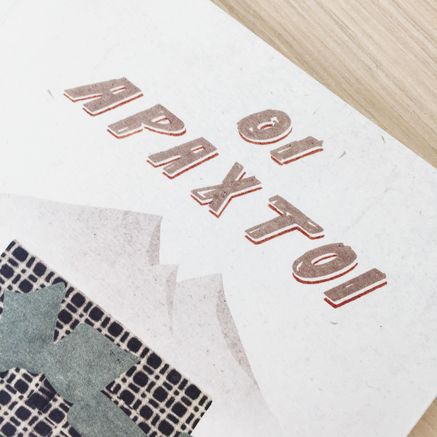
Some very good news has reached us from Italy. Michele Serra’s novel *The Arachtoi*, published by our publishing house a few months ago in a translation by Dimitra Dotsi, is to be adapted for the big screen, directed by Francesca Archibugi!Preparations for the film are, of course, at an early stage, specifically in the process of writing the screenplay, which is being co-written by Francesca Archibugi and Francesco Piccolo.Francesca Archibugi writes and directs. She has tackled various film genres, and both her films and she herself have been honoured with awards in Italy as well as at major festivals abroad.Francesco Piccolo is a well-known author, winner of the 2014 Premio Strega, and screenwriter. He has written the screenplays for famous films by Nanni Moretti and other renowned directors. He is currently also writing the screenplay for a television series based on Elena Ferrante’s Neapolitan Novels. Filming is set to begin at the end of the year, and we are eagerly awaiting to see how such a unique book as *The Peasants* will be adapted for the screen.The novel, which was published last November, has won over readers and critics alike, as it combines the author’s irony and the power of his satire, which alternate with heart-wrenching moments, nostalgic lyricism and the unadulterated beauty of the writing.In addition to the Italian and Greek editions, it is also available in German, French, Spanish and Dutch, and is expected to be published soon in Portugal and Brazil.A candid account of a relationship taking root and a description of life’s journey which, however much it may loop back, ultimately moves forward. This is what this text is. I believe that, in its own way, it convinces us that it is a novel unlike any other, a narrative of the human anguish of the ‘I’ until it accepts the tenderness of the ‘We’.Manos Konteleon, Diastixo.gr The text is well-balanced, superbly translated, and you get the sense that not a single word is missing or superfluous. In short, although his choice for this series might have seemed bold at first, it was a successful one. Katerina Malakate, ‘Reading’ blogLearn more
-
#SummerIkarosBooks: On the occasion of a photography competition.
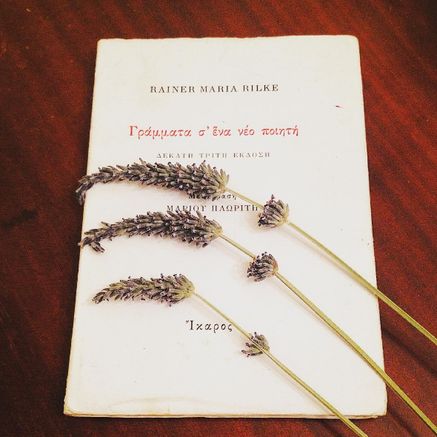
The summer photography competition we organised on Instagram came to an end today, and your entries filled us with positivity.We saw photos of our books accompanying you in your daily lives, helping you relax and influencing you in their own way, especially at times when you’re seeking personal calm and peace, and we were delighted!Below are the photos of the 10 lucky winners that will take you on a journey in their own way. Thank you for taking part. Photo: mellymusic83 Photo: ioatsag Photo: Agape Photo: Vasiliki Papadopoulou Photo: Tatiana Liani Photo: i.mast Photo: kritsinaki Photo: stella_moutro Photo: andreas_kyr7 Photo: roadartistLearn more