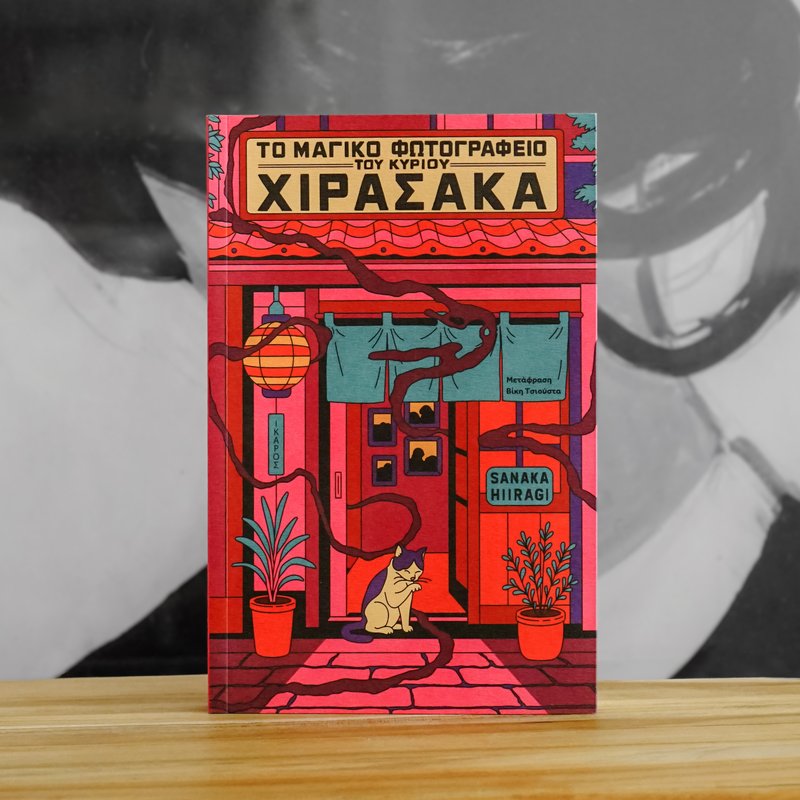
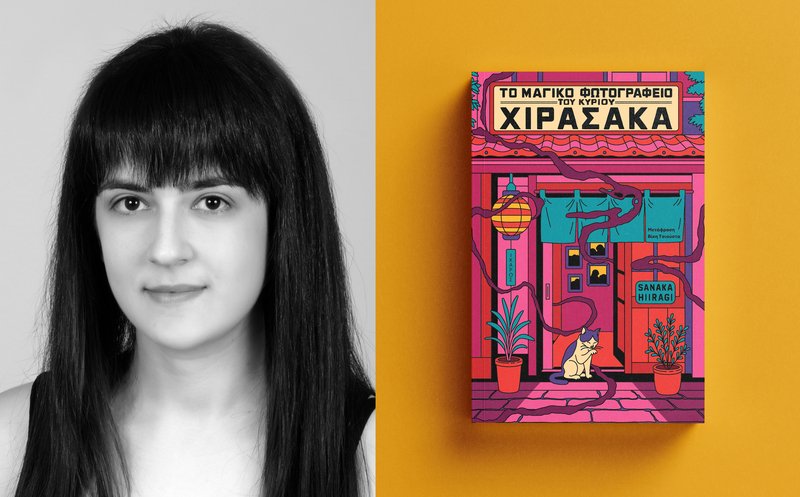
Viki Tsiousta | Translating "The Magical Photo Studio of Mr. Hirasaka" by Sanaka Hiiragi
Viki Tsiousta is featured in our "Translation Workshop" column, speaking to us about The Magical Photo Studio of Mr. Hirasaka, the new novel by Sanaka Hiiragi, which she translated into Greek and which has been beloved since its first day of release. A moving hymn to the value of life and the precious memories that shape us.
There is a place, somewhere between life and death, memory and oblivion, where time does not flow as we know it. People arrive there when they die, to see their lives once more and to choose the moments that defined them. The Magical Photo Studio of Mr. Hirasaka by Sanaka Hiiragi leads us to this imaginary place with a calm simplicity.
A photo studio. A series of photographs. The need to choose.
Hiiragi writes in a way that is difficult to describe without doing it an injustice. It is simple, but not simplistic. It is tender, but never overtly sentimental. There is a silence, a discretion in her narrative—a pause that leaves you space to feel for yourself, without guiding you. And for me, as a translator, that was perhaps the most demanding part: not to render the meaning, but not to lose that balance. Not to "fill" the text where the original leaves a gap. To trust that this discretion can work in Greek as well.
Photographs play a central role in the book, not only as a narrative tool but also as carriers of memory. Through them, the characters are called upon to re-examine their past and recognize the importance of moments they might have overlooked. Even a seemingly insignificant moment can become decisive. And so, the selection of the photographs becomes something more than a simple process—it becomes an act of understanding and recognition.
When I finished the translation, what remained most deeply etched in me was not any specific scene, but a feeling—as if I had looked through an album of old photographs. Not necessarily the most important ones, but those that, for some reason, you do not want to forget.
And perhaps that is ultimately the most unique element of the book. It does not try to tell you what is important. It chooses moments, illuminates them gently, and places them side by side. And the translation, in a strange way, becomes part of this process: one more choice, one more effort to hold onto something of the light of memories—this time in another language.