News
News List, News Categories, Events
-
More on Greek cuisine
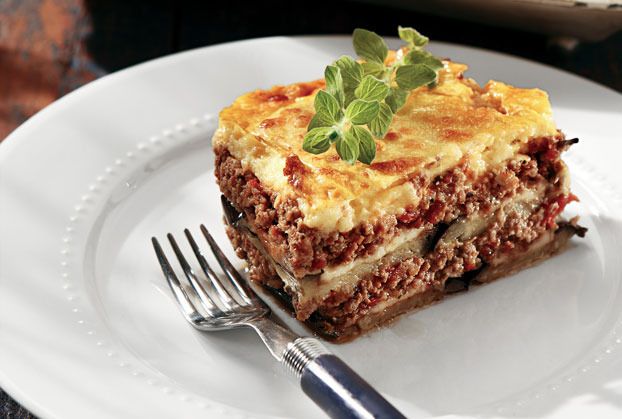
In 1991, Ikaros Publications released the book *Deipnosophistis*. It was a collection of articles, originally published in the newspaper *Kathimerini*, focusing on cuisine or gastronomy, as we would say today. It was the first time in Greece that anyone had spoken about the philosophy of taste, its aesthetics, its sociology and its ritual dimension. He spoke of both popular and refined cuisine and of the clarity of flavours. It changed the way we had viewed cuisine up to that point, but it also introduced the dimension of Greek identity, opening up a major topic, a dialogue that continues to this day. The book was loved by both the public and critics, went through numerous reprints, was discussed, commented on, copied, gained a devoted readership, and was followed in subsequent years by the equally successful Second and Third Diners, both by the same author, Christos Zouraris.Much has changed since then. Gastronomy has entered our lives and become fashionable, with all the pros and cons that entails. Hundreds of related books and magazines have been published. Television has become a vast kitchen. Restaurants have opened and closed, chefs have risen to fame and faded away, we’ve eaten feta mousse and caramelised everything (much of the aforementioned being of exceptional quality). Rocket and Parmesan became our national salad, and we saw a TV advert featuring a grandmother in a headscarf in the village telling her neighbour the brilliant line: ‘I’m rolling out the sushi sheet!’ And now? Now the trend will pass. Unfortunately, with the help of the crisis that is plaguing everything. But the good things will remain. The essence. The substantive dialogue about Greek cuisine and Greekness. With all its cultural, social and philosophical ramifications. Ramifications that contribute to self-awareness, an essential virtue for us to be better Greeks. Epicurus has been at the forefront of this dialogue for years. A follower and interlocutor of Christos Zouraris, he has published books and numerous articles and reviews in newspapers and magazines. His deep engagement with gastronomy in general and Greek cuisine in particular, his knowledge and his many years of experience, have now been brought together in a volume, a thorough study entitled: The New Greek Cuisine, with the subtitle On the Greekness of moussaka, our gastronomic identity and its renewal. In this book, Epikouros passionately explores what exactly Greek identity means in our cuisine. He begins by exploring what ‘Greekness’ means, drawing on references and examples from literature, painting and architecture. He asks what ‘Greekness’ meant to the generation of the 1930s, how it is changing today, and what this means for gastronomy. He traces, from the Ottoman period to the present day, the folkloric, local, cultural, economic and many other factors that constantly shape what we call Greek cuisine. What is ‘mum’s cooking’ and what is restaurant food? Who are the great chefs who have shaped our tastes and palates from Nikolaos Tselementes to the present day? Is moussaka Greek? Will our great-grandchildren consider sushi to be Greek? In other words, joking aside, the dialogue we were discussing continues. What will be the next chapter in this fascinating history of our Greek cuisine? It is a great joy and honour for us that, 20 years after the Deipnosophists, this dialogue continues at Ikaros. Epicurus’s book will be published by our publishing house this autumn.Learn more
-

The only thing that saves us is friendship. By Vangelis Raptopoulos
Krystalia Patouli | www.tvxs.gr, 25-06-2012 With the arrest of Savvas Xiros and those others alleged to be members of the organisation, it is as if the cycle that began with the Metapolitefsi has come full circle.In the summer of 2002, there was a pervasive fear or numbness in the atmosphere, as if the prosecutions were about to become widespread and include anyone on the left, from the era of the anti-dictatorship struggle onwards.Or as if the ultimate aim of the prosecutions was to incriminate those I mentioned earlier. Both the Polytechnic generation and my own, that of the post-dictatorship era, began with collective visions only to end up trapped in the cocoon of individualism.And the days of the dismantling of 17 November were as if to remind us of exactly what we once were and what we have now become. It was like a final spasm of the collective as it faded away, a last flicker of it.That is why the whole atmosphere seemed appropriate for my narrative, which leads to the bitter realisation that the only collective thing left to us today is friendship. But perhaps there is an optimistic note here too.Because friendship could also act as a catalyst for whatever collective spirit emerges in the near future! Something like the old Philiki Etaireia! The only thing that saves us is friendship. One could put it that way. […] In my early books, from the 1980s, using the language of my time, I managed – by general admission – to capture certain collective characteristics of my generation. Later, I explored individualism and its labyrinth. They accused not only me, but my entire generation, of being obsessed with lifestyle, or perhaps of going along with it. But that was the 1990s: the era of lifestyle. It was something new to all of us, and as prose writers of that era, we explored it.After all, the politicisation of the post-dictatorship era had gone too far, the collective had become a parody, and when the constellation of individualism rose, it was clearly radical.With ‘Friends’, it’s as if I’m returning to the collective. There’s a trend of returning to politics; you can even see it in Hollywood films, it just hasn’t taken on mass proportions yet. It’s as if social consciousness is gradually returning.And within this context, from precisely this perspective, I discover friendship as a solution and a salvation, as resistance to the commodification of everything. However, we should not view friendship narrowly, merely as a relationship between teenagers, for example, but also between couples, children and parents. As a catalyst and a reason that will once again create a sense of community, something hopeful. [...] I observe today’s youngsters, the twenty-five-year-olds, and suddenly realise the confusion they are caught up in. Whilst they are a link in a chain, they delude themselves into thinking they are a new beginning, precisely because they have never experienced anything collective. My generation had the sense that something had come before it, and that something would follow.We were conscious of the historical baton relay. (Excerpt from Vangelis Raptopoulos’s book, The High Art of Failure, Ikaros Publications, 2012) Learn more
-
A change of course
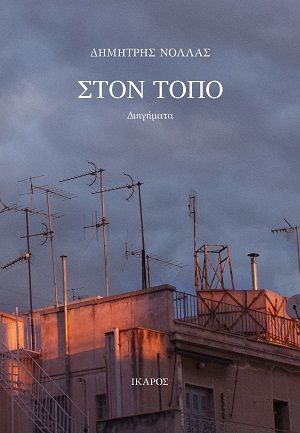
Elisavet Kotzia, Kathimerini, 3/6/2012The ten short stories in the collection ‘In the Land’ (‘Ikaros’, p. 85) mark a new direction in Dimitris Nollas’s prose. Texts from the last decade highlight an aspect that was faintly visible in his previous collection of short stories, ‘The Old Enemy’ (2004). It is the shift from the realm of the incongruous, the empty and the alien towards a side where a glimmer of warmth, a hint of heat, a small haven of comfort and love is concentrated. For the issue at stake is emotion, the emotional bond, the openness to human connection. In Nolla’s earlier prose, the world appeared immutably bleak, definitively inhospitable, perpetually hostile; a dystopia whose consistently negative character was due to the unfriendly individuals, the passive subjects and the rootless beings who inhabited it. A world fashioned from the aimless trajectories of the fated and the misfits, it comprised people who struggled to fit into the community. The unemployed, the swindlers and the misfits; the dreamers, the wavering and the half-mad; the humiliated, the degenerate and the gravely ill. Absent-minded gazes, people who were forgotten, figures who wandered, figures who were lost; in labyrinths, in wells and in arcades; figures who strayed, went astray, were led astray. A world with no refuge for the lost, no shelter for the destitute, no haven of a warm embrace. Inevitable, Nolla’s merciless, heartless, alien universe was derailing and drowning in blood. Thus, alongside the two-faced and the stripped bare, the wretched and the defeated, within the twilight universe the unthinkable was taking place. Envious, shameless, greedy, filthy and unrestrained figures plunged knives into chests, fired guns and detonated explosive devices. It was a world of enmity and strife with no place for affection, tenderness or love. With ‘The Place’, Dimitris Nollas contrasts the previous poetics of inhuman alienation with a new poetics of friendship. Not, of course, something radically different, but a slightly tweaked version of the older one. For his heroes continue to find themselves on the social and psychological margins (fanatical bachelors, solitary old men, the romantically wounded, isolated outcasts). In his earlier work, the emotional element intruded through emptiness and absence. Here, by contrast, it is presented directly as an expression of responsibility for the other: the pursuit of caring for a defenceless infant and the reciprocal offering of companionship (in ‘Burnt Papers’ and ‘Baby in the Hammock’, two prose pieces which, not coincidentally, are Christmas stories). ‘A Bagel for Two’ and ‘Inevitable Encounters’, which are governed by the Gospel saying ‘it is not good for man to be alone’. Finally, ‘Matzikert’, ‘Still Life on the Water’ and ‘The Price of Dreams’, which legitimise the cultural otherness of the outsider in the embrace of the immigrant community.In the new collection, Nollas walks a tightrope and triumphs. In ‘The Old Enemy’ there were stories involving critical social issues and sensitive matters of political correctness which perhaps exceeded the capacity of their fictional material (‘No One Alone and Sad’, ‘The Mute Other’). In contrast, in ‘In the Place’, the central idea is established, digested and assimilated through a variety of circumstances whose common element is the circumvention of reason – through the sudden revelation that pierces like a ray, through the reckless devotion offered freely, through unwavering obsession, through generous giving, through superstitious faith.Learn more
-
Extension
D.N. Maronitis, To Vima tis Kyriakis, 3 June 2012 Which is to say: the brief respite of last Sunday is being extended, albeit at the expense of the second round of erratic pre-election news, which is being promoted by Syriza’s predictions with the populist lure: Europeans and euros for free. For those who are fed up with endless vigils—which, however, lend themselves to midnight reading—all it takes is to get hold of the right book. In my case, this happened with the ten short stories by Dimitris Nollas, gathered in the eighty-three pages of a booklet. It is titled ‘In the Place’, published by Ikaros, and was read in one sitting twice over the course of a single night – this is the third and most demanding reading, intended to result in a written piece.The difficulty lies in the fact that here the sense of taste and touch takes precedence, embedded in a kind of ‘natural’ discourse that brooks no second-hand interpretation, especially when attempting to reproduce the narrative plot. I shall endeavour, as far as possible, to avoid this tempting shortcut, speaking with ‘The Words of the Air’, just as the named and unnamed passengers do on the old-fashioned train in the second, eponymous short story.I first came across Dimitris Nollas in 1974 with his first novella, which bore the whimsical title ‘Athena’s Fairy’. Since then, I have taken a great liking to him and his writing, which, in the meantime, has flourished in both quality and quantity. If my count is correct, his total output to date amounts to seventeen books in Greek, to which are added two translations into other languages. The first and most substantial category comprises three novellas, six collections of short stories, four novels, and two standalone texts of an unclassifiable nature.The numerical predominance of short stories should not be considered coincidental: I have the feeling that Nollas excels comfortably in this genre and proves himself a true master. This is not to say that he falls short in novellas – indeed, some of the longer short stories justify the title of ‘novella’. Novels, however, are, I believe, Nollas’s secret weakness, in the best sense of the word: they appeared somewhat late (1992) with *The Mound by the Sea* (which rightly won the first state prize of the year), whilst the fourth and, as yet, final instalment of the series, entitled Each Person’s Time, reveals new and daring innovations in form and fiction, incorporating elements of latent poetry within the narrative framework without becoming overly poetic.I now return to the subject, having, as a devoted reader of Nollas, perused most of his prose works, and having concluded that, in my opinion, he is recognised as the finest prose writer of his generation. Two preliminary observations precede this. The first concerns the titles of the ten short stories, which, when taken together, form a strange poem. A mood that is also confirmed in the quotations featured in three of the stories. In the first: ‘Oh, poor children, poor children, children in exile.’ In the third: ‘To those I love.’ In the tenth, a profound statement by Argyris Chionis in two sentences, the first of which is reproduced here: Man is a beautiful thing, perhaps the most beautiful object of all, especially when he remains motionless and silent in a corner of a room or a landscape, forgotten and almost invisible. In much the same way, the narrator Nollas remains hidden behind the curtain of the ten stories, completely avoiding any prominent role for himself.Now to the substance: I suggest a comparative reading of the first and last stories in the collection (the first is titled ‘Baby in the Hammock’, the last ‘In the Place’), to reveal their complementary parallels. At the end of the first, the life-saving abduction of a baby—essentially an abandoned child—takes place arbitrarily. The second concludes with Sefi collapsing face down from his broken bench, remaining in the place. Just like his anonymous comrade in the battle of Koritsa, who, swapping places with him outside the dugout for greater safety, takes a bullet straight to the head and is left lying there. Unwittingly saving Sefi, who henceforth persists in his life, unshakeable. Second analogy: in the first story, the duo of Rolando (commonly known as Roulis) and Anastasis remain, ‘living and half-living’, in inhospitable Athens as immigrants: one an outsider, the other an insider. In the final short story (late 1950s), Allogiannis, an official at the relevant department, tries to persuade Sefi to apply to emigrate to Germany, but Sefi remains unconvinced and unmoved.That’s a first taste and introduction to the ten short stories by Dimitris Nollas, which stand out this time round.Learn more