Award-winning
Out of stock
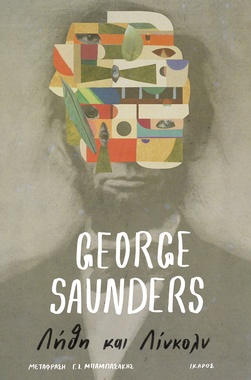
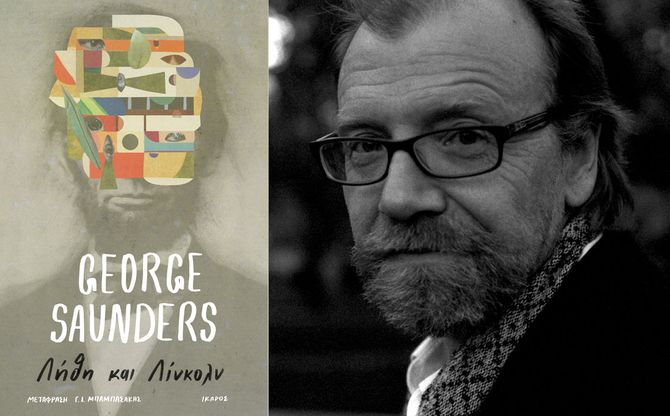
Oblivion and Lincoln
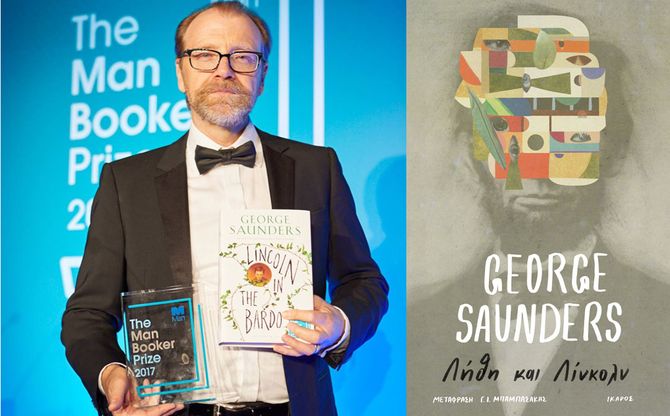
The Man Booker Prize 2017
Shortlisted for the Literary Translation Award at the 2018 State Awards
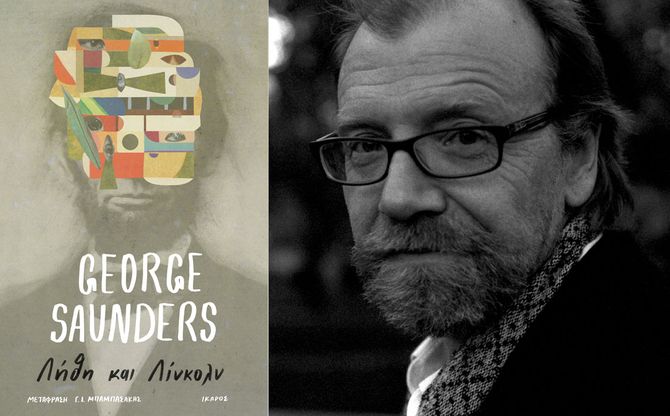
The gripping debut novel by Folio Prize-winner and National Book Award nominee George Saunders, about Abraham Lincoln and the death of his eleven-year-old son, Willie.
Shortlisted for the Literary Translation Award at the 2018 State Awards
The gripping debut novel by Folio Prize-winner and National Book Award nominee George Saunders, about Abraham Lincoln and the death of his eleven-year-old son, Willie.


How do we live and how do we love, when we know that everything we care about will one day cease to exist?
February 1862. The American Civil War is raging, whilst President Lincoln’s beloved eleven-year-old son is seriously ill and, despite predictions of recovery, eventually dies.
On 22 February 1862, two days after his death, Willie Lincoln was buried in a marble crypt in Georgetown Cemetery.
That evening, Abraham Lincoln arrives alone at the cemetery, wishing to spend time with his son’s lifeless body. Throughout the night, the ghosts of those who have recently passed away and those who have been dead for some time coexist; a monumental battle takes place for the soul of little Willie.
Using this historical event as a catalyst, George Saunders tells an unforgettable, kaleidoscopic story of family love, loss, and the forces of good and evil.
Author:
George Saunders
Edited by:
Eleftheria Kopsida
Translation:
George-Ikaros Bambasakis
Cover design/illustration:
Christos Kourtoglou
Pages:
472
Dimensions:
13.3 X 20.5 εκ.
ISBN:
978-960-572-185-5
Publication:
2017
Categories:
Books, Literature, Foreign Literature
"The most prestigious prize in English-language literature was awarded to the debut novel of a great short-story writer, who has also made his mark in the major American publications. [...] George Saunders is worth reading, and above all he is worthy for his overall attitude to life."
– Tina Mandilara, LIFO"...Just as the ghosts pass through the body of Abraham Lincoln, who keeps Willie awake all night in the cemetery, and take on his form, so too does the book pass through me and settle there: it sits, lights a fire, simmers its soup, and once sated, lies down. ‘Who is the guardian of the word?’ Lincoln asks, devastated, on one page. And I finish reading and don’t want to write anything; there is no reason to write anything. And I write.”
– Konstantinos Hatzinikolaou, Kathimerini"...A story of palimpsests, betrayal and forgiveness, love and hate, passion and compassion. With as many realities as there are perspectives. In a dialogue-driven form, where each character occupies a space ranging from a single word to several pages, blending historical references and fictional elements, it bears no resemblance to anything read before."
– Yannis Karkanevatos, Bookpress.gr"...what truly impresses and emotionally captivates the reader, and I believe fully justifies the author’s award, is this lyrical harshness with which the dead recount the fragments of images and memories from their lives: it is impossible to remain unmoved whilst it has such a powerful psychological effect on you, and this is where Saunders’s literary genius lies."
– Angela Gavrili, diavasame.gr"...Written with unrivalled humour, passion and grace, it showcases a thrilling new writing technique and confirms Saunders as one of the most important writers of his generation."
– Passe Partout Reading"...Elliptical, visionary, the book *Oblivion and Lincoln* possesses a sense of theatricality, as it emerges from the fragmented conversations of everyday life, in the realm of life and death."
– Angela Mantziou, cityculture.gr"...Around him the voices of the dead awaken and Sanders sets up a series of dialogues amongst the lost souls – it is difficult to find ways to describe the book. A philosophical farce? A polyphonic theatrical drama? A metaphysical political allegory? A heart-rending tale of love for the absent? Rare and unforgettable."
– Athos Dimoulas, K Magazine"...The versatile Saunders makes the transition from short to long form with inventive mastery. It simply seems as though he is naturally broadening his narrative scope to welcome a host of new voices into his story. Vying to take the reins of the narrative, these fragmented voices rush to succeed one another."
– Stelios Giamarelos, Slus.gr"A remarkable book thanks to the experimental boldness and deep empathy of the writing."
– Katerina Schina, the books’journal
"...Around this harrowing human moment, Saunders skilfully constructs a novel of existential anguish. Kaleidoscopic, polyphonic, with touches of lyricism and an admirable balance between drama and comedy."
– Christos Vasmatzidis, Eφημερίδα των Συντακτών"...the conception and execution were exceptional. The dead who narrate, the fragmented yet complementary narrative, death and loss, and the philosophy of grief make the work a powerful lyrical read."
– Papissa Ioanna, In2life.gr"...Perhaps a stroll through a surrealist necropolis might sound like an overly gothic suggestion for Christmas. And yet this first novel by Saunders (2017 Booker Prize), which reads more like a play, doesn’t ‘put you off’. It does, however, invite you to swim in a pitch-black ocean. The first few pages do, truth be told, require a little effort. But after a while you find yourself swept up in something strange and intoxicating, OK and very macabre, at times even harsh, and you can’t tell whether it’s the book’s subject matter or its form that achieves this. A true ‘poetry’ of cemeteries. If you let yourself go, this crawl of familiarisation with death and loss is even entertaining."
– Lena Papadimitriou, Insidestory.gr"A novel that is experimental in a sense, bold in its conception and execution, in its composition and style. A novel that avoids the easy way out and winking at the reader. [...] page by page, surprise gradually gives way to charm."
– Kostas Athanasiou, Epochi newspaper"...a work where the choice of subject is a challenge, the choice of ‘theatrical’ structure likewise, and where certain informative narrative digressions are missing that would have enhanced the reader’s enjoyment. In any case, a distinctive work, at the heart of the postmodern condition, where rationalism is put on hold and where, to put it in Greek terms, the saying ‘anything goes’ is glorified."
– Michalis Modinos, Ta Nea"...If love does not end with death, then surely the dead, who were loved in life and know it, do not wander mercilessly in the realm of what we call ghouls. And it seems that this is what the author wants to tell us here. True love does not end with death."
– Thanasis Liakopoulos, Diastixo.gr"...Sonders speaks to us of family love, loss, a life that knows not when it will end, and the oblivion that nullifies life and death! The translation is by Giorgos Ikaros Babasakis. It was a difficult undertaking, particularly in terms of the style and structure of the story, but also in matching the vocabulary to each character. He succeeded."
– Alexandros Stergiopoulos, The Magazine"...Despite the emotionalism that pervades the story, the author stands as a detached observer and avoids the intense emotional involvement that might lead to tear-jerking pages. For the reader, this is a punch in the gut as they are confronted with death in a raw and simple way. The words used, however, conceal a wonderful lyricism, the innate human need to feel pain, to mourn, to embrace."
– Maro Panagi, Smassing Culture"...Just like the ghosts that inhabit it, *Lethes and Lincoln* lies somewhere between a novel and a play, whilst in many places it flirts with poetry and in others it resembles a chronicle. But it also lies somewhere between drama and comedy, joy and sorrow. As you will realise, then, when you read it, this book—a book about grief, loss and love—is unique. With ‘Lethith and Lincoln’, George Saunders breathes new life into American literature. And to think that this is his first novel!”
– Nikos Grigoriadis, Proust & Kraken"...Saunders’ achievement is therefore nothing less than giving us a post-portrait of Abraham Lincoln that responds to the contemporary worldview, a pioneering conception of how we can today approach the spectral legacy of the unfinished, emancipatory, Enlightenment project of previous centuries. And this is achieved through the most appropriate form of literary writing of our time: that of historical, polyphonic, post-mythical fiction."
– Giorgos Kachrimanis, AvgiGeorge Saunders
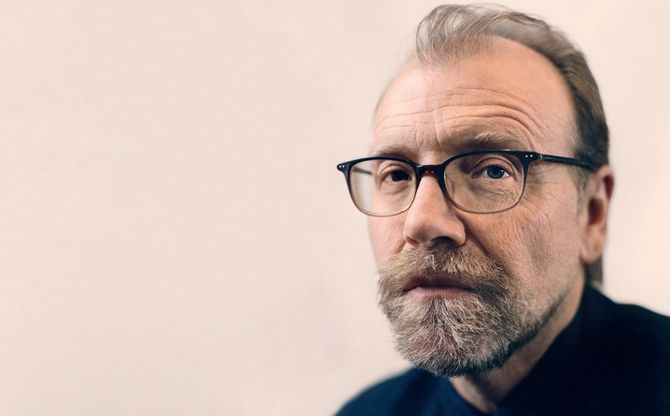
George Saunders has written eight books, including the short story collections Twelfth of December (Folio Prize 2014) and Pastoralia. He has been a fellow of the Lannan Foundation, the American Academy of Arts and Letters, and the Guggenheim Foundation. In 2006, he was awarded a MacArthur Fellowship. In 2013, he received the PEN/Malamud Short Story Award and was included in Time magazine’s list of the 100 most influential people in the world. His first novel, Oblivion and Lincoln, won the 2017 Man Booker Prize. He teaches on the Creative Writing Programme at Syracuse University.