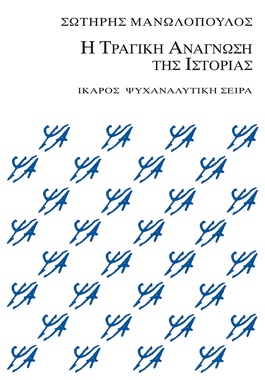
Institutions are haunted by the shadows of our heritage. The shadows of heritage are metabolic residues of the transformations of history – both subjective and collective – and intrinsically define the bonds between the public and private spheres. These bonds are currently under attack and being eroded, resulting in the desolation of communities of reference and the narrowing of individuals’ horizons of meaning within institutions. Today, we are witnessing social transformations in the internal and external representations of the paternal role, a profound crisis of the family, institutions, culture and religion, and a discrediting of ideologies. These transformations are linked to pathologies in the representations of the Superego, which deprive individuals of conflicts and repressions and encourage narcissistic-perverse attacks against bonds of meaning. The problem we face is that in our repetitions within groups, we bring onto the stage of an institution, into its practices, elements of unprocessed early and traumatic experiences in order to process them and make them historical.
These concerns pertain to every self-organising institution: How do the shadows of heritage resurface in our bonds and institutions? How do we take on the history of previous generations whilst appropriating the new elements of our experience into our subjective history? How do we turn our repetitions into a past, and how do we turn the past into history—both personal and that of the institution to which we belong?
Author:
Sotiris Manolopoulos
Pages:
164
ISBN:
978-960-8399-85-3
Publication:
2010
Categories:
Books, Humanities & Social Sciences, Ψυχολογία
Sotiris Manolopoulos
Sotiris Manolopoulos is a psychoanalyst specialising in children, adolescents and adults, a member of the Canadian and International Psychoanalytical Associations, and a training analyst with the Hellenic Psychoanalytical Society. He specialised in adult psychiatry at the Aeginition and Dromokaiteion Hospitals in Athens. He specialised in Child Psychiatry at the University of Ottawa in Canada, where he was appointed Assistant Professor before returning to Greece in 1985. He trained in Psychoanalysis at the Canadian Psychoanalytic Society. Since then, he has been working privately in psychoanalysis and psychoanalytic psychotherapy. He studies and teaches on the work of Winnicott, the functioning and pathology of sexuality, drives, the structural and defensive processes of the psyche, trauma, character organisation, and the functioning of institutions. He has published articles on these studies, the book "A Tragic Reading of History" by Ikaros Publications (2010), the book "Psychic Bonds, Social Institutions", published by Gavriilidis (2011), and "Paths of Adolescence", published by Nisos (2015).