Special correspondent
A riveting spy novel, a cocktail of a dose of Nikita, a dash of the Pink Panther and a pinch of John Le Carré, the work of one of the greatest contemporary novelists.


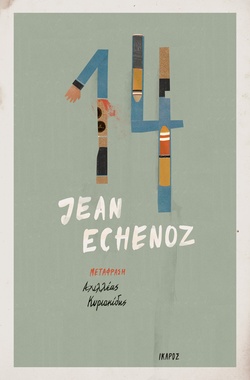
Following the masterful ‘biographical’ trilogy (Ravel, Zatopek, Tesla) and the densest, most austere and understated novel ever written about the First World War (14), the greatest stylist of French literature returns to the genre in which he has served with such distinction. His freshest (in every sense of the word) novel is an adventurous odyssey through the labyrinths of chance, the Paris metro and, above all, the ever-changing map of international politics, as, quite simply, a pop singer with a single (but colossal) hit is recruited by the French secret services to destabilise the North Korean regime!
Delightfully strange and unpredictable, full of unexpected twists and coincidences, a novel with a… delightfully smooth narrative and a humour that never lets you settle down and view things rationally! What more could you ask for, after all?
Echenoz returns to his literary roots: a crime plot with intensely cinematic action, full of humour and irony. A master of the absurd, he is clearly our most entertaining novelist.
Le Nouvel Observateur
Author:
Jean Echenoz
Translation:
Achilles Kyriakidis
Cover design/illustration:
Christos Kourtoglou
Pages:
312
Dimensions:
13,3 x 20,5 εκ.
ISBN:
978-960-572-184-8
Publication:
2017
Categories:
Literature, eBooks, Foreign Literature
"...Jean Echenoz wanders through the universe of spy stories, infuses it with strong doses of pop culture, seasons it with a glossy, silly eroticism, and deconstructs everything as much as possible."
– Giorgos-Ikaros Babasakis, Bookpress"...A unique novel where burlesque meets espionage, by a unique author who – ingeniously – does as he pleases, is *The Special Envoy*. Strange and subversive, with a finely crafted writing style and surreal humour, full of unpredictable twists and diabolical coincidences, elements that make up a satire that truly knows no bounds."
– Angela Gavrili, diavasame.gr"...Reading as genuine entertainment: verbal, visual, participatory, collaborative. This is the aim of this novel as a tribute to the tradition of pioneering techniques in creative writing."
– Evi Malliarou, LIFO"...Although the novel parodies the spy genre, the plot twists on which its subversion is based are truly worth keeping secret, allowing the reader to enjoy them in peace. So we say nothing about the kidnapping and the ransom, nor about the mission to North Korea, nor about its outcome. Only that it is utterly cinematic, as indeed is the entire narrative, which leaves a lasting impression of high-quality entertainment, of vibrant literature at its very best."
– Titika Dimitroulia, Ethnos
"...The cinematic questions find their reason and answer in Jean Echenoz’s _The Special Envoy_. This is neither a film script nor an imitation of the works and creations mentioned. Simply, Echenoz shakes up reality, just as the aforementioned authors do. And while the image is always more powerful than words, the desire for subversion knows no bounds. Art knows no bounds, and naturally, neither does satire. Echenoz satirises without mercy and winks at our unconfessed, unbridled desires."
– Alexandros Stergiopoulos, toperiodiko.gr"A first-rate novel that winks at the spy novel, the realistic novel and the anti-novel, drawing on them and parodying them. Yet it parodies them with admiration, paying homage to them."
– Vangelis Kokkaris, FractalJean Echenoz: “The reader is the inventor of the books they read.” Interview with the popular French author by Dionysis Marinos on the occasion of the book’s publication.
– Bookpress.gr"...A pop singer with a single (but colossal) hit is recruited by the French secret services to destabilise the North Korean regime. Yes, Echenoz’s new novel is hilariously funny, but it is also strange and unpredictable, full of unexpected twists and spy-thriller suspense from the first to the last page."
– In2life.gr"...Esnoz, without disregarding the achievements of the New Novel or literature’s potential for social critique, has managed to revitalise the art of the novel, focusing on its crucial elements—such as plot, action, suspense, reader engagement, surprise and plot twists. In short, Esnoz has restored the emphasis on narrative, the faith in the novel as a literary genre."
– Thomas Symeonidis, Bookpress"...For every cubic centimetre of Trier blood, Echenoz smears everyone in this amazing book of his with black humour, whispered information behind the scenes, twists, sarcasm, but also empathy."
– Georgia Tsourou, Theathinai.comJean Echenoz
Jean Echenoz was born in Oragne, France, in 1947. He lives in Paris and has published 17 books, all with Minuit. His first novel [The Greenwich Meridian (1979)] was awarded the Fénéon Prize for the best work by a new author, and his second [Cherokee (1983)] won the Médicis Prize.
The following are available in Greek: the novel *Lake* (1989) from Kastaniotis Publications, and the novels *The Tall Blondes* (1995), *I’m Leaving* (1999) – Goncourt Prize, Above All Not Chopin (2003) and the fictional (or non-fictional) biographies Jérôme Ledon (2001), Ravel (2006), The Road to Endurance (2008), Lightning (2010), and, from Ikaros Publications, the novel 14 (2014).