Dimitriou Soutsou 36 - A conversation between Nikos Karouzos and Yannis Zouganelis (13 June 1986)
A special book capturing the conversation between two great Greek figures: the poet Nikos Karouzos (1926–1990) and the musician Yannis Zouganelis (1938–2006).
The conversation between the writer Nikos Karouzos and the musician and writer Yannis Zouganelis, which took place on 13 June 1986 at the former’s home and was recorded on three cassettes by the latter, covers approximately four hours of conversation. The two men chat ‘as friends’ – amongst other things – about music, poetry, the meaning of art, history, death and the artist’s place in the world… A spontaneous, authentic conversation that reveals the successive stages of their lives as well as the issues that preoccupied them throughout their artistic careers. In addition to the main text of the conversation, the publication includes an introduction, as well as notes by the editor Thanasis Galanakis, an illustrated appendix and indexes. Yannis Zouganelis (1938–2006) succeeded in associating his name with the largest brass instrument, the tuba, and through his performances in Greece and abroad, he was recognised as one of the leading tuba players of his time. Outside of music, he was involved in literature, publishing the magazine ‘Kritiki kai Keimena’ (Criticism and Texts) with Yannis Patilis, and he published autobiographical books. He had a special relationship with the poet Nikos Karouzos, and many of their conversations have been published in newspapers and magazines.
Author:
Yiannis Zouganelis, Nikos Karouzos
Introduction-Transcription:
Thanasis Galanakis & Amalia Tsoukala
General editing, research, commentary:
Thanasis Galanakis
Date of publication:
04/07/2022
Pages:
248
Dimensions:
13 x 20 εκ.
ISBN:
978-960-572-490-0
Publication:
2022
Categories:
Books, Essays & Thought, Δοκίμιο
"Δεν ήταν μια τυπική συνέντευξη, αλλά μια συνομιλία που καταγράφηκε σε μαγνητόφωνο και τώρα έρχεται σε εμάς σαν μια συνομιλία μεταξύ δύο ανθρώπων βαθύτατα πνευματικών. Μιλώντας για τα απλά και τα μεγάλα. Για την ποίηση, τη μουσική, τη ζωή, τον θάνατο και τον έρωτα βρισκόμαστε μπροστά σε μια ανακάλυψη: το υπόγειο της Δημητρίου Σούτσου 36 ήταν ένα σημείο όπου ο ήλιος είχε άλλη λάμψη. Ολότελα ποιητική."
– Διονύσης Μαρίνος, Andro"Η ζωντανή συζήτηση ανάμεσα στον ποιητή Νίκο Καρούζο και τον διεθνώς αναγνωρισμένο μουσικό Γιάννη Ζουγανέλη, που περιλαμβάνεται στο βιβλίο _Δημητρίου Σούτσου 36_, αναδεικνύει τις ουσιαστικές πτυχές της σκέψης και τις αρχές της μεταφυσικής του ποιητή. […] αμφότεροι συμφωνούν ότι η αισθητική είναι η νέα ηθική αλλά και ο βασικός άξονας που μετατρέπει το βιβλίο σε ζωντανό οδηγό της φιλοσοφίας του Νίκου Καρούζου, ένα ιδανικό εγχειρίδιο μιας δειπνοσοφιστικής προσέγγισης της ποίησής του…"
– Τίνα Μανδηλαρά, LIFO"...Και έτσι άρχισε αυτή η «συνομιλία», σαν συζήτηση μεταξύ φίλων, όχι ομοτέχνων αλλά ομοούσιων καλλιτεχνών, όπου ο ένας αφηγείται τη ζωή και τις σκέψεις του στον άλλο. Μία συζήτηση μεταξύ ανθρώπων που συγκλίνουν, αλλά και αποκλίνουν σε πολλά..."
– Ανθούλα Δανιήλ, Diastixo.gr"...Η συνομιλία, και όχι συνέντευξη, των δύο ανδρών είναι το τέλειο παράδειγμα διαλεκτικής. Η συζήτηση τους οδηγεί στην αλήθεια και κανείς δεν μπορεί να το αμφισβητήσει. Όχι, δεν είναι φωτεινοί παντογνώστες και φυσικά δεν έχουν το αλάθητο. Σε αυτόν τον διάλογο, όμως, μπαίνουν απελευθερωμένοι. Εδώ δεν υπάρχει καμία περιοριστική σύμβαση, ούτε καν του χρόνου! Δύο ώρες κουβέντα για «συνέντευξη» είναι πάρα πολύ, είναι η πρώτη ύλη για να δημιουργήσεις έναν νέο κόσμο, για να παρουσιάσεις με προσοχή τη σκέψη και την ψυχή του άλλου. Η βιασύνη των λεπτών, των ωρών, των δεικτών, μπαίνει στην άκρη και η είναι ανταλλαγή αδιαμεσολάβητων ερωτήσεων-απαντήσεων που δίνει τον ρυθμό και τον τόνο."
– Αλέξανδρος Στεργιόπουλος, Το περιοδικό"Πρόκειται για ένα εξαιρετικά σημαντικό βιβλίο που συμπληρώνει μοναδικά τις γνώσεις μας για ζωή και τη δημιουργική διαδικασία του Νίκου Καρούζου, ο οποίος μέχρι τέλους έγραφε ποιήματα που αποτυπώνουν μοναδικά την υπαρξιακή μοναξιά, την απελπισία, την επιθανάτια αγωνία, την ματαιότητα. Και όλα αυτά, πάντα μέσα από απρόβλεπτους ποιητικούς στοχασμούς, από στίχους- χρησμούς, αλλά και από την αυτοκαταστροφική μανία ενός δημιουργού που ποτέ του δεν έπαψε να ερωτοτροπεί με την εκμηδένιση…"
– Γιώργος Βαΐλάκης, PopagandaNikos Karouzos
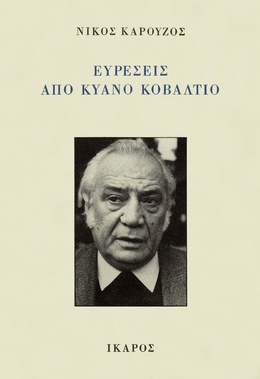
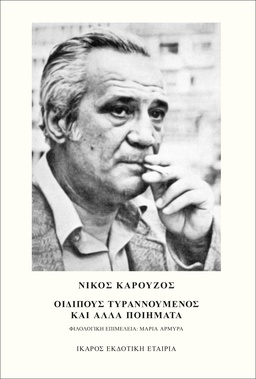
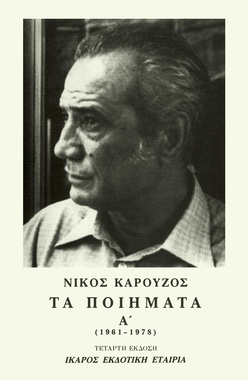
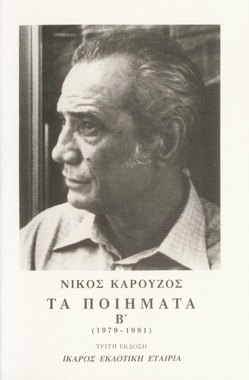
Nikos Karouzos (1926–1990), son of Dimitris and Konstantina, née Pitsaki, was born in Nafplio. His father was a teacher who had joined the National Liberation Front; he was persecuted during the civil war and exiled following the Varkiza Agreement. His mother was the daughter of a priest and a teacher. During his secondary school years, Karouzos was active in the EPO and was exiled to Ikaria (1947) and Makronissos (1951), from where he finally left in 1953 following a nervous breakdown. He married twice: in 1955 to Maria Daraki, with whom he lived for just a few months, and in 1963 to Mary Meimarakis, from whom he divorced in 1980. From 1981 until the end of his life, he was accompanied by Eva Bey.
He studied law and political science in Athens, but did not complete his studies, as he had already turned to poetry by 1941. In 1949, he made his first official appearance in the literary world with the publication of his poem “Simon of Cyrene” in the magazine “Our Age”. His first collection of poetry, entitled “The Return of Christ”, was published in 1954. He became better known in literary circles in the 1960s with the collections “The Deer of the Stars”, “The Sleeping Bag” and “Laments”. Many more collections and anthologies of his poems followed, culminating in his final poetic work, "Suspension", written on 29 August 1990 at the Ygeia Hospital, where the poet had been hospitalised for the last two years of his life, suffering from cancer.
He contributed to magazines such as "Nea Estia", "Athinaika Grammata", "Efthini", "Spira", "Tomes" and "I Leksi". He was honoured with the Second State Prize for Poetry (1963), the Group of Twelve Prize (1963), the First National Poetry Prize, jointly with Takis Varvitsiotis and Milto Sachouris (1972), and the First State Poetry Prize (1988).