News
News List, News Categories, Events
-
Interviews
Alekos Papadatos: ‘Leander could be one of us’"
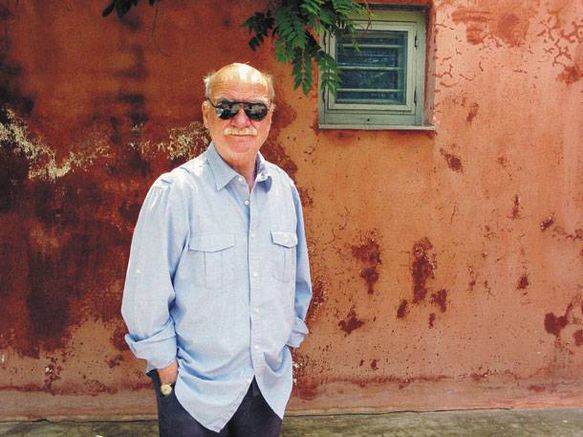
Alekos Papadatos speaks to Alexandra Panagopoulou of plusmag.gr in a wide-ranging interview about his new graphic novel *Democracy*. We first met Alekos Papadatos in 2014 when he presented his work ‘Encounters’ at the Cube gallery in Patras. Back then, everyone was asking him about Logicomix. Today, everyone is asking him about his new graphic novel ‘Democracy’, the fruit of his collaboration with Avraam Kawa and Annie Di Donna. And “Democracy” proved to be the perfect excuse to catch up again. Alekos Papadatos talks to us about the birth and development of the idea, the state of graphic novels in Greece, democracy today, and what the era we live in would look like as a comic. How did ‘Democracy’ come about? How did the story come about? There had been some thoughts and discussions about creating a graphic novel on the theme of political history as soon as Logicomix was finished. I’d started to get the itch to do something related to ancient Greece that wasn’t just ‘educational’ or glorifying the chlamys, but something more substantial. At some point, my daughter came to me with a school assignment in which her teacher had asked her to look up some historical figures and names of ancient Greeks, and Cleisthenes popped into my mind – a figure about whom I’d previously had a very hazy impression. I looked him up and found that various online encyclopaedia sites described him as the founder of democracy. That impressed me. Because I had this preconception, I started looking into it. It turned out that this subject is extremely interesting. The era of Cleisthenes is very obscure. We know much more about the 5th and 4th centuries, which are the ‘Hollywood’ centuries of ancient Greece, with Plato, Socrates, the Peloponnesian War, the Acropolis and so on, but we don’t know how we got there. That was a question. Let’s see how we got there. It is the second graphic novel to be published within a few months on the subject of history. This trend didn’t exist in the past. How do you explain it? There was a wave of so-called graphic novels that began in the mid-1980s abroad and, as far as I know, I think the first major work in this field, in terms of page count, was Art Spiegelman’s *Maus*, which was historical and dealt with the Nazi concentration camps. It was a real page-turner. A few years later we had V for Vendetta, Watchmen, Blankets and others, which created a trend that gradually made its way to Greece and really got us excited. We wanted to tell a more expansive story with Logicomix, which woke many people up from the slumber of the small-scale comic that was either for children or, if for adults, contained pornography, violence and horror. Everyone began to think, like Soloup, of telling stories that weren’t fantastical. They all drew on this trend. And before Soloup, there was Nikos Pagonis, who created a book about the Fall of Constantinople. Then came Logicomix, Aivali, and now Democracy. There’s a lot in the pipeline now. The new generation of comic artists have caught fire and many have started working. There is a scene. How do you see the comic scene in Greece developing? Here in Greece, we have a culture that doesn’t do much to support narrative illustration. We have a Byzantine past; we’re a country that didn’t experience the Renaissance like others in Western Europe. For example, we don’t have illustration schools like those found elsewhere, such as in England, France, etc. Here, there is only the Orneraki School. Unfortunately, our only tradition here—and a very good one, of course—is political caricature. A graphic novel is something that takes years to produce; it takes a lot of effort to create it, and it requires money. You have to take your subject very seriously because, for a publisher to publish it, they need to be interested in it; you can’t just do whatever you like. It’s harder to create a graphic novel than to write a novel, which we see being churned out by the truckload every day… On an international level, if you go to Amazon, you’ll realise that truckloads of graphic novels are being churned out every day! How does the story work as a comic? There aren’t many graphic novels that deal with historical events of broad significance, which might interest even people who don’t read comics. Depicting historical events through sketches brings them to life, because at school history seemed a bit ‘dry’ to us. Usually, it has to be a subject that transcends borders. So the options for historical graphic novels aren’t that plentiful… How difficult was it to strike the right balance so that you could narrate historical events without sounding like a schoolteacher? We found a ‘trick’ to achieve this. And we applied the technique familiar to writers: telling the story through the eyes of a fictional character who lived during that era. So, in a way, our doubts—which stem partly from ‘gaps’ in the sources, as there aren’t many sources for this period—our questions and our comments, we conveyed them through this person’s narrative. He is a fictional character who lives out his youth during this turbulent period and, in a way, allowed us to show that, just as today, so too back then people found themselves facing a tsunami of changes in the political and social situation of the societies in which they lived, without being able to do anything about it. We completely moved away from simply saying, ‘This is the story of Cleisthenes, this is how he carried out the reforms, end of story,’ and making it sound like a school textbook. We wanted it to convey knowledge, but not in a way that feels like school. We wanted it to impart culture, and if anyone wants to look into it further, they can do so afterwards. Since we’re talking about democracy, do we have democracy today? Yes, we do, a kind of democracy, just that what we have today is different from what the book describes. The book recounts the first ‘technical’ steps taken by democracy as a system. On the other hand, what we lack today compared to that era is the intellectual representation of citizens, since the representatives we choose to represent us in the legislature usually look only to their own interests and use us merely as tools to climb the ladder of power, whereas back then this was not the case to such an extent. But today we have something they did not have back then. There was no concept of individual rights. When the majority of the city decided to expropriate your home and banish you from the city for 10 years, there was no way you could defend yourself. There was no rule of law. Today there is. Citizens have the tools to fight for it. Women can vote, something that only happened at the beginning of the 20th century; slavery ceased to exist. It is a system that evolves and improves, becoming increasingly refined and adapting to circumstances. If in Greece and Europe we are experiencing a time when our democracy is showing some unpleasant aspects related to populism, corruption, and public apathy, we should remember that this system will never function perfectly because we will never be satisfied with anything. It is something in our own image, and right now it is going through a phase that resembles us very much in how we are on an individual level. So you can’t say we are better or worse off than back then; it is simply evolving. So we are in a different phase of democracy. Yes. After the Industrial Revolution, after the Enlightenment, after the movements of the 20th century… And I hope that perhaps in the future there will be an awareness of the ecological problem, things will move to a different level and the system will once again move towards the better. Certainly, however, no progress will be made if the system becomes authoritarian rather than democratic. Is there a more contemporary theme you’d like to illustrate, some events from recent history? Yes, of course. I have some ideas at the moment for a possible future book of this kind. In any case, 20th-century history is very interesting in this respect. By understanding the past, you gain a better sense of where you are and where you’re going. In that sense, I’m interested in seeing if there’s anything to be done with 20th-century history, not the wars, of course… Wars are events; they happened. The point is to see why these things happened. The underlying context is what shapes everything. We’ve seen the phenomenon, we’ve done one thing or another – comics, books. We know it all. The question is how people navigate through time and why these things happen. Is it related to the economy, to politics? It’s a matter of reflection. I’m just reading at the moment. I’d like to create something that, like Logicomix and Democracy, can transcend our borders a little and speak to people living in cultures different from our own, yet allow them to connect with the core of this book and with themselves at the same time, to speak to them as well. This presents many difficulties and challenges. Could the present day be turned into a graphic novel? Of course. What is happening in the Eastern Mediterranean in general, in North Africa and in the part of Asia that is close to us, as well as in the Middle East – and how this affects us and ‘impacts’ life in Europe – is of great interest. Of course, our own problems—entirely our own—which we know far better because we follow the news on a daily basis, might lead some to say that they show that Greeks are a bit inward-looking, a bit ‘parochial’. Greece is very isolated from the rest of the world. And that bothers me and pains me, but if you sit and think about it, it’s a very Balkan trait because right now the Bulgarians and the Serbs and other Balkan countries are living by eating their own flesh. I hope that one day we’ll be able to make a difference abroad. Right now, we can’t even influence our own lives. As for the politicians, they recycle their presence by changing labels: one moment they’re right-wing, then left-wing, then right-wing again, and then centrist. That pains me. The years go by and you see that those in power have no intention of letting anyone take their share. Isn’t that the case today too? We see that although the events of ‘Democracy’ unfolded centuries ago, there is a parallel between the institutions and events of that time and those of today. Yes! And indeed, one might even say that unless you climb up there, unless you are obliged to govern, you cannot understand the perspective from which these people view things. Just as you cannot understand the extent to which their souls are worn down by the arrogance of exercising power, unless you experience it yourself. Because these people are psychologically worn down by what they do. We, who are on the ground watching events unfold and simply casting our votes, have a completely different perspective on the whole situation from the one they have. They are two different realities unfolding in parallel. If you had to create a comic about today, what would it be like? I don’t think it would differ much from what we did with Democracy, because Leandros could easily be one of us. He’s a bloke who’s growing up, maturing; his ‘ego’, his swagger, is violently shattered, and through violent situations he comes into contact with a reality that gives him an awareness of what’s going on. Little by little, he realises that the problems are not just his own, but collective. Given the incredible individualism of a section of society, I would do the same in a different context—it could be a kid in jeans and a hoodie… It could be Fyssas. Fyssas’s story is a deeply moving image; it has power and concerns us all. This young man was not the son of some high-profile lawyer from Ekali who was studying at Harvard. A young person growing up today and fighting for things would be a narrative thread on which one could base a story. Alexandra PanagopoulouLearn more
-

The “Ships that carried the imagination” in White Ravens
The “Ships that carried the imagination” have been selected and are proudly featured on the international White Ravens list, as “…The authors Antonis Papatheodoulou and Maria Angelidou have written the stories of these Ships in a compelling way and have enriched them with fresh and interesting details..."Learn more
-
Literary Translation Award to Achilleas Kyriakidis
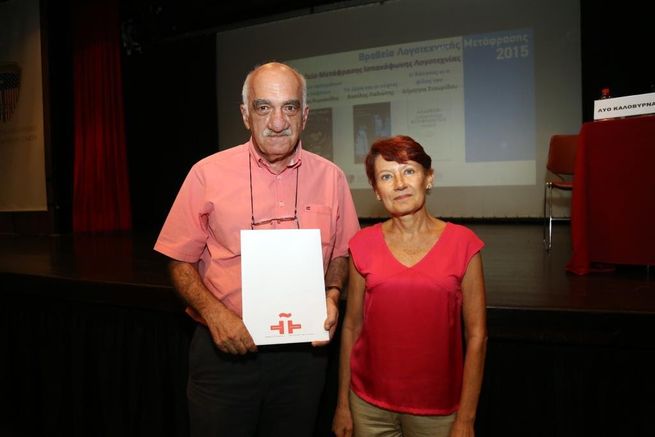
For his translation of the book *The Sound of Things Falling* by Juan Gabriel Vásquez.Learn more
-
Interviews
Interview with Dimitris Nollas in the Czech literary magazine PLAV
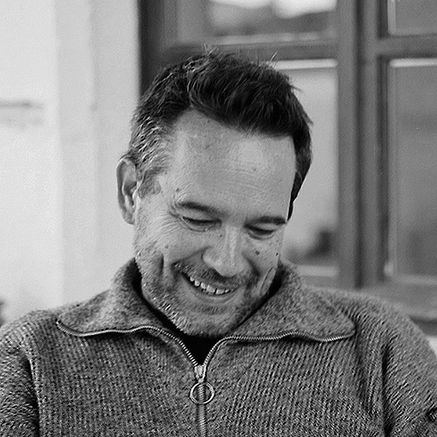
The latest issue of the Czech literary magazine PLAV features an interview with Dimitris Nollas by Nikol Soumelintisova, as well as an excerpt from the novella Shipwrecked Creatures.Learn more