News
News List, News Categories, Events
-
Interviews
Vangelis Raptopoulos: Interview in the newspaper Avgi
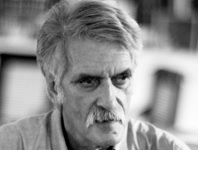
Poli Kremnioti | Avgi | Monday 29 April 2013 Much water has flowed under the bridge of history, from the December Uprising to the Indignant Movement. That thin thread, however, which links these historical cycles, can easily be traced in Vangelis Raptopoulos’s new book *The Most Hidden Wound* (published by Ikaros).In a charming "ping-pong" between memory and the present, between the frozen stillness of the past and the speed of the present, and with a lifelong love providing the impetus and dictating the whys and wherefores, the author runs through events and deeds, but above all he expresses his own anxiety about what we are experiencing today. And he calls a spade a spade, speaking out about the press, his colleagues, ideological and political practices, and the role they play in the particularly difficult times we are going through.From Peristeri, where he was born and raised, to the squares of 2011 and Manolada the other day, Vangelis Raptopoulos traverses this distance not as a mere observer but as a participant in the social game. After all, “in any case, the way out and the solution for me remains collective resistance,” he says today, and on every occasion. In his ‘Sto Kokkino’ programmes, in his books, in his teenage daughter… Interview with Polly Kremnioti: Is the wound of the civil war still as hidden as the title of your book suggests?I think it is; I realised this, after all, whilst writing the book, when I asked older people and they didn’t answer, but also in the time that has passed since its publication, during which people don’t want to hear about the civil war. I have presented the book from Veroia to Heraklion in Crete and from Kalamata to Thessaloniki, and everywhere I encounter the same reactions. Although the civil war is rhetorically brought up in public discourse, or the government is compared to the collaborationist government, Merkel to the Third Reich and Golden Dawn to the Nazis, the civil war remains a taboo. As I write in the book, the early years of the post-dictatorship era were spent on the recognition of the National Resistance, which was completed in the early years of PASOK. Since then, a few books on the civil war have been published, yet it remains a wound that society is still unable to come to terms with. Why do you think that is?Because the civil war brought to the surface the beast that lies hidden within each of us, and people do not want to remember that. Can this hidden wound of the civil war be healed today, at a time when Greek society faces a new, open wound?The great danger is not merely that it will not heal, but that we will slip back into the same cycle, into a new civil war, as a result of the unprecedented social injustice we are experiencing today, the widespread impunity, and the dysfunction of almost all institutions. All these problems have their roots in corresponding situations that arose from the civil war and were exacerbated by the post-civil war state with its persecutions, the ‘desert islands’, the certificates of social conduct, and everything else that Greek society endured for so many years.Why are you focusing on this historical period now? I grew up in Peristeri, just like the heroes of my novel, a neighbourhood where much blood was shed during the December events of ’44. I heard similar stories as a child from my father, and they left a lasting impression on me. I read voraciously and gathered material on the civil war, but the spark to write about it came from the Indignant protests in 2011. It is no coincidence that my novel begins with the transition to democracy and ends with the Indignants. The December events of ’44 are merely a flashback. I wanted my two middle-aged heroes, who are in love, to be convincing when they say they fear a new civil war. Only they can be so convincing because the novel describes the extent to which the civil war has become an obsession for them.Your two protagonists fall in love during the years of the post-dictatorship transition, and for the girl’s sake, the boy learns everything about the December events of ’44. His life is haunted by the idea of the civil war and by this great love, which, in contrast to the fast pace of our times, endures over time. It sounds strange...Even stranger is that this love begins in an era, the post-dictatorship period, when the sense of community was still strong, and lasts until the Indignants, when we witness the re-emergence of a sense of community. In the intervening period during which this love endures, our society has sunk into extreme individualism and privatisation. The novel seems to be saying that, if we do not want to end up in a blind, violent outburst, we must tackle the crisis not individually, but through collective processes.It is your most political book to date. Does the times demand it? And how does the writer engage with the times, each time? Since ‘The Invention of Reality’ and ‘Friends’, my books have turned increasingly and openly towards politics. Of course, I had some relevant background, if you consider books of mine such as ‘Does Simitis Listen to Mitropanos?’. But our times do not allow you to remain uninvolved. During the boom years, the dominant form of art was entertaining and decorative. Now we are witnessing a shift towards art that is comforting and uplifting. Yet we do not see this among artists and intellectuals.The majority of artists, like the majority of our society, have turned into ruthless conformists and opportunists. The few who have an opinion, and indeed a dissenting one, are not given a platform to speak. The neoliberal *Kathimerini* did not even review the book, whilst *To Vima tis Kyriakis*, which had made a show of slandering the Indignants in 2011, dismissed it summarily. Is our ideological opposition coincidental? I wish it were, but I don’t believe it. ‘Lifo’ was equally slanderous towards the Indignants. On a recent cover, it equated a Golden Dawn member with a rioter. How can such a publication endorse a novel that gives a voice to the rioters? And I say this because the penultimate chapter of *The Most Hidden Wound* is a young man’s account of the clashes with the riot police during the Indignant Movement era.Does this treatment bother you, given that you were one of the media establishment’s ‘favourite’ children? A favourite, but also often the target of criticism. In this particular case, however much it saddens me as a writer, it angers me as a citizen and confirms my worst political fears. The establishment neoliberal media, despite their rhetoric about democracy, are becoming increasingly authoritarian, increasingly repressive and censorious towards dissenting voices. Let’s not forget that the media, especially these days, play a leading role in manipulating and controlling the population. As Eco said, when you have the media, you don’t need tanks. Did your daughter read the book? How did she react? The historical and factual part of the book about the civil war discouraged her somewhat. Perhaps because her generation—Katerina is nearly 17—unlike mine, no longer has the slightest connection to those specific historical events. At her age, I was immersed in the literature of the civil war. But there is another reason: children of authors look for autobiographical elements in their parents’ works and identify the protagonist with the parent, especially when the narrative is in the first person. I think that of all my books, she enjoyed ‘The Incredible Story of Pappisa Ioanna’ the most, precisely because I didn’t live in the Middle Ages! What worries you about your child’s future? The paramilitary gang of Golden Dawn. What frightens me even more is that the 8% the neo-Nazis received in the elections means that there are broader sections of our society that have become more conservative and, to put it bluntly, have become fascist. The thugs who shot at the migrants in Manolada are Golden Dawn, whether they vote for them or not. The same goes for those who are not bothered by such atrocities. But this is the fruit of so many decades of privatisation and brainwashing by the mainstream media. Without the complacency and proverbial incompetence of the ruling parties, Golden Dawn would find no foothold for demagoguery nor any support within Greek society. The social insensitivity of neoliberal policies, the absurd and dangerous theory of the two extremes, as well as the eagerness with which some of my colleagues offer their services to the system – all these hatched the serpent’s egg. And without all this, perhaps people would not now be so numb, in this state of hypnosis. In any case, the way out and the solution for me remains collective resistance.info: "The Most Hidden Wound" by Vangelis Raptopoulos will be presented tomorrow at 7.30 pm at the Giorgos N. Vogiatzoglou Art Gallery (61-73 Eleftheriou Venizelou, Nea Ionia), at an event organised by Ikaros Publications and the Gallery in collaboration with radio station "105.3 Sto Kokkino". Speakers include Aris Hatzistefanou, Makis Milatos, Nikos Kourmoulis, Kostas Arvanitis and the author. Moderated by Fotini Lambridi. Readings by Mata Kastrisiou and Vangelis Zapaniotis.Learn more
-
In Greece via "Bombay"
Vagelis Hatzivassiliou | To Vima tis Kyriakis | Sunday 28 April 2013 The journey of a Greek man from Munich to Thessaloniki in the 1960s and the ghosts of the Civil War. Dimitris Nollas’s most extensive novel. When, in May 1963, Grigoris Lambrakis is killed under the wheels of the murderous tricycle driven by Emmanouilidis and Gotzamanis, Greece would already be fifteen years removed from the end of the Civil War. With the difference that, at this stage, the Civil War would be tending to become a spectre of everyday life, a pathology detectable at the most diverse levels of society. It is to such a society that Aristos Karabinis will return shortly after the assassination of Lambrakis; although he works in the Munich vegetable market, having long since abandoned his studies, he refuses to give up his artistic ambitions — to become a poet or a painter. Aristos will bring a woman from Munich to Thessaloniki who began working in German industry during the Nazi era and now suffers from paranoia. The woman will disappear as soon as they arrive in Greece, and the search for her will lead Aristos into the depths of the civil war past: a past that has completely taken over the present and staunchly opposes any different future. With Journey to Greece, Dimitris Nollas seems to be bringing an end to the respite hinted at in his short story collection from last year, entitled In the Place. Whereas there was a hint of the possibility of a community of basic solidarity in that collection, with his latest novel we return to the fragmented and deeply eroded sense of community found in his previous books. Aristos will encounter a veritable hell in his hometown: his family will attempt to get their hands on his estate in close collaboration with loan shark rings, n the police will threaten to revoke his passport unless he provides information about his left-wing friends in Munich, and n the woman he is searching for will mock all the ambitions he had the folly to harbour for his birthplace. And yet, when Karabinis reaches the heart of the Civil War through following Apostolos’s adventures, reality will not change. People will be slaughtered for an empty shirt, and the only thing that will prevail in the hearts of those who survive will be annihilation: political, social, moral and existential.In writing his most extensive and, consequently, his most accomplished novel, Nollas begins and concludes his story in motion: on the train travelling first from Munich to Thessaloniki and then from Thessaloniki to Munich. The rest of the plot will be confined to the parenthesis of the intervening period: Aristos’s journey to Greece will be nothing more than a temporary interlude, a situation that will intervene between two train journeys, ending with his return to Germany when all hope and resilience for Greece has been lost. With a tapestry of poetic allusions (from biblical and classical passages, folk songs by Seferis and Pentzikis, as well as Vasilis Vasilikos and Giorgos Skambardonis), Nollas sets up an emblematic scene that will shatter the novel’s historical timeline to reveal, through a morbidly seductive atmosphere, the timeless survival of opportunism, compromise and corruption. This is the descent into the sinful ‘Bombay’, a gloomy centre of entertainment, where everything that remains hidden for life in the upper world – the world of costumed dignity – will be revealed. ‘Bombay’ will define the boundaries of the Greek landscape and will be the sole guarantee of its continuity. An exceedingly bitter conclusion, but the purpose of literature is not to help us swallow the camel. All the more so when we are dealing with a writer of Nolla’s calibre.Learn more
-
Interviews
Dimitris Nollas: Evil never ends.
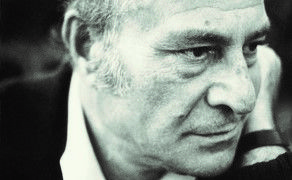
Interview with Dimitris Nollas by Yannis Baskozos for the newspaper To Vima, 7 April 2013 The novelist talks about his latest book, the terrifying Western modernisation and the ‘trinkets’ proposed by party gangs.A young man, a perpetual student in Germany, visits his hometown, Thessaloniki, shortly after the assassination of Lambrakis, accompanied by a ‘runaway’ girl, Chrysanthi. There he will find his roots but also his worst self, the product of the people who created modern Greece. The Journey to Greece (Ikaros Publications), Dimitris Nollas’s new novel and the second part of a trilogy, is a journey through history and a descent into the Evil that tyrannises us.His hero, Aristos, finds himself in a society full of informers, loan sharks, get-rich-quick types and relationships built on thin air, based on self-interest. He will also realise that his own identity – which he has renounced whilst abroad – consists of ‘money, names, words and phrases’ that bind him to places and people he would rather have forgotten. Rich in meaning, minimalist in expression – as always – Dimitris Nollas’s novel gives us the opportunity to discuss with him some of the issues it raises. Your protagonist’s search for identity raises a question: is there today an identity for the individual defined as a ‘modern Greek’? And what is it? ‘Yes, it exists, for those who claim it and are proud of it. Now, as for what constitutes it, we could start with the basics: faith and language.” In your novel, you return to the darker aspects of our history and, in particular, to the Civil War, which forms a central chapter of the book. You even pose the question: ‘Can anyone remain neutral in a civil conflict?’ What do you think about this? ‘Yes, this question is raised, though it is not the central one. Life’s dilemmas – and a civil conflict is one of the most extreme – can sometimes turn out to be a blessing. Because they remind us how tragically free we are, whilst ‘our fall is certain’. A fever can be cathartic, let alone a serious illness, which comes to reorient us towards values we have neglected, such as tolerance of others and forgiveness. And love, above all, which never fails.” Reading the story you tell, one senses that there is a fate, a destiny, an “evil” from which no one can escape. “Evil never ends and we cannot escape it except by choosing Good. It is an illusion that we can eradicate it, and usually its eradication is used as an excuse for the Ego to swell, suffocating the Universe. ‘Only when man ceaselessly battles Evil does he become human.’ You speak somewhere of the ‘multitude of material things’ that oppress our lives. Does the crisis perhaps offer a way out of this? ‘When we are incapable of building relationships with one another in any other way, the crisis, like war, always offers a way out.’ ‘Truth is what could happen’ or what has happened. Is truth ultimately something elusive? “It is an age-old truth of art: what is true is not only what happened, but also what might have happened. And what could be more captivating than the ceaseless search for truth?” If the hero, Aristos, were to return to the present day rather than 1963, what exactly would he see? “We shall see together, when the third part of this Journey to Greece is published.” You write somewhere that “the right-wingers have always envied the left-wingers”. What is the relationship between the Left and the Right today? Is it true, as they say, that this distinction has now been lost? “It is the envy born of the desire for power that maintains the distinction/identification between the Right and the Left remains so strong, and it is from this that the kinship between the party gangs, with all the salvationist trinkets that surround it, emerges and becomes glaringly obvious. And chilling.” The gamble on modernisation was lost in the 1960s, just as it was in the 1990s. Is it that Greek society is ultimately incapable of (Western) modernisation?Greek society has proven that it has the capacity to modernise; it knows the art of survival. We need only recall that island Greece, with the advent of steam in the 19th century, could have been wiped out. It took it about fifty years, but it weathered the storm. And as you can imagine, in this land, which has learnt to converse with the centuries, fifty years mean nothing. It is the scale and the haste of Western modernisation that terrify Greek society and hold it back.” “Writing and rewriting the same thing,” you write on the blank pages before your narrative begins. How do you situate this book in relation to your earlier works? “If the motto I quote at the beginning holds true – and it does – then all my books form a chain that hauls up and down the bucket of water that quenches my thirst. This particular book is a link in that chain. The last one, the penultimate one, whatever God provides.”Learn more
-
The psychological landscape of the place
Thanasis Alevras | Eleftherotypia | 22 March 2013 The night-time train journey at the start of Dimitris Nollas’s ‘Journey through Greece’, published by Ikaros, is from the outset the most accurate depiction, the most faithful representation of the journey, or rather the almost motionless journey, through the time of Greece, a journey that compels you constantly to think about it, that is, to think about yourself, in a ceaseless shift through deserted night-time stations and empty platforms, a journey through your own mental landscape, this opening ‘idea’ of Greece, as Elytis might say, which is, however, more historically, emotionally and spiritually charged and in direct contact with the soul of the place, a soul brimming with domestic and foreign migratory currents, the overgrown railway tracks, the carriages with their pale lights, at the hour when ‘the moon, low on the horizon and before it began to set, spread a luminous, fairy-tale veil and cast a silvery glow over creation in its darkest hour’, it is precisely this most intimate, mysterious moment that finds its absolute centre in the present-day psychological landscape of the place, so far removed from the lyrical fishing boats, the olive groves and the Aegean sunsets, which remain, as if misunderstood by such naivety, on glossy postcards and alongside exorbitantly priced, plastic fruit salads5 of a crude commercial exploitation of this ‘idea’, the Acropolis Express, precisely that, set off once more on the same journey, ‘writing and rewriting the same thing’, and the first thing one says, halfway through the journey, and what one has probably never ceased to ask, over and over again, in one’s life, ‘where are we?”, already carries the body of history as luggage and transports it into a contemplative constellation of personal stories, fragments in the vortex of a larger shared history that has seen itself anew in the same light and continues to carry the collective suitcase further, sweeping everyone and everything along in a rather uncertain and astonishing gamble of self-knowledge, in a country endowed with boundless light, light that is probably not that of the sun of justice, but that Cavafian light, that unknown which—who knows what new tyrannies it will reveal—is another zone of twilight into which we have entered to find ourselves and understand what has happened to us, a zone all too lucid, like a radiant Attic morning, where ‘everything around them shone with light, confirming the suspicion that they were heading towards the realm of madness, since darkness cannot transform into light so quickly, so hastily, without this having an effect on people’s souls’.Learn more