News
News List, News Categories, Events
-
Interviews
Christos Giannaras: ‘We are slaves to “sensationalism”, to emotions, to sensational headlines, to the propaganda of television “news”’.
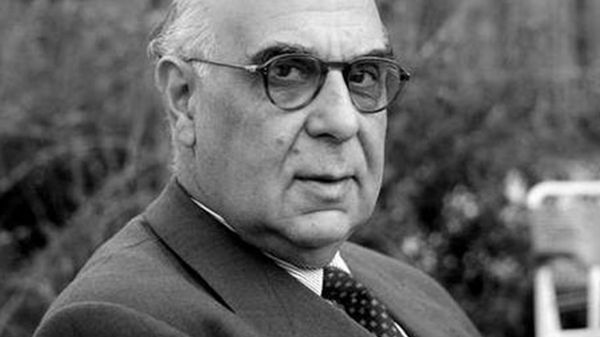
Christos Giannaras, on the occasion of the publication of his two most recent books, *Ontology of the Person* (Person-centred Ontology), and Here and Beyond (Attempts at Ontological Interpretation), spoke with journalist Yiannis Hatzigeorgiou in the magazine Philgood, published by the newspaper Phileleftheros in Cyprus.The interview was published on Sunday 12 February and you can read it below:The philosopher, academic, thinker and ―above all― one of the few remaining intellectuals in Greece continues, in one of his rare interviews, to remain incisive, bold, and at times ‘heretical’, boldly posing new questions for reflection in every answer he gives.The living room of the author and one of the most significant contemporary Greek thinkers, philosophers and professors of philosophy—noted for his public discourse and writings (at Panteion University, though he has taught philosophical terminology and methodology, political philosophy and cultural diplomacy at universities in Paris – he is, after all, a Doctor of Philosophy from the Faculty of Humanities at the Sorbonne University—as well as in Geneva, Lausanne, New York, Boston, Belgrade, etc.) is not filled with books, studies – let alone his own extensive bibliography – but, on the contrary, with framed photographs of his loved ones, mementos from his travels, and small but undoubtedly precious objects. It was very cold that Friday evening when we met, in the little alley where he lives and works, opposite the church of Agios Charalambos, in Nea Smyrni. ‘The old folks were right to build houses with small windows rather than large panes,’ he remarked at one point, smiling. He treated me to some mastic ouzo, poured himself a glass too – ‘it’s just the thing for this sort of weather,’ he said, and sat down in the armchair by the fireplace. He asked me a few things about Cyprus, mentioning specific names of politicians and arguing for or against his opinion of certain ones, concluding that ‘Cyprus pays for our empty faces’ and remained silent for a moment. ‘Savvopoulos was spot on with that line,’ he concluded. A few days ago, you wrote in an article: ‘In Greek society, nothing is renewed with the passing of time. Unbiased, fundamentally realistic thinking also rules out hope. We know the human quality of those who manage our lives, the effectiveness of the institutions and functions of public life, the laws of the jungle that prevail in our much-vaunted cultural ‘model’. All of this rules out hope.” So should we expect utter destruction in the future? And to what extent?What I personally conclude, Mr Hatzigeorgiou, from history and human experience, is that only a realistic awareness of reality can give rise to the surprise of a recovery. The hopes of the Greeks in 1821 were nil: the Ottoman Empire held overwhelming superiority, and the authoritative power of the ‘Holy Alliance’ in Europe ruled out any possibility of rebellion against the established balance of power. A similar overwhelming imbalance existed in the Greeks’ confrontation with the ‘Axis Powers’ in 1940. In both cases, the surprise stemmed from the Greeks’ consistent and utter despair: they knew what they risked losing, and it was unthinkable to them that they should lose it. Today we cling to ‘optimism’ – we dare not despair, because we have nothing of value to defend. What is most valuable to us today are our ‘individual rights’ and the maximisation of our consumer freedom. Yet we can, more or less, retain these even whilst enslaved – to the Turks or to the ‘Markets’.It seems that this ‘crisis’ is not merely circumstantial or temporary; many, countless signs point rather to an unstoppable momentum towards the historical end of Hellenism. What you write sounds terrifying – your reference to an ‘end’. As if every trace of hope, of optimism for the future, has been lost… Perhaps the reference to a historical end seems like an exaggeration to you. But consider this: is there today any element, any quality, that Hellenism bestows upon the Greek (whether from mainland Greece, Cyprus or the diaspora) which is so precious that without it, their life would no longer have meaning? In other words, an element for which they are prepared to die, so as not to lose it? When Cypriot politicians today haggle over terms that will make the Turkish minority and the invaders the arbiters of Greek life, or when Greek politicians hand their country over to humiliating trusteeship, that is, to a complete surrender of national independence, sovereignty and self-determination, does it shock you that we speak of the ‘historic end’ of Hellenism?Speaking of ‘Cypriot politicians haggling over terms that will make the Turkish minority and the invaders the arbiters of Greek life’, are you also referring to the ‘end of Cypriot Hellenism’ which some have been emphasising almost from the outset of the latest – critical – talks on the Cyprus issue? I am not referring to individuals, I am referring to the fact of the ‘negotiations’. To the unthinkable absurdity of a supposedly independent state, a member of the EU, with a democratically elected leadership, is haggling over its own self-destruction, its submission to the outrageous demands of a domestic minority and to the blackmail of brutal occupiers condemned by all international organisations. Hellenism has every right on its side and, unfortunately, elects leaders of pygmy stature to defend those rights. What, then, must be done, in general, to change the current situation – if it is to change at all? Must sweeping, structural changes take place? Beyond the state and the citizens? Given the fatal decline of Hellenism today, it is utopian to discuss what ‘must’ be done. Even if we were to agree on certain ‘musts’ (which seems impossible), who will then enforce them? The comical little men who govern us? The courts? The police? The citizens, however, do not bear the main responsibility for what is happening today, Mr Giannaras? ‘The most nightmarish of all afflictions is the complete numbing of Greek society’s reflexes,’ you write… Which citizens are we talking about who bear the responsibility for this disgrace and destruction? For the last 43 years – since 1974 – educational policy in Greece and Cyprus has systematically engineered the linguistic and intellectual incapacity of the masses (it is well known that people without language are people without thought), and the complete distortion of their historical consciousness. And the infectious influence of radio and television complements and completes their impoverishment. For only voters who have lost their reason, their judgement and their dignity are capable of sustaining such a debased political class as that which represents Hellenism, both in mainland Greece and Cyprus, over the last few decades – with the unforgettable exception, throughout Greece, of Tassos Papadopoulos. If the Greek people bear any responsibility for the ruin and disgrace in which they are now mired, that responsibility lies solely in the fact that they did not revolt. But even the possibility of revolt has been discredited and ridiculed by the nihilism and amorality of the so-called ‘left-wing progressive and modernising forces’.What do you mean when you refer to ‘revolution’ and ‘uprising’? Armed revolutions, as you understand, are now impossible. I mean, for the key institutions of collective life to react: the judicial authorities, university senates, bar associations, teachers in every school, cultural institutions and associations; for citizens to take to the streets and demonstrate their faith in freedom and dignity. It is unthinkable that people’s humanity should be put at risk and haggled over by politicians whom no one would ever entrust with running even a newsstand.Do the Greeks ‘suffer’ from immaturity, an obsession with the past, a superficial approach to handling difficult situations and ‘spoilt behaviour’, in comparison with other peoples, as they are ‘accused’ of? Has the ‘glorious past’ ultimately done a disservice to the current inhabitants of Greece?My personal opinion is that we modern Greeks suffer only or mainly from pretentiousness, just like all those newly liberated Third Worlders who are dazzled by beads and trinkets. We neither understand nor care about the cultural contribution that Hellenism has made and continues to make to humanity – we are only interested in the tacky kitsch produced by Elladex (Greek and Cypriot) for tourists. Ask an MP from AKEL or ‘New Democracy’ to answer this: why is the Parthenon a more important monument than the Eiffel Tower or the Empire State Building? When, from the generation of Evagoras Pallikarides, Karaolis and Dimitriou, Grigoris Afxentiou, or the generation of Seferis, Elytis, Tsarouchis and Manos Hadjidakis, we are separated by a mere few decades, to what factors can we attribute the rapid decline of Hellenism into today’s nightmare? It is abundantly clear that, in an era where technological progress has created unprecedented opportunities for mass manipulation, these opportunities have been exploited, primarily in Greece and Cyprus, by people of tragically low calibre.What connection do you think there is between the Greeks of Greece and the Greeks of Cyprus? Many people observe a different mindset, different ways of reasoning and different approaches to historical adversity, different points of reference and ways of thinking… Your question raises a very interesting issue: from my personal experience, my impressions and my reading, I have formed the opinion (without claiming that it is the correct one) that there was a crucial difference, up until the mid-20th century, between Hellenism in mainland Greece and Hellenism ‘in the periphery’, as they were called at the time – the Hellenism of Egypt, Asia Minor, Pontus, Crimea and the Danubian regions. Hellenism outside mainland Greece tended to preserve a sense of the superiority of Hellenic identity and no sense of inferiority vis-à-vis Western Europeans. This sense allowed the Greeks to adopt the achievements of Western modernity to serve their own needs, not to avoid lagging behind the Europeans in modernisation. Thus, the adoption of Western elements was assimilative rather than imitative; the critical adoption of Western customs and institutions did not in the slightest diminish the Greekness of the Greeks – they chose, they did not mimic. In mainland Greece, unfortunately, due to Bavarian rule following Kapodistrias, and the inferiority complex (coupled with snobbery) cultivated by the quisling collaborators of the era, followers of Korais, a servile inferiority complex and a lifeless imitation of the West prevailed, accompanied by a deep contempt for anything Greek… As this is a crucial issue, allow me to refer to a relevant book I have written, entitled: ‘Europe was born of the Schism’, published by ‘Ikaros’.Cypriot Hellenism, I believe, embodied the same sense of superiority over the West, right up until the island was declared an independent (?) state. The active Greek self-awareness of the Cypriots gave birth to Hellenism’s last great breath: the EOKA liberation struggle. I cannot forget, as a child at the time, the iconic figure of Polykarpos Ioannides, who wore, all his life, traditional Cypriot ‘alantza’ costumes, thereby undermining the English ‘cashmere’.This conscious Greek identity seems to have been lost for good with Cyprus’s ‘independence’. Cypriot society has changed rapidly and relentlessly into a sad imitation of Greek decline and disgrace. Why do you question Cyprus’s independence? And, furthermore, what do you mean when you say that ‘Cypriot society has changed rapidly and relentlessly into a sad imitation of Greek decline and disgrace’? In a single interview, it is not possible to present a documented and therefore convincing account of a social reality. I dare to make allusions that refer to the attestations of shared experience. It is clear to any rational person that the Greek Cypriot community has established a state, yet its state is not independent; it is a captive of the power of an international terrorist, Turkey, which provocatively denies the very basics of logic and international law, rewarded by the ‘enlightened and illustrious nations of the West’, our own, those pretentious idols. As for the sad Cypriot imitation of Greek decline and disgrace, it is up to each individual to recognise the parallel. At least in terms of intelligence and dignity.In many of your writings, you speak of ‘Greeks’ rather than ‘Greeks from Greece’. Why? Yes, because the majority of the population, simply and coincidentally, inhabits Greek soil, with the mindset and behaviour of a globalised consumer. A Greek under the age of 50 today does not understand Papadiamantis or Roidis; he does not know what ‘I fight for the victorious General’ means. When one hears the ‘Greek’ spoken by George Papandreou, Costas Simitis, Dimitris Christofias and Nicos Anastasiades, one is convinced that a history of three and a half thousand years of Hellenism is ending in disgrace.Isn’t what you say about these particular politicians rather harsh – and perhaps unfair? That, dear Mr Hatzigeorgiou, let us leave to our readers to judge. I judge the ‘Greekness’ of our politicians as a teacher, not as a supporter or opponent. Has realism always been the compass of your thinking, writing and teaching? Have you never resorted to… ‘magic’?I think we have become addicted to operating in a consumerist manner, and our consumerist naivety is fed mainly by ‘impressions’. And even the most insignificant or wretched product can lay claim to titles of quality thanks to ‘packaging’ that makes a good impression. Even someone who is blatantly delusional or utterly corrupt can be elected prime minister or president of the Republic, if they spend a fortune on their advertising and succeed in ‘brainwashing’ the masses. With this ‘logic’, we label as ‘optimism’ or ‘pessimism’, ‘realism’ or ‘utopia’, whatever the well-oiled mechanisms of impression-making would have us believe. We are slaves to ‘effects’, to emotions, to sensational headlines, to the propaganda of television ‘news’.I wonder: over all these years, have you ever been ‘inconsistent’ in your views, exercising the right of a person to reconsider what they once believed, given that the surrounding environment and circumstances change?Allow me to observe that a person’s ‘views’—every person’s—their ‘opinions’ and ‘beliefs’ are, as a rule, individual choices, preferences and inclinations that are, at their core, arbitrary in nature. In today’s cultural ‘paradigm’, this arbitrariness is enshrined as an individual ‘right’ – the conventions that enshrine individual rights have the authoritative force of laws that are ‘binding on all’. The basis of our ‘civilisation’, in other words, is the enshrinement of ‘freedom’ as an individual right of choice, a legal shield for the unchecked indulgence of impulses, appetites and interests. This is why the protection of rights, when it establishes the terms of collectivity, equates civilisation with the barbarism of individualism, not with the exercise of freedom that is the society of relationships. Consequently, whatever is an individual choice (views, opinions, beliefs) we can easily change. However, whatever is the fruit of the endeavour of self-transcendence—that is, freedom from the ‘self’ in order to attain the shared truth of the relationship (of faith and trust, of love and self-giving)—does not change. Its expressive form may mature, but the intended goal remains unchanged. Many describe you as a ‘philosopher’ – and ‘heretical’. Certainly one of the very few in Greece who continue to articulate a discourse. What do such labels mean to you? In the Greek tradition, we attribute labels that embody moderation and modesty. A ‘philosopher’ is not the wise man, the one who possesses wisdom; he is the ‘friend’ of wisdom, the lover of knowledge, the one who loves the truth and seeks it. The title of ‘philosopher’, therefore, is an honour and a compliment. The meaning of the word ‘heretic’ has today strayed far from the original meaning the Greeks attributed to it. Today, ‘heresy’ refers to the notion of truth as ideology, that is, as an individual choice of definitively (or even infallibly) formulated ‘beliefs’. The ‘heretic’ questions or even rejects the codes of certainty of ideology; they have chosen individual ‘beliefs’ that do not align with the ‘principles’ and certainties that are obligatory for the ‘faithful’ followers of the ideology. Thus, the word ‘heretic’ has today taken on a rather positive connotation: it refers to the person who questions the ‘infallible’ dogmas of ideologies, the rigid, mandatory ‘beliefs’. It refers to a person who seeks empirical access to the truth. These, then, are roughly what the terms ‘philosopher’ and ‘heretic’ mean to me. Much has been written and said about your views in relation to religion. In simple terms: what does Orthodoxy mean to you today? Orthodoxy has come to be the name we give to the Greek version of the Christian Church, the Greek experience and witness of the ecclesiastical reality. The Church is not just another religion, even if it is ‘better’ than the others. It is a reality, a way, a means of revealing the truth – and ‘truth’ is existence free from time, space, decay and death. The Greeks had called it the ‘church of the demos’, not merely a general assembly of citizens, but the act, the work of ‘poiein’ the political: for citizens to realise and reveal the ‘polis’, that is, another way of being and coexisting that aims no longer merely at necessity (the society of need) but at truth (the society of the true, at harmony according to reason, at civility). It was with this very same Greek meaning that Christians adopted the word ‘ekklesia’: a gathering that realises and reveals the true ‘way’ of existence and coexistence, freedom from the necessities of self-centred impulses – freedom of erotic self-transcendence and self-offering.To conclude, a question – a personal query of mine – to a man like you: what is the meaning of life, Mr Giannaras? The meaning of life cannot, fortunately, be found in a formula, in a ‘should’. Can we ever experience love by following recipes, advice or exhortations? The meaning of life, just like love, is bestowed as an antidote to the exercise of realising freedom from the ‘self’. That is why, within a cultural ‘paradigm’ founded on the absolute priority of shielding the ‘self’, both the ‘meaning’ of life and love are achievements reserved for only a few stubborn souls. Photo: Penelope MasouriLearn more
-
A poem marking the anniversary of the death of Zisimos Lorentzatos.
On this day in 2004, the writer, author and literary critic Zisimos Lorentzatos passed away. He was a man of a particularly low profile, yet his personality left a profound intellectual mark on Greek literature, far transcending his own era. To mark today’s anniversary of his death, we read one of his few rhyming poems, ‘To Mr Voria’, which is included in the book Poems (Ikaros, 2006), which contains the collections ‘Mikra Syrtis’, ‘Alphabetari’ and ‘Collection’. OF MR NORTH Rolling the wavesLike the possessedThey turn foamingThe winds of the north wind All day long it did not ceaseThe sea’s furyWhich blew a line straight to your bow But the helm remainedIn the helmsman’s handsOn the swiftest of pathsAmidst the terror All you see around you is nothing but driftwood and the blackness of death’s hound in the hold, as the waves, like possessed spirits, swirl foaming in the winds of the north wind. * * *Mother night, day I stay, Waiting for the drowned man, With a bell and a trisagio, In the sea’s murmur, On the rocky shore, on the sand, In the seaweed, in the seaweed, I wait for him day and night, Wrapped in the nets, Washed by the sea breeze, Of thecaressed by the waves The baby he found today His eternal birth. A few words about Zissimos Lorentzatos: Zisimos Lorentzatos, son of the philologist and academic Panagiotis Lorentzatos, was born in Athens on 25 June 1915. After completing his secondary education, he attended courses at the Faculties of Law and Philosophy, and subsequently devoted himself to critical study, translation and poetry.His first foray into literature came in 1936 with the study ‘Edgar Poe: The Exceptions; The Philosophy of Composition; The Poetic Principle’, which he later disavowed, and he established himself with his book ‘Essay I’, on the poetic work of Dionysios Solomos.He also published studies on the work of Alexandros Papadiamantis, Giorgos Seferis, C.P. Cavafy, Angelos Sikelianos, Dimitris Hatzis and others. In the field of translation, he worked on authors such as Ezra Pound, André Gide and William Blake. In 1988, he was awarded the First State Prize for Criticism and Essays, which he declined, whilst in 2001 he was honoured with the Ourani Foundation Prize for his entire body of work.He passed away on 3 February 2004. You can read more about Zisimos Lorentzatos’s books here: http://ikarosbooks.gr/authors/lorentzatosLearn more
-
Interviews
Anthony Marra: ‘I am a disillusioned American’.
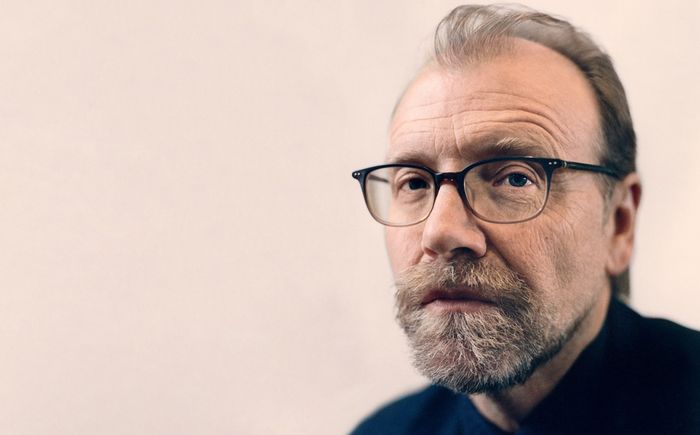
Anthony Marra gave an extremely interesting interview to Lena Papadimitriou for BHMAgazino magazine, on the occasion of the publication of his book The Tsar of Love and Children (translated by Achilleas Kyriakidis). A tsar is making his mark in Trump’s America. The novelist of the youngest American generation, obsessed with Russian and Chechen history, returns with his new book and explains to BHMAgazino why history is the most inventive storyteller.The interview was published on Sunday 29 January and you can read it below: Following the multi-award-winning Constellation of Vital Phenomena, perhaps the most significant prose writer of the newest American generation, who already has many fans around the world (including Sarah Jessica Parker), returns with the book *The Tsar of Love and Children* (published by Ikaros), in a masterful translation by Achilleas Kyriakidis. Without hiding his obsession with history, the 32-year-old Anthony Mara creates a sweeping, episodic novel or a collection of nine short stories that read as a single novel (whichever way you choose to interpret it), set against the backdrop of the Soviet Union, before and after its dissolution. Mara gathers snapshots of life, with protagonists whom historiography often attempts to erase: ordinary people. The first story, for example, is set in 1937, at the height of Stalin’s purges, featuring the painter-retoucher Roman Markin, who ‘erases’ faces with an airbrush on behalf of the propaganda department. In conversation with BHMAgazino, the American author who insists on delving into the Russian and Chechen universe speaks about Putin’s Russia, Trump’s America, and why history is the most inventive storyteller.It is more than obvious that you have an obsessive relationship with history. So, what are you, ultimately, a storyteller or a history nerd? ‘A wonderful question, but I don’t think it lends itself to a black-and-white answer. Above all, I’m a history nerd, and there is no more inventive storyteller than History itself.’ The US was largely unaware of Chechnya’s existence, at least until the Boston Marathon bombings in 2013. Your own interest in the region began as soon as you arrived to study in St Petersburg, just a few days after the murder of the journalist Anna Politkovskaya, who had exposed human rights abuses by Russian troops in Chechnya. Truly, were you not afraid to tackle such a sensitive international issue through fiction? ‘Literature has a duty to engage with complex and controversial issues. For readers who are fortunate enough to live in countries that enjoy peace, a novel is perhaps the closest they will ever get to places like Chechnya, Syria or Iraq. Readers are willing to travel anywhere in literature, provided the story is good enough. Asking readers to feel compassion for the victims of these conflicts and to identify with them seems even more crucial today, as Europe faces the refugee crisis. In a broader sense, I have focused my attention more on those about whom we learn the least: ordinary citizens. Although The Constellation of Vital Phenomena delves into the history of that specific region, the story of the war’s impact on ordinary people could, geographically speaking, have been set anywhere.”Did you discover anything paradoxical during your research into Russian and Chechen history? ‘Many paradoxes! The other day I was reading Arkady Ostrovsky’s book *The Invention of Russia: The Journey from Gorbachev’s Freedom to Putin’s War*. He writes that in the 1930s, workers in British shipyards found messages written in charcoal on imported timber. They came from prisoners in the Siberian gulags; these messages on the logs they were cutting were their only means of communication with the outside world. Ostrovsky devotes no more than a line or two to this in his book, yet an entire novel could spring from such a small moment. ‘Given that you have researched Russia and the Russian mindset in depth... how would you actually describe Putin’s Russia? Does it have any hope of becoming great again? ‘When I started writing about Russia nine years ago, I still harboured some hopes. The last decade has largely managed to extinguish them. The democratic reforms of the 1990s have been dismantled under the Putin regime. The rule of law no longer functions. Putin has turned the presidency into his own personal prison cell; he cannot escape, for fear of reprisals. I suspect he will rule Russia for the rest of his life. However, states are greater than their politicians. The same country that produced Putin has also produced ‘Pussy Riot’. Putin’s Russia will never be great, but the Russia of ‘Pussy Riot’ already is.’ How popular are you in Russia today? ‘My books have not been published in Russia, which is hardly surprising, given that they do not paint a particularly flattering picture of life under Putin’s regime. I have, of course, given lectures at a few universities and interviews to opposition newspapers, but I suspect that outside intellectual circles I am unknown.”The stories in your latest book—so distinct yet so inextricably linked—are set against the backdrop of the turbulent history of the Soviet Union before and after its dissolution. And yet, the reader gets the sense that your central canvas is human stories. Would you say that, for the most part, you write about those whom historiography struggles to erase? ‘Undoubtedly, that’s a lovely way of putting it. And, yes, that has been the aim of my work so far: to reconstruct those scattered stories that History has forgotten, ignored or erased.” Would you say that *The Tsar of Love and the Child* is a political book? ‘When you write about highly charged moments in history, you are not really in a position to avoid politics, so, in that sense, yes, it is. And both *The Constellation of Vital Phenomena* and *The Tsar of Love and the Child* focus on characters who are far from the sources of political power but close to its effects. Both books explore the ways in which politics can permeate and corrupt the personal sphere. Both are set in parts of the world where the price paid by those who oppose central authority is far higher than that borne by those who do the same in most Western countries. Neither, however, has its own political agenda.’ From the very first page of ‘The Tsar’, one gets a sense of science fiction. I think the final pages confirm this... ‘We tend to think of dystopias and apocalyptic future universes exclusively as products of science fiction. “Star Wars”, “The Hunger Games”, “Mad Max”, etc. And yet, for someone living in Grozny in 1999, the apocalypse has already arrived. For someone in Moscow in 1937, dystopia is everywhere. We don’t need to look to the stars or to the future. For many people, it is already here.’ Correct me if I’m wrong, but it is said that your involvement with the Russian world has now come to an end and that you are currently writing a novel set in Los Angeles and Italy. Would you really consider writing something about Greece? With the unprecedented economic crisis that nearly destabilised the whole of Europe and the waves of refugees, plenty of history is being written here. I assure you there are countless, semi-educated ordinary people... ‘One of the reasons I became involved with Chechnya was the absence of novels examining its modern history in the English language. This is not the case with Greece. You are right, there is no chapter in modern European history more dramatic and more urgent than that of Greece. However, Greece can boast a vibrant literary tradition, which is already producing the texts that will breathe life and meaning into this entire chapter of history. However, if anyone is willing to host me in your country, I would be truly delighted to begin my research.The book is, among other things, prophetic. I would remind you that one of your characters, Sergei, reads Donald Trump’s autobiography when he begins intensive English lessons. ‘It was purely coincidental. I wrote that particular passage long before Trump announced his presidential bid and I really had no idea what fate had in store for us. In that story, I tried to imagine what the ideal model would be for an aspiring hustler. In the category of ‘flashy, tasteless, gilded ass-kissing artists’, Donald Trump is king.Do you think there is a category of Americans ready to believe anything, even if it defies their common sense? Apart, of course, from the Tom Hanks fans you mention in the book... ‘Undoubtedly, I would put Donald Trump’s ardent fans at the top of the list. Anyone who bought one of his ridiculous red caps. It is disheartening how prone to delusion—however unrealistic, absurd and cruel it may be—many of my fellow countrymen prove to be. I grew up in Washington DC and the pizzeria in my neighbourhood is a place called ‘Comet Ping Pong’. My closest childhood friend was working there when, a few weeks ago, a madman turned up with an automatic weapon and opened fire (fortunately, without anyone being injured). What was the gunman’s motive? He had read a ‘fake news’ story claiming that Hillary Clinton was coordinating a satanic, cannibalistic child prostitution ring from inside that pizzeria (note: with ‘clients’ including senior members of her campaign team). And as if that weren’t terrifying enough, the national security adviser to the newly elected US President (note: Michael Flynn) had tweeted this conspiracy theory in recent months (note: according to which young children are being prostituted to Democrats). Now, the inmates are running the asylum.”What sort of American are you? “At the moment, a disheartened American. I have never been prouder to be an American than when Obama was elected, nor more ashamed than when Trump was elected. Obama’s track record, his belief in the possibility of hope and change, was confirmation that the hope I had for America was well-founded. The prejudice and stupidity of Donald Trump and all those he represents were nothing but the sad confirmation that my fear for America was also well-founded.’ In the introduction to her latest book, *Iron Curtain* , the naturalised Polish-American Anne Applebaum writes: ‘There have been regimes that sought absolute control not only over the organs of the state but over human nature itself.’ She concludes that we should today study in depth the ways in which totalitarianism operated in the past, since ‘we cannot be certain that mobile phones, the internet and satellite photographs will not end up as tools of control’. Do you agree? ‘The fundamental dangers of the “surveillance state”, which people like Edward Snowden have brought to light, were always projected into the future. Whatever one may hold against them, both George W. Bush and Barack Obama operated within the framework of democratic, liberal rules. There was never any great danger that either of them would engage in widespread spying or the systematic silencing of opposing voices. The real danger has always been the possibility that these powerful and privacy-invading technologies might fall into the hands of a completely unaccountable president, with no respect for or faith in the rule of law and institutions. For the past fifteen years, this possibility has been placed beyond the visible horizon, in the distant future. The problem with the future is that it always becomes the present.The rise of the far right in Europe and the rest of the world resembles a nightmarish echo of the 1930s. How, indeed, do you explain humanity’s almost inherent inability to learn from history? “It is a reasonable question that everyone is struggling to answer. One fairly strong argument I have read is that the last generation capable of recalling memories from the 1930s has passed away. In other words, there is no longer a living memory of where far-right, nationalist, populist demagoguery can lead. It is likely that those fortunate enough to have lived through the last seventy years of peace regard this as the status quo rather than an anomaly in European history, a fact that explains their tendency to act with less prudence. As for our inability to learn from history, I would say that we are capable of learning only what we are willing to hear.’ Ultimately, is *The Tsar of Love and Children* exclusively the product of historical research and imagination? Weren’t you tempted to weave in autobiographical elements? “Of course. There are quite a few small, autobiographical references. For example, the comments about Jim Carrey from ‘The Grozny Travel Agency’, I picked those up from a conversation I had with a Carrey fan in Chechnya. But also, quite a few of Alexei’s descriptions and experiences are my own genuine experiences, from the time I lived in Russia myself. As for my own doomed childhood dream of becoming an astronaut, it is the coda (ed.: the closing section in music) that brings ‘The Tsar’ to a close. Finally, the best lines in the book were first tried out in conversations between me and my parents or my girlfriend.” Could you describe a typical day for you? “I once heard a writer say that he only works when he’s inspired and makes sure he’s inspired from 9.00 to 5.00. That’s more or less what a typical day in my life looks like.”Learn more
-
Upcoming Releases | January – June 2017
Ikaros Publications has a number of significant books due to be released over the coming months. Read on for more information about the titles we plan to publish by June 2017: GREEK FICTIONEftychia Giannaki: Halcyon DaysFollowing the warm reception and excellent reviews received by Eftychia Giannaki’s first crime novel, In the Back Seat, the author returns with the second instalment of her Athens Trilogy, starring Inspector Haris Kokkinos. Kyriakos Margaritis: KronakaThe word Kronaka refers to the seminal 15th-century work by the Cypriot chronicler Leontios Machairas and, of course, means Chronicle.With this eponymous work, Kyriakos Margaritis attempts a fictional reconstruction of the chronicle as a narrative form in the 21st century.Using methods of criminal investigation, the hero-narrator traverses the eras of human adventure and gathers evidence from ancient myths, childhood, world literature, the 1974 invasion, Auschwitz, and everywhere else, seeking an alternative reading of History and an ontological vindication for the tragic events that have marked it.Kronaka, ultimately, narrates this interpretation as an adventure and as a gesture seeking unity amidst fragmentation and difference. And it is within this framework that Hermes converses with the Joker, Palamidis with Philip Marlowe, Charles Bukowski with Saint John of the Ladder, and Friedrich Nietzsche with the Virgin Mary and the madmen for Christ’s sake. Dimitris Nollas: The Garden in FlamesThis novel by Dimitris Nollas completes the trilogy entitled ‘Difficult Times’, which includes the books The Journey to Greece (2014 State Novel Prize) and Marbles in the Middle.George Seferis: Six Nights on the AcropolisIkaros is set to reissue George Seferis’s seminal work Six Nights on the Acropolis, which was first published in 1974, three years after his death, edited by G. P. Savvidis, based on a manuscript and two typescripts found in the poet’s archive. GREEK POETRYYannis Antiochos: DissolutionFollowing the books Inhalations and Exhalations, Yannis Antiochos returns with his new collection of poetry entitled Dissolution. George Seferis: Poems with Pictures for Young ChildrenIkaros is set to reissue Giorgos Seferis’s classic book Poems with Pictures for Young Children.The book, first published in 1992, contains poems modelled on the English ‘limerick’, written by George Seferis for his great-granddaughter Anna. It also includes the opera Merlin the Magician and two translations from Edward Lear’s ‘The Book of Nonsense’ and from Lewis Carroll’s ‘Alice’s Adventures in Wonderland’, dedicated to Anna’s daughter, Daphne. Kyriakos Charalambidis: Sun and Moon, Another WayAward-winning poet Kyriakos Charalambidis begins his collaboration with Ikaros by publishing his new collection of poetry. A comprehensive edition of all his previous collections will follow in 2018. ESSAY/TESTIMONY Athanasios Alexandridis: Parents’ School: Childhood LovesThe book Childhood Loves is the first in the ‘Parents’ School’ series by psychiatrist and psychoanalyst Athanasios Alexandridis. The material in this book, as well as in those to follow, was compiled from transcribed evening discussions and lectures with the parents of pupils at the Argyris-Laios Primary School.The strong need of parents to express and discuss a range of issues relating to their children’s development, intra-family relationships, and the children’s connection to school and the social environment forms the backdrop to these meetings.The family is a constantly changing space of potential conflict, both between the forces of love and those of aggression within each of its members, and between the family as a whole and the external reality. It is through this lens that discussions take place; it is through this psychodynamic psychoanalytic perspective that answers are defined. Panourgias St. Panourgias: Free Greeks General Panourgias (1917–2008) served in the 2nd Staff Office of the General Staff from 1966 and was present at the coup d’état of 21 April 1967. He opposed the regime from the outset, was arrested in June 1969, remained in solitary confinement and was subsequently exiled. He was a member of the steering committee of the organisation known as the ‘Free Greeks’, responsible for political contacts. In this book, he describes in detail the events as he experienced them from his position both before and after the junta. The narrative begins in 1964, with emphasis on the early months of 1967 and, of course, the coup, whilst also providing an extensive account of the royal counter-coup. The book concludes with a detailed chapter on the Free Greeks. The author has drawn on an extensive bibliography, as well as material from his personal archive. The publication includes a list of the members of the Free Greeks, an appendix with interesting illustrative material and rare documents, and an introduction by the historian Tassos Sakellaropoulos. Takis S. Pappas: On a Tightrope – National Crises and Political Acrobatics from Trikoupis to Tsipras Following the success of Populism and Crisis in Greece (Ikaros 2015), Takis Pappas continues, in his new book, to delve into the historical past to investigate the causes and consequences of earlier crises that have shaken the country. Starting from the era of Trikoupis and extending to the current government, he identifies four long-term cycles of crisis, the latest being the one we are experiencing today. Given that each of the three previous crises lasted 15 years on average, Pappas seeks first to explain the causes that led to the major historical crises of the past, then society’s reactions in the midst of such crises, and, finally, the ways in which the country emerges from crises and returns to normality. In the book’s final chapter, the author draws on the lessons of accumulated historical experience to envisage the future. He argues that, in all the country’s previous historical crises, the most decisive factor in their resolution was political leadership, albeit with specific characteristics analysed in the book. The question arises: Is there such leadership that gives us reason to be optimistic that a way out of the current crisis is possible, and indeed soon? Efi Sapouna-Sakellaraki: When Time Spoke Efi Sapouna-Sakellaraki’s book is a special retrospective of her life with her husband, Yannis Sakellaraki. The two of them, leading archaeologists, shared scientific challenges, made significant discoveries, and met with close friends who changed their lives. The author recounts this journey as if revealing the secrets of the most extraordinary excavation. Apostolos Doxiadis: Telling and retelling: literature, the enigmatic Patroklos Giatras, and the transformations of the Deserted Country. Apostolos Doxiadis’s lecture at the Cambridge Festival of Ideas (Festival of Ideas) in Cambridge in 2016 focused on Nasos Vagenas’s short story ‘Patroclus Giatras’ and the Greek translations of ‘The Waste Land’.In addition to the lecture and the short story, the publication includes T. S. Eliot’s The Waste Land in a translation by George Seferis, Ilias Lagios’s The Waste Land, A. T. Elie’s The Ready Land, and an afterword by Giorgos Giatromanolakis entitled Writers: Agents of the Mind or a Host of Enthusiasts. Together, these form a section that will aid in a better understanding of the theme of transformations and imitations in literature. FOREIGN PROSE Vicente Alfonso: Huesos de San Lorenzo (The Greek title will be announced shortly)Translation: Maria PalaiologouSurprised by the seriousness of the charges against his patient Remo Ayala, psychologist Alberto Albores agrees to join a team that will defend the young man’s innocence. As time goes by, reality reveals more and more disturbing facts about Remo’s past, and the psychologist is called upon to decide whether his monologues are mere fantasies or confessions of heinous crimes...How many lies and truths are there in the stories Remo tells his psychologist? Under what circumstances did Remo’s mother die, and why are some people trying to cover her tracks? Is it possible for a man to be murdered in a bar without anyone being able to confirm the identity of the perpetrator? Was it Remo, or perhaps his twin brother? The investigations to solve these mysteries will piece together the history of the Ayala family and show that every reality can have infinite interpretations. Neil Gaiman: Neverwhere (Neverwhere)Translation: Maria AngelidouBeneath the streets of London, as beneath every great city, lies an unknown and invisible world, full of strange creatures.Richard leads an ordinary life that will change forever when he helps a girl bleeding on the pavement. His act of kindness plunges him into a world he never imagined existed until now: he slips through the cracks of reality and lands in an underground London where spies lurk behind the stairs, and shadowy figures wait on the other side of the gate...After reading Neil Gaiman’s Neverwhere, no one will pass through the dark places of the modern world with the same — childlike — confidence. Enrique Vila-Matas: In Kassel, there is no logicTranslation: Nanna PapanikolaouA strange phone call interrupts a writer’s daily routine. The mysterious female voice on the other end of the line tells him that the McGuffins wish to invite him to dinner to reveal the solution to the mystery of the universe. He soon discovers that this is an invitation to take part in Documenta in Kassel, the legendary contemporary art exhibition. The writer’s task will be to sit and write every morning in a Chinese restaurant on the outskirts of the city, transforming himself into a living art installation.In Kassel, the writer is surprised to find that his spirits do not sink as dusk falls and that, on the contrary, he is filled with optimism when he goes for a walk, because he is swept along by the inexhaustible energy that makes the heart of the exhibition beat. It is art’s spontaneous and imaginative response that stands tall in the face of pessimism. ‘She is probably Spain’s most important contemporary literary figure.’Joanna Cavanaugh, The New Yorker Emma Reyes: Memoria por correspondencia (The Greek title will be announced shortly)Translation: Maria Palaiologou In 1969, the painter Emma Reyes sent her friend, the historian Hermann Arciniegas, the first of twenty-three letters describing the harsh conditions under which her childhood unfolded. Her friend was deeply moved by these painful memories and decided to show the texts to Gabriel García Márquez, who encouraged Reyes to continue writing. The correspondence continued until 1997; during this time, Arciniegas managed to obtain Emma Reyes’s permission to publish the letters after her death.In a style distinguished by its honesty and the absence of any affectation, Reyes describes the hardships she endured during her childhood in Colombia in the early 20th century, when she and her sister were abandoned in a convent. She narrates without self-pity, with the intelligence of an adult and the perspective of a girl, and succeeds in conveying her emotions to the reader with precision.Memoria por correspondencia was first published in Colombia, where it became one of the books of the year, and has continued to move everyone who reads it ever since. George Saunders: Oblivion and Lincoln (Lincoln in the Bardo)Translation: Giorgos – Ikaros Babasakis The gripping debut novel by Folio Prize winner and National Book Award nominee George Saunders, about Abraham Lincoln and the death of his eleven-year-old son, Willie.February 1862. The American Civil War is raging, whilst President Lincoln’s beloved eleven-year-old son lies gravely ill and is dying. On 22 February 1862, two days after his death, Willie Lincoln was buried in a marble crypt in Georgetown Cemetery. That night, Abraham Lincoln arrives at the cemetery and visits the crypt, alone, spending time with his son’s lifeless body.Taking this historical event as his starting point, George Saunders tells an unforgettable story of family love and loss, but also of the forces of good and evil. Willie Lincoln finds himself in a strange state which, in Tibetan tradition, is called the Bardo. In this transitional stage, where the ghosts of those who have recently passed away and those who have been dead for a long time coexist, a monumental battle takes place for the soul of little Willie.The novel Oblivion and Lincoln is an exploration of the deeper meaning and possibilities of life, written as only George Saunders can: with humour, passion and remarkable power. Tobias Wolff: The Warrior’s Joy and Other StoriesTranslation: Yannis Palavos, Tasos AnastasiouThe book is an anthology of the author’s short stories. It includes the following stories: “Hunters in the Snow”, “An Episode in the Life of Professor Brook”, “The Liar”, “The Warrior’s Joy”, “Leviathan”, “Mortals”, “Fresh Snow”, “A Bullet in the Head”, “Her Dog” and “Sleepless”. Tobias Wolff (Alabama, 1945) is one of the leading contemporary American short story writers. He worked as a journalist and subsequently taught at the renowned Creative Writing Department of Syracuse University in New York. Since 1997, he has been a professor at Stanford University. Alejandro Zambra: The Private Life of Trees (La vida privada de los árboles)Translation: Achilleas KyriakidisEvery Sunday, Julián spends time writing a novel. And every evening, he improvises and tells his adopted daughter, Daniela, just before she goes to sleep, original stories featuring trees. But tonight is not like any other: Verónica, Julián’s wife and Daniela’s mother, is inexplicably late coming home. And as the night wears on and Verónica does not return, Julián reflects on their life and imagines what thoughts Daniela might have about his novel as she grows up… without a mother.A novel imbued with a unique sense of nostalgia and melancholy, confirming Alejandro Zambra as one of the leading figures of the new generation of Latin American writers. Alejandro Zambra: Skills Test (Facsimile)Translation: Achilleas KyriakidisTo say that Skills Test is a novel would be just as risky as saying it isn’t. Perhaps it is better simply to say that it is a book by Alejandro Zambra, because the style and themes that have made him a significant voice in Latin American literature unfold here in a substantial and intense manner.Taking as his starting point the structure of the oral examination administered in Chile from 1967 to 2002 to university applicants, the author creates a work in which stories coexist with literary excerpts and linguistic exercises, which are, in essence, moral dilemmas: the need to lie in order to be validated by others; the desire to form bonds, despite mistrust of love and family; the difficulty of navigating a minefield full of secrets; the desperate conviction that, rather than learning to think, we have been trained to obey and repeat. NON-FICTIONErik Larson: Dead Wake (Greek title to be announced shortly)Translation: Katerina SchinaThe gripping story of the sinking of the Lusitania.On 1 May 1915, with the First World War already in its tenth month, the Lusitania, a luxury ocean liner, set sail from New York bound for Liverpool, carrying a large number of passengers, including many children and infants. Despite the fact that Germany had declared the seas around Britain a war zone, the liner’s passengers did not believe they were in any danger, as for a century civilian ships had been kept safe from any attack. For months, German submarines had been sowing terror in the North Atlantic, but the Lusitania was one of the finest and fastest transatlantic liners of the era, known as the ‘Hound of the Seas’.Germany was determined to change the rules of the game, and Walther Schwieger, captain of the submarine U-20, was ready to rise to the challenge.In Dead Wake, Erik Larson, in a manner that captivates the reader, examines the sinking of the Lusitania by U-20 and the events surrounding the wreck, bringing to the fore the lives of a host of formidable characters, he paints a sweeping portrait of America during the Progressive Era. Alec Ross: The Industries of the FutureTranslation: Nikos RoussosOne of the leading experts on innovation, Alec Ross, explains what is set to happen in the world over the next ten years. He discusses the progress that will be made and the obstacles that will arise, and how we can tackle them.As Senior Innovation Advisor to the US Department of State, he worked with Hillary Clinton, travelled to forty-one countries, exploring the latest developments on every continent, and knows full well what the future holds.In his book Industries of the Future, Ross highlights the changes coming over the next ten years, pinpointing the best opportunities for growth, and explaining why countries prosper or decline economically. He examines the sectors that will shape our economic future, including robotics, cybersecurity, the commercialisation of genomics, the next step for big data, and the impending impact of digital technology on money and markets. For each of these topics, Ross asks the most difficult questions: How will we adapt to the changing nature of work? Will the prospect of cyberwarfare trigger the next arms race? How can the world’s emerging nations hope to create their own Silicon Valley? And what can today’s parents do to prepare their children for tomorrow? The author combines storytelling and economic analysis to offer a vivid and well-researched perspective on how sweeping global trends are shaping the way we live. Drawing on the insights of leaders (from tech titans to defence experts), the book Industries of the Future addresses the complex, crucial issues that concern us and summarises them in clear and accessible language. It is an essential book for understanding how the world works ―now and in the future―, and should be read by professionals in every sector and country. CHILDREN’S BOOKS Michalis Moulakis – Filippos Fotiadis: A Yellow LeafA Yellow Leaf is the short story of an autumn leaf falling from its branch to the ground. During this brief journey, the leaf meets a sparrow and an ant, sees the tree trunk that supported it all its life, and encounters the tree’s hollow for the first time. Finally, as it falls to the ground, it meets the other fallen leaves and together they wonder what will happen next. The leaf’s encounters on its short journey highlight different approaches to life. A Yellow Leaf will charm and amaze its young readers, introducing them to concepts such as life and rebirth, the perception of reality, and the balance between the forces that coexist in the world.A wonderful fairy tale, with distinctive illustrations, which will leave children with a beautiful and optimistic feeling. Thodoris Papaioannou: Silouani (working title)Two twin siblings are invited to spend their summer holidays in the mountains, at their relatives’ house, together with their parents. The prospect of a holiday far from the sea and their usual friends does not please them at all. But when they meet their cousin with the strange name Silouani, a whole new world opens up before them: the blue waterfall, the Indian-style christening, the breathing cave, the boisterous dog Leon, the mysterious old man Sokos, the watermill, the treehouse, the friends, the flowers in the garden, transform what seemed boring into a unique experience for the two children. The description of nature in the areas around Edessa, the author’s home, combined with the lively dialogue and the intensity of the narrative, create a wonderful story that will captivate young readers and encourage them to explore the magic of a different way of life.Thodoris Papaioannou, creator of the award-winning fairy tales Anapoda (Penelope Maximou Award – Greek Children’s Book Circle, 2015) and Apenanti (Public Bookshops Special Award, 2016), makes a dynamic entry into the world of children’s books aimed at older children. Series: ShipsAntonis Papatheodoulou – Maria Angelidou / Illustrations: Christos KourtoglouThe creators of the ‘Ships’ book series return with two new titles:Ships that played with fire Ships that sailed on curiosity Real and imaginary ships, from mythology and literature, from ancient and recent history, invite us to set sail with them on a journey through space and time, a journey where everything can be told as a maritime tale.The first two books in the series have been recognised by the Greek Children’s Book Circle and have been included in the international White Ravens list. Alkistis Chalikia – Daniela Stamatia: Silan’s Box Silan has arrived in his new home. Every morning, he leaves the reception centre and goes to school, taking his box with him. He has a wonderful time there: he plays with the other children, draws, learns music, but he won’t reveal to his classmates—no matter how much they insist—what’s inside his box.When, at the end of the story, its contents are revealed, Silan’s friends—and the book’s readers—will feel deeply moved and take great joy in it.A book by two award-winning authors that tackles one of the most pressing issues of our time with great sensitivity and tenderness, leaving a sweet sense of optimism. Benji Davies: The Storm WhaleTranslated by Antonis PapatheodoulouFrom the creator of the books Grandad’s Island and Friends on the Hill, as well as the successful series Little Bear, comes a new book.Little Noe lives with his dad and six cats. One day, after a storm, a whale washes up on the shore and Noe decides to help it by taking it home and looking after it as best he can. When Noe’s dad returns home, he understands Noe’s need for companionship and realises how lonely he has been.The adventure of a lonely little boy, a little whale, and a friendship that will change both their lives forever, is a warm, tender story told with the unique talent of Benji Davies.The book has been awarded the Oscar’s First Book Prize, the Generalitat Valenciana Best Picture Book in Spain, and the CPNB Dutch Picture Book 2017 in the Netherlands. It was also shortlisted for the Booktrust Best Books and Peter’s Book of the Year, as well as the Bookseller’s Guild of Madrid Picture Book in Spain. Series: Bizzy BearBenji Davies: Bizzy Bear Travels to Space (Bizzy Bear Space Rocket)Translation: Filippos MandilarasLet’s count down and help Bizzy Bear set off on his journey into space! Another fantastic book from the series of pre-school books featuring Bizzy Bear.Made from sturdy cardboard, with moving parts for hours of exploration, this book is ideal for children aged 1 to 3. Oliver Jeffers & Sam Winston: A Child of BooksTranslated by: Filippos MandilarasA girl made of books sails her raft across a sea of words until she reaches a boy’s house. She invites him to join her on an adventure into the world of stories, where anything can happen with the power of imagination.Oliver Jeffers’ characters move and find their way through Sam Winston’s distinctive typographic landscape, in a book that is a hymn to the power of storytelling. The illustrations feature forty classic works of children’s literature, creating countless opportunities to remember, discover and share them.The unique illustrations, which blend harmoniously with the text, offer an unforgettable reading experience that will inspire and encourage readers of all ages to explore, learn and create their own stories inspired by the original ones. Axel Scheffler & Julia Donaldson: ZogTranslated by: Filippos MandilarasZog is the kindest little dragon at dragon school. However, he is also a bit clumsy, and every time he learns to roar, fly or breathe fire, something happens to him. But who is this girl who is always there to support him? Will she be able to help him with his toughest challenge: catching a princess? Despite his misfortunes, Zog’s persistence will make him the most beloved hero of an incredible story!The two creators have also published the books *The Wedding of the Two Scarecrows* and *Xylarakis*, whilst Axel Scheffler has released the successful book series *Tick and Tella*. New series: Kiki and BobosThe new series of pre-school books stars a cat and a dog: Kiki and Bobos! The two friends spend a lot of time together exploring the world around them, with humour and sensitivity.This brilliant duo is the creation of illustrator and animator Yasmeen Ismail, who has won The New York Times’ and V&A awards for best illustrated book and has been longlisted for the Kate Greenaway Medal. Yasmeen Ismail: Kiki and Bobo: A Sunny Day (Kiki and Bobo's Sunny Day)Translated by: Maria ZourariKiki and Bobo are going to the beach. It’s the perfect day to eat ice cream and swim in the sea. But why is Bobo so worried? Can Kiki help him? Lift the flaps and find out what happened on this sunny day. Yasmeen Ismail: Kiki and Bobo: Super Surprise (Kiki and Bobo's Super Surprise)Translated by: Maria ZourariBobo knows that today is a very special day. And so does Kiki. They’re both organising a surprise party, but for whom? Lift the flaps, play and find out who the biggest super surprise is for. New series: I’m playing hide and seek! Ingela P. Arrhenius: Where’s Mr Lion?Where’s the Ladybird? In this new series of pre-school books, our little friends are invited to discover where their favourite animals are hiding by lifting the soft, fabric flaps. The playful illustrations and the surprise mirror on the last page will bring great joy to every young reader! Two ideal books for very young children (aged 1–3). Rebecca Jones: Colouring Cards and Envelopes – NATUREA book for all ages containing 24 cards, envelopes and stickers!Grab your crayons and felt-tip pens and colour the pages of this book in the most amazing colours. Create unique cards and envelopes with a NATURE theme and give them to your friends and family.Learn more