News
News List, News Categories, Events
-
Interviews
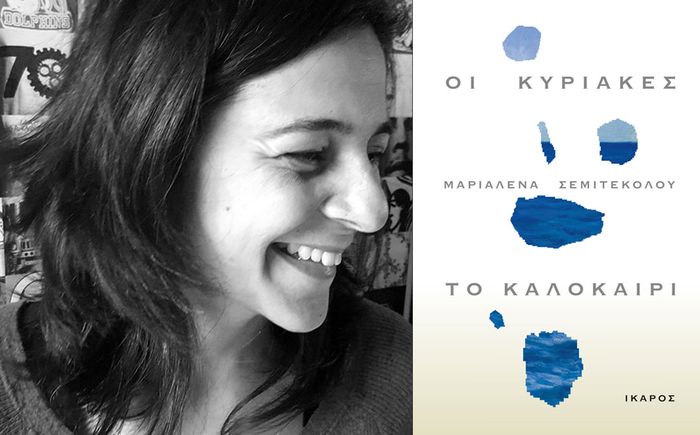
Marialena Semitekolou: “My relationship with the literary tradition is rather unruly and playful.”
Marialena Semitekolou, on the occasion of her novella *Sundays, in Summer*, gave an interview to Sofia Zisi for *Tetragono*. Read it below: In your book, you use the present tense and a simple vocabulary, which lends a sense of immediacy to your narrative. Is simplicity of style a goal for you? What meaning would a story have if its charm and interest were limited to the elaborate style of the narrative? I admire stories in which the style serves the needs of the narrative and not the other way round. Marina’s Sunday is a simple Sunday, and above all immersive in the way she experiences it, despite her flashbacks to the past and her dreamlike journeys. Marina is a simple heroine, without narcissism or posturing. She is a heroine who almost consciously renounces her ‘depth’ or her narrative substance. I hope that the directness and simplicity you have discerned in the style of my narrative faithfully convey the unique nature of my heroine and her summer Sunday.Each of the book’s sections (Morning, Midday, Afternoon, Evening, Monday) begins with the lyrics of a song, serving as an epigraph. How did you choose these particular songs? These specific – favourite – songs emerged spontaneously, but not at all by chance, I imagine. Their lyrics are directly linked to the text: they look at it askance and/or mock it (Morning, Monday), they describe it, giving it an inner tone (Noon), they make an invocation / prayer for the sake of the text (Afternoon) and they resonate with it, summarising it with exceptional simplicity (Evening).How long did it take you to write Marina’s story? The story was written in two phases (morning–midday and afternoon–evening–Monday). Each of these phases was written rather quickly, almost intensively. However, a lot of time passed between the two phases and there was a long pause, so that in the end Marina’s Sunday lasted much longer than 24 hours… Your narrative gives the impression that it consciously avoids the pursuit of originality. Are there moments when you’re drawn to the idea of writing something that has never been written in quite the same way before? I’m not sure what you mean by the word ‘originality’ or whether one can even speak of ‘original writing’ anymore. I’m drawn to the idea of writing in a style that doesn’t put on airs or mechanically imitate others. I want to consciously avoid the sense of tedium, of monotony and of sloppiness, something I feel happens when I lose my emotional connection with what I’m writing.One might describe your book as nostalgic, confessional, associative, minimalist. How would you like it to be described? Three words would suffice for me to describe the book: honest, finely crafted, moving. I’d like all three to be tightly interwoven with one another. I also really like all the descriptions you’ve chosen! Do you feel that your writing fits into a particular literary movement? What is your relationship with the literary tradition both within and outside Greece? I feel that your question is of a literary nature. I therefore ‘hold back’ from answering it, because I do not come from the world of academia, which would allow me to respond with the precision and competence I would like. Moreover, I do not know how my self-identification with a particular literary movement would help me. My relationship (as a reader) with the literary tradition both within and outside Greece is rather unruly and playful: I make my way from book to book, without a specific plan and without any strict adherence to what ‘must’ or must not be read. I imagine this choice has cost me some perhaps serious gaps in my reading, but I make up for them, feeling the luxury of an amateur, rather than a professional (of writing and reading).Is writing a solitary task for you? Do you need to isolate yourself to write? I find it hard to imagine writing as a social activity! I need to be ‘alone’ when I write, either literally or in my mind (whilst doing other, unrelated things). But I don’t necessarily isolate myself. It has happened, for instance, that I’ve written a whole page whilst a group of young children were playing noisily and laughing right next to me, or on several occasions, crammed onto a bus, I’ve written sentences in my head. It is a state of unique concentration, precious and almost magical, which you never know when it will come to you.A phrase from your book that you feel sums it up (apart from the title)? ‘She scans the walls around her with her eyes, sweeps them with her gaze, feels them with her hands to find a hole, an opening to start digging at it patiently to make it bigger and let in a little air, to let a sliver of light shine through.”Learn more
-

Interviews
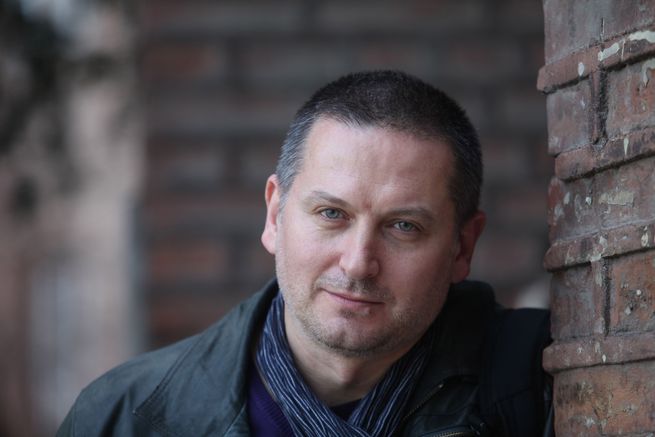
Georgi Gospodinov: ‘The Minotaur was an abandoned child’.
Read below the exclusive interview given by Georgi Gospodinov to Grigoris Bekos for *To Vima*, on the occasion of the publication of his novel *On the Physics of Melancholy* (translated by Alexandra Ioannidou). Postmodern Balkan literature. To many, the combination of these words seems incongruous. After all, all three are burdened by misconceptions or prejudices. The truth, however, is that there have always been literary circles in South-Eastern Europe dedicated to producing literature that is high-quality, experimental and, at the same time, demanding, sometimes at the cutting edge of artistic exploration. Those who have read works by Danilo Kiš, Milorad Pavić or Dubravka Ugrešić, for example, will certainly welcome the first appearance in Greek of a book by Georgi Gospodinov.Myth and biographyThe Bulgarian author, born in 1968 in the town of Yambol, one of the most widely translated and internationally recognised writers, introduces himself to us with his novel On the Physics of Melancholy. It is a charming and strange book organised (and expanding in a branching manner) around a central image, the Minotaur. It is essentially a unique blend of myth and biography (the latter in the broadest sense of the term, as it is not merely personal, but familial and social, and ultimately national).The other day, when he spoke to ‘To Vima’, Georgi Gospodinov had just landed from a business trip to Spain. At the start of this summer, he had returned to Sofia from New York, where he spent a whole year as a fellow at the renowned New York Public Library (NYPL) and the Cullman Center. ‘Actually, I’m not entirely sure if I’ve returned. In the meantime, my new book, ‘All Our Bodies’, has been published. It contains very short stories; the shortest is three words long and the longest is about a page and a half. In fact, at a presentation in Burgas, I met a Greek translator who told me he’d managed to get some of my short stories published in a few anthologies. In short, it’s a bit of a chaotic time at the moment. Autumn is distracting me. I’m waiting for the rains so I can carry on writing my new novel uninterrupted.’ From poetry to the novel Things weren’t always like this, though. Because Georgi Gospodinov started out as a poet, and an award-winning one at that. What drove him to the novel? ‘Ah, back when I wrote only poetry, that was the golden age. And I still wonder why on earth anyone decides to write novels. Human life is far too short for truly great novels; I mean the great ones, not the lengthy ones. All the more so for someone who writes slowly when tackling this genre, like me. Essentially, though, I don’t think I ever abandoned poetry. Even when I write novels, which are quite mad, I always try to slip my poetry into them, secretly and surreptitiously. My first, *The Natural Novel*, was a direct result of what I’m telling you. I had never written prose before. I told myself I had the right to fail; I felt free; I wanted to give it a go and then return to poetry. And completely unexpectedly, the novel began to cross borders and was translated into around 20 languages, which surprised me a little. I didn’t like, of course, the mould of such a job, being confined to a single genre and producing a novel every two years. That is precisely why I continued to write poetry, short stories, plays, a libretto for an opera or a graphic novel. Until I had accumulated enough stories for the next novel. The good thing about the novel, as I understand it, is that it can encompass all the other genres like a womb. The novel is like Noah’s Ark. And in exactly the same way, ‘On the Nature of Melancholy’ emerged.The History of Melancholy This book has a labyrinthine form. Why? ‘The labyrinth is the natural form taken by our narratives, but also by our lives. Start telling a story, for example, and you will soon realise how often you stop, go back, unconsciously veer off in other directions, and take side paths. That is the form! And I wanted my novel to follow it because there is a voice in the book, that of the protagonist, which narrates in the first person the stories of his father and grandfather, the story of the Minotaur, but also the story of melancholy, not only of the 20th century but of the present day as well. Tell me, was there any way for all this not to be a labyrinth? The labyrinth is situated more vertically in time than in space. So there are no postmodern traps here. On the contrary, I address the readers directly and tell them, ‘this is where we stop’. Because we no longer write our novels as we did in the 19th century, and I say this with some disappointment. The novel, however, is not a train that departs from point A to arrive linearly at point B. The novel is a labyrinth into which we all enter of our own free will to set free, within its corridors, our own Minotaurs, our demons and our fears. There are solitary Minotaurs lurking within each of us.’Childhood abandonmentGeorgi Gospodinov forces us to see a side of the Minotaur that many of us had not even considered, namely his ‘silenced story’. ‘If we read the myth carefully, with a little compassion, we will discover an incredible injustice that has long been concealed. The Minotaur was, in fact, an abandoned child, who at the age of 3 or 4 was locked away by his father, Minos, in the underground chamber. I have read everything in ancient literature concerning the Minotaur and found not a shred of mercy for him, beyond ‘monster’, ‘shame’ and so on. The theme of child abandonment is one of the book’s central themes. The first image that came to mind when I started writing it was a memory of myself as a young lad in a small town in southern Bulgaria in the 1970s. I’m sitting by the window. Our home was a single room, located in the basement – or rather, the semi-basement. The window was at street level; my parents hadn’t come home from work yet. I was alone and scared, curled up on the windowsill, watching the last light of the late afternoon. Behind me, inside the room, a thick darkness stretched out. I entered this memory as I was thinking about the novel and, at some point, I realised that there was another such creature living alone in a dark labyrinth. In this way, the Minotaur boy of myth and the Minotaur boy from the 1970s came together in my text. That is where it all began. “It is, however, also a novel that highlights, I believe, both the shift in our perspective and the importance of empathy, which helps us to see others with fresh eyes,” emphasised the Bulgarian author.The narrator in the book, his alter ego, suffers from ‘pathological empathy or obsessive empathic-somatic syndrome’. It may sound frightening, but it is absolutely essential. ‘I cannot imagine how anyone could write fiction without this hyper-empathy. In the novel, this ability—or affliction—is the way in which the protagonist enters into the stories of his ancestors, as well as into the bodies of other living things.”We then discussed with Georgi Gospodinov the incredible scene in which he describes the ‘living museum of socialism’ with his compatriots. He had previously edited a volume with the telling title I Lived Through Socialism – 171 Personal Stories. Is there such a thing as positive and negative nostalgia? ‘As a writer, collecting personal stories is of the utmost importance to me. Bulgarian ‘real socialism’ appeared peaceful and mild, yet, like any totalitarian regime, it eroded and corrupted each individual. In reality, people feel nostalgia for their past and their youth, but in a foolish way they believe, or have been conditioned to believe, that their youth and ‘real socialism’ are naturally intertwined. ‘Well, they aren’t!’ emphasised the author, who, moreover, makes some apt observations about ‘small nations’ and their syndromes. Are there, correspondingly, such literary syndromes? ‘The periphery is full of stories and, often, the way in which its writers tell them is far bolder than that of the centre. The problem is stereotypes. For example, I once received the following response from a major Western publishing house regarding *On the Nature of Melancholy*: ‘Your novel is very good, but it isn’t Eastern European enough.’The Neighbours’ SyndromeIn the end, we wondered together why, even though we are so close, we know so little about one another. ‘Ancient Greek literature and philosophy were part of my literary education and, over time, became part of my personal interests. Especially from the twentieth century onwards, Cavafy, Seferis and Kazantzakis were an essential part of my reading as a young man. To be honest, however, I am not very familiar with the literary output in Greece over the last three decades, just as I imagine you do not know much about contemporary Bulgarian literature. This is a typical neighbourly syndrome; neighbours usually don’t take much interest in one another. A lack of curiosity and a host of stereotypes. A while ago, a writer from Central Europe said, with great arrogance, that no one expects a great novel from Bulgaria, at most a tomato of exceptional quality. That’s how you talk if you’ve internalised the stereotypes. In any case, I think the situation has started to change. If you’re a Bulgarian who travels to Greece quite often, or the other way round, a Greek who frequently visits Bulgaria, and you’ve tasted a good wine, the local fish or tomatoes, the moment will inevitably come when you seek something more, something to read about this country or to become a little more curious about other issues concerning it. I have the feeling that this is the moment we are in right now, Bulgarians and Greeks alike.”Learn more
-
Interviews
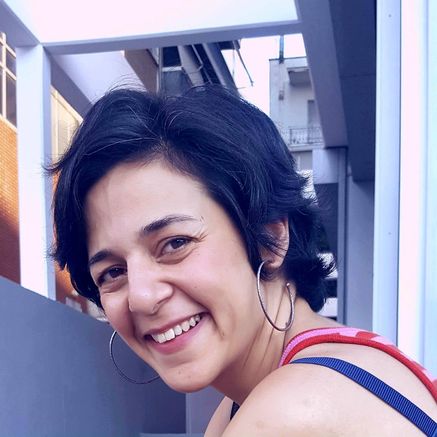
Marialena Semitekolou: ‘Literature is a living organism’.
Marialena Semitekolou, on the occasion of her novella *Sundays, in the Summer*, gave an interview to the newspaper *Ta Nea*. Read it below: The last time I was moved by a complete narrative was… the day before yesterday, in a ballet class, listening to a piece on the piano, just four minutes long, called ‘Porz Goret’, which I thought referred to some enigmatic character, but I eventually discovered it is the name of a place.If I could write to music, I would choose… a soundtrack. I love the fact that in soundtracks you can hear the most seemingly ‘incongruous’ genres of music blended into a harmonious, narrative whole.The most painful part of the writing process… is the before and the after. In the ‘before’, images, words, thoughts and faces come to you, disjointed and without substance. And you don’t know what to do with them, how to fit them together or what form to give them. In the ‘after’, when you’ve written the very last word, you realise that the text ultimately has the last word. Not you. There is no pain in the moment of writing. There is a magical concentration that extends the present into eternity.Three books I would definitely recommend for a secondary school library would be… ‘The Trial’ by Franz Kafka: a modern work, painfully topical, open to multiple interpretations and discussions. “The Catcher in the Rye” by J.D. Salinger: because it makes you believe that a book’s protagonist can, if you so wish, become a lifelong companion. ‘The Double Book’ by Dimitris Hatzis: the tenderness and respect with which the author describes the greatness of his ‘humble’ heroes constitute a valuable lesson.The criticism I accept concerns… descriptions rather than judgements, observations rather than categorisations, suggestions that have nothing to do with the words ‘good’ or ‘bad’ and that smooth out their edges to include rather than exclude.Self-criticism begins… the moment it breaks off its insidious association with self-reproach and self-pity and joins hands with personal responsibility and taking action. Otherwise, its energy is tied up in creating endless loops of self-negation.The opening of a classic book I envy is… ‘Once in the spring, at the hour of an incredibly warm twilight, in Moscow, by the Patriarch’s Ponds, two citizens appeared’ from Mikhail Bulgakov’s *The Master and Margarita*. I’m not jealous, of course. I feel awe at literature’s terrifying ability to create parallel universes into which, every time you enter, you know you’ll emerge a different person.When I hear about the ‘crisis of literature’ or the ‘literature of crisis’, I think… first of all of the word ‘crisis’ and its meaning. In development, crises, despite the turmoil and destabilisation they bring, are inevitable and necessary for a living organism to evolve and, above all, to progress. And literature is (or ought to be) a living organism, whether it is itself in crisis or describes a crisis.Learn more
-
Interviews
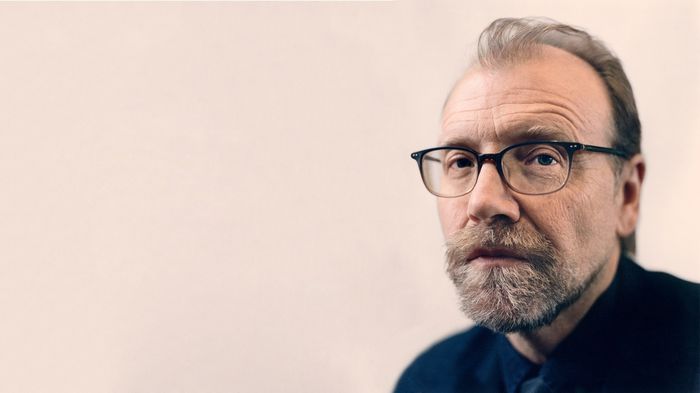
George Saunders: I experience inspiration as happiness.
On the occasion of his visit to Greece, George Saunders gave an extremely interesting interview to Giorgos Nastos for the magazine VIMAgazino, in which he spoke about the infinite versions of history and the place of humour and kindness in books and in life. You can read it below: Mr Saunders, you have obviously carried out thorough research for the writing of this book. Did you learn anything in the course of this that surprised you? ‘There is indeed something. According to contemporary accounts, Lincoln was very popular with women – although he was unattractive, he was tall and charismatic, and women were drawn to him. He wanted, however, to be a good husband, so he had found a way to keep them at a distance, because on the one hand his wife was very jealous, and on the other he respected and loved her. He exuded intense sexual energy, but he didn’t let it show. This was something I didn’t know about him and it confirmed a feeling I had that he was a distant, disciplined man. He wasn’t particularly warm, but he had a way of controlling his environment.” In your work, you cite many conflicting historical accounts. Can we trust memory and, by extension, History? ‘If in ten years’ time they ask both of us about that day, we will both describe it incorrectly; it will probably seem vivid in our memory but will have turned into something else. I have been a scientist, and part of being a good scientist is knowing the limits of one’s subject. Of course we can trust history, yet when dealing with the details, one must take into account the limitations imposed by memory. Nowadays, even experts believe that we distort our memories to confirm our worldview; so whether we are talking about history or life, it would be wise to view our certainty that we remember with a touch of humility. There is something I find very beautiful: the fact that, let’s say, a party takes place and as soon as it’s over, it’s as if there have been as many parties as there were guests – everyone remembers their own version and the truth, ultimately, is all these versions together; there is nothing more objective.You had been mulling over the idea for ‘Lethis and Lincoln’ for many years. Why did it take you so long to finally write this novel?A writer far greater than myself once said that if a writer learns the difference between ideas that will become books and those that really ought to become books, he will save himself a good fifteen years of hard work. It was a difficult challenge from a technical point of view, and I didn’t know if I could have managed it any sooner. At some point, I realised that all the reasons holding me back should, in fact, have convinced me. It’s an interesting fact that if an idea is difficult, then it’s likely to be a very good one. Because it has something to teach you. Some books broaden our horizons; this was one such book. As we grow older, we settle into our comfort zones. Of course, there’s always the risk that when you take a chance, you’ll make a complete mess of things. But you’re as good as dead if you don’t try.’ You drew inspiration from an unjust, tragic death. What do such events teach us? “Many years ago, a friend of ours died young and I was thinking of writing something to his wife. It was a tragedy; they had a small child; there was nothing comforting about the whole story. The people we love, however, continue to exist within us and interact with us; they change something about our presence in the world. There are many ways to change a person’s life; if a man comes in here and starts shooting and you save me, that will be significant and I thank you, but if we have a nice chat and something starts to click inside me, then you’ve influenced me for the rest of my life, and perhaps I’ll influence others too. It sounds a bit New Age, but there’s a grain of truth in it. I believe that our positive and negative actions have a corresponding impact on the world. Most of the book’s heroes find themselves in a strange state between death and definitive non-existence. Personally, what do you believe happens after we leave this world? “I think there is something, and I believe there is plenty of evidence – with accounts of near-death experiences, for instance. I don’t believe, in other words, that a switch is simply flipped and that’s it. Patricia Pearson has written a book on communicating with spirits; she almost convinces you with the examples she gives.” Reading your interviews, I was struck by how much importance you attach to humility… “The times I’ve felt truly wise in my life were when I was really down; I didn’t pretend when I felt I knew nothing. I’m very suspicious of self-confidence, especially when I see it in myself. My book did well in America and I toured the whole country hearing praise, so I had to tell myself that it was ‘full of shit’. I have to keep checking myself, because certainty is a bad advisor.You’ve embraced Buddhism. Has it helped you in your relationship with mortality? “I’m still at the beginning. You know, I sometimes think I’m a balanced sort of bloke. Until they lose my luggage at the airport – then I realise I’m not ready for death at all. From the little meditation I’ve done, I understand that there’s a way to change this machine called the brain and react better to adversity. I know the small steps I can take and I try to do them. I find it very interesting that human experience is based on small assessments. If I ask myself how I am, if I think that I have become a writer and that I am doing well, I immediately calm down. No one, however, is keeping score. There is only you and the moment. And then the next moment. There is nothing else.’ ‘Your offbeat humour is present in all your writing. Is it a strategic choice as a writer or a fundamental aspect of your character?’ ‘Obviously both. The writing process is a validation and an expression of one’s personality. How you process the world will be reflected in how you process a book. I find that I have a mind that operates both emotionally and sarcastically at the same time. I can be at a funeral, genuinely sad, and notice that the deceased’s trousers are slightly dirty, and find that tragicomic. Over time, you learn to understand which side prevails in each situation. When I’m nervous, when I feel inadequate, I become sarcastic, but I know that’s not all I am. None of these things are you; they are aspects of yourself that you have access to. An initial draft of the book had turned out far too serious and needed a bit of humour. It was a strategic choice, but it was also closer to who I am. What I’m trying to do as I get older is to be open to whatever happens to me. When I was younger, it was very easy for me to joke constantly and, in essence, to trivialise every situation. I thought I was on top of everything and being honest, but I was simply honouring just one aspect of my character.” I see you say you have an emotional brain rather than that you are emotional. Is it all down to the chemistry of the organ in our heads? “I believe in neurological processes. There is a system of chemical reactions within us that, when you are young, you think is identical to yourself; then you come to see it as the world; and at some point you realise why your reactions are predictable—you have decoded them. I have come to a very liberating conclusion: We are not merely our thoughts. We are so much more.’ Your speech at the Syracuse University graduation ceremony, where you teach creative writing, which has been published under the title ‘Congratulations – Thoughts on Kindness’, speaks of kindness towards others. Is kindness towards ourselves a first step? ‘I wrote that speech in a hurry, in three days, so it remains a bit superficial. In America, kindness is equated with being good, and I don’t agree with that interpretation. The definition I now give is the state of mind that allows you to have the fewest illusions. Why do we become selfish? Because we think we’re amazing, that we’re the centre of the world. If we let go of that notion a little, we’ll become better people. If we recognise our transience, we’ll naturally become kinder, more compassionate. By being humble—not by beating yourself up, because that too allows your ‘ego’ to take the lead—you correctly define your place in the world and ultimately treat yourself well.”Some define inspiration as the ultimate connection with the world. What do you say? “I experience it as happiness. How is it that sometimes you wake up in the morning and are in a good mood for no reason? It happens to me when I’m writing – even if I’m working on a sad scene, if I feel somewhat happy, I know I’m doing a better job. In any case, there’s no point in constantly chasing the muse; if I don’t feel it, I do the most mundane things – I go shopping, I go for walks, I see friends – and when I feel better, I get down to work. Of course, you don’t wait for it completely idly; literature, in particular, requires a lot of practice.” “What are your most significant literary influences?” “One writer I keep coming back to is Nikolai Gogol. Although I’m not sure I can describe what I like about him, I always try to write like an American Gogol. Chekhov is an influence, as are the Monty Pythons. Lately I’ve been wondering if there’s anything I’ve learnt about the world that hasn’t been properly expressed – I feel I don’t have much time left, perhaps the time has come to write my own truth. On the other hand, I feel ‘poorly educated’ when it comes to literature. I wish I could stop time and just read for twenty years, but unfortunately that’s not possible, and the limitations in my work stem from that. It’s never too late. Perhaps robotics will develop rapidly and we’ll start living to 180.” I imagine you’re probably tired of answering this question, but how do you view the situation with Donald Trump as US president? “Sickening. Shocking. There’s nothing good about it. And seeing this great American edifice crumble because of this bloke is tragic. As a writer, I’m trying to understand why I didn’t see it coming. I have quite a few friends and relatives who voted for him and I’m trying to listen to them, to understand. Trump is the result of a long period of decline, consumerism and poor education. And perhaps the choice of a spoiled generation. A generation that has never faced real hardship, which is why it sets fire to the house as soon as it feels even the slightest pressure. Because it has never found itself inside a burning house.”Learn more