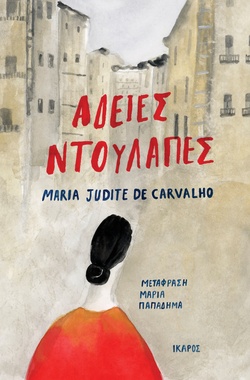

Written in the 1960s, this great novel, which occupies a central place in Portuguese literature, portrays the society of southern Europe with clarity, simplicity and boldness. The central figure of the work is Dora Rosário, in the role of wife, daughter-in-law, working mother and lover. The narrative of her life—as told by her friend Manuela—reveals forgotten stories, family secrets and unhealed wounds of the past, whilst simultaneously unravelling the intricacies of a hypocritical, male-dominated society. However, Maria Judite de Carvalho’s heroines react—each in her own way—to their predetermined fate. Whether submissive or rebellious, weak or strong, they stand tall and alone in the face of inequality, claiming their place in a patriarchal world that is unforgiving towards ageing women.
‘There is no doubt about the authenticity of Carvalho’s vision and the originality of her voice: as scathing and harsh in her portrayal of “empty” women as she is in her description of toxic patriarchy.’
―The New York Review of Books
Read what Maria Papadima wrote on our blog about the translation of the book.
Author:
Maria Judite de Carvalho
Translation:
Maria Papadima
Text editing:
Antonia Kilesopoulou
Cover design/illustration:
Christos Kourtoglou
Date of publication:
23/10/2023
Pages:
152
Dimensions:
13.3 x 20.5 εκ.
ISBN:
978-960-572-609-6
Publication:
2023
Categories:
Literature, eBooks, Foreign Literature
"Μπορεί να πρωτοεκδόθηκε το 1966, αλλά αυτή η νουβέλα της συγγραφέα από την Πορτογαλία είναι ένα βιβλίο που διαβάζεται σαν να είναι σημερινό. Η Carvalho γράφει με φοβερή ακρίβεια καιν σπουδαία πύκνωση για τρεις γενιές γυναικών που ζουν σε καθεστώς πατριαρχίας."
– Φωτεινή Σίμου, ELLE
"Με πλήρη έλεγχο και λιτότητα που θυμίζει είσοδο πεντακάθαρης παλιάς μονοκατοικίας, οι γυναίκες του βιβλίου θυμίζουν αυτό που λέει ο τίτλος. Άδεια σπίτια γεμάτα μασίφ, άδειες ντουλάπες που αν φωνάξεις η κραυγή θα χαθεί στα συρτάρια."
– Μιχάλης Παπαγεωργίου, Νεολόγος
"Οι ήρωες είναι αστοί, ζουν ήρεμα και χωρίς εκπλήξεις, μολονότι τα μυστικά που ενυπάρχουν ακόμα και στους πιο συνηθισμένους χαρακτήρες θα δώσουν νόημα στην αφήγηση, θα διαφοροποιήσουν το καθημερινό και το αναμενόμενο και τα το καταστήσουν ανατρεπτικό και καταλυτικό."
– Χρύσα Σπυροπούλου, Τα Νέα
"Αυτό το μυθιστόρημα, γραμμένο στη δεκαετία του 1970, παραμένει σημαντικό επειδή είναι αυθεντικό, ως προς την απεικόνιση της ανδροκρατούμενης κουλτούρας που διαπερνά τον ευρωπαϊκό Νότο. […] εδώ οι γυναίκες αγωνίζονται απέναντι στα τραύματα του αναπαράγει η τοξική πατριαρχία."
– Το Βήμα
"Στη νουβέλα _Άδειες Ντουλάπες_ η αφήγηση θα φωτίσει την ιστορία της και την ίδια στιγμή η εξαιρετική συγγραφέας Maria Judite de Carvalho θα καταδείξει χάρη στην ακρίβεια της γραφής της, την ευαισθησία και τη χρήση μίας αδιόρατης ειρωνείας, αλήθειες διαχρονικές και παγκόσμιες, συμπτώσεις που κυλούν ορμητικά και παρασύρουν στο διάβα τους γυναίκες αντι-ηρωίδες που ζουν παραγκωνισμένες και ασήμαντες, θεωρούνται δεδομένες μα και τόσο απαραίτητες σαν παλιωμένο γρανάζι σε πολυκαιρισμένη μηχανή."
– Νάντια Τράτα, FractalMaria Judite de Carvalho
Maria Judite de Carvalho (1921–1998) is considered one of the most important female voices in 20th-century Portuguese literature. She was born and died in Lisbon, but spent a large part of her life (1944–1959) in France and Belgium. She wrote novels, short stories, novellas, chronicles, poetry and a play. With clear influences from existentialism and the New Novel, though without strictly adhering to their rules, her distinctive writing constitutes a ‘distinctive flower’, as Agustina Bessa-Luís aptly describes it, the other great lady of Portuguese literature. Her work has been honoured with the following awards: the Grande Prémio de Conto Camilo Castelo Branco, the Prémio da Crítica da Associação Portuguesa de Críticos Literários, the Prémio P.E.N. Clube Português de Novelística, and the Prémio Vergílio Ferreira. Maria Judite de Carvalho’s work has been translated into many European languages. Empty Wardrobes is her first novel to be published in Greek.