News
News List, News Categories, Events
-
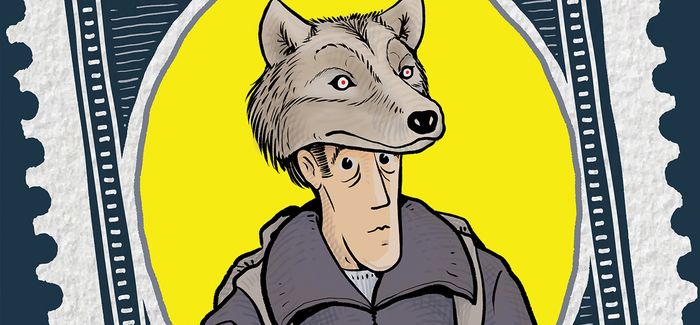
Soloúp: «Ο Συλλέκτης – Έξι διηγήματα για έναν κακό λύκο» | Έκθεση στο Μουσείο Μπενάκη.
This post is only available in Greek.Έκθεση, Graphic novel, παραμύθια, μουσική που γίνεται σκίτσο ζωντανά, μια καινούργια ανάγνωση της Κοκκινοσκουφίτσας, ημερίδες για την αποξένωση γονιών και παιδιών που καιροφυλακτεί στο διαζύγιο, καθώς και για την «ώριμη φόρμα των comics».Την Πέμπτη 24 Ιανουαρίου ξεκινά στο Μουσείο Μπενάκη, Πειραιώς 138, η έκθεση «Soloúp: Ο Συλλέκτης – Έξι διηγήματα για έναν κακό λύκο». Η έκθεση παρουσιάζει πρωτότυπο υλικό του νέου graphic novel του Αντώνη Νικολόπουλου (Soloúp) Ο Συλλέκτης, έξι διηγήματα για έναν κακό λύκο. Μια επανερμηνεία της «Κοκκινοσκουφίτσας», που ξαναδιαβάζει το παραμύθι των αδελφών Γκριμ στη δεύτερη εκδοχή του, βάζοντας τον κακό Λύκο να «συνομιλεί» με δυο φιγούρες βασισμένες στα σχέδια του John Tenniel από την Αλίκη στη χώρα των θαυμάτων του Lewis Carroll: το «λαγό» και τον «καπελά».«Ο Συλλέκτης», μια σύγχρονη ιστορία σαν κακό παραμύθι, μιλάει για την αποξένωση των παιδιών από τους γονείς τους μετά από ένα διαζύγιο. Μια ιστορία, ωστόσο, που κρατάει ζωντανή την ελπίδα της επαναπροσέγγισης. Storyboards, προσχέδια, σκίτσα σε μολύβι, ασπρόμαυρες κι έγχρωμες σελίδες comics, εικαστικά και κατασκευές ζωντανεύουν τις έξι διηγήσεις του βιβλίου, οδηγώντας τους επισκέπτες σε μια νέα οπτική προσέγγιση.Η έκθεση διαρκεί ως τις 17 Μαρτίου 2019 και διοργανώνεται από το Μουσείο Μπενάκη, Περιφέρεια Αττικής και τις Εκδόσεις Ίκαρος. Σε συνεργασία και με τη στήριξη της «Αθήνα 2018 – Παγκόσμια Πρωτεύουσα Βιβλίου» του δήμου Αθηναίων, μέγας δωρητής της οποίας είναι το Ίδρυμα Σταύρος Νιάρχος, πραγματοποιούνται μια σειρά από εκδηλώσεις και δράσεις με είσοδο ελεύθερη για το κοινό στο πλαίσιο της έκθεσης, ενταγμένες στη θεματική ενότητα «Το βιβλίο και οι Τέχνες». Ειδικότερα:-Στα εγκαίνια της έκθεσης, την Τετάρτη 23 Ιανουαρίου 2019 και ώρα 20:00, οι Drums & Voice Jazztronica Duet» με τη βοκαλίστρια Αγγελική Τουμπανάκη (Voice, Fxs, Loops, Percussions) και τον ντράμερ Ηλία Δουμάνη (Drums, Voice, Fxs, Loops, Custom Design Programming) παρουσιάζουν δικές τους συνθέσεις, πρωτότυπη μουσική για το graphic novel του Soloúp και κομμάτια της bebop, modal, hardbop jazz σκηνής, με έμφαση στην αυτοσχεδιαστική διάδραση και την extended χρήση του κάθε οργάνου. Μαζί με τον Soloúp δημιουργούν μια βιωματική μουσική-εικαστική παράσταση, καθώς ο Soloúp μεταπλάθει τους ήχους σε σκίτσα με livedrawing. Παράξενοι ήχοι, εφέ, βοκαλισμοί μεταπλάθονται την ίδια στιγμή σε χρώματα, σκιές και γραμμές! Καλεσμένος ο Δημήτρης Παπαδόπουλος (τρομπέτα).Η vocalist Αγγελική Τουμπανάκη και ο drummer Ηλίας Δουμάνης δημιούργησαν το 2014 τους “Drums & Voice Jazztronica Duet”. Με το ειδικά σχεδιασμένο ηλεκτρονικό drums set, τoυς ψηφιακούς κρουστούς ήχους, τα effects, samples και τις real time λούπες, ενορχηστρώνουν, εναρμονίζουν και συγχρόνως αποδομούν τον συνηθισμένο ρόλο των δύο οργάνων, δίνοντας πολυδιάστατη προσέγγιση στα τύμπανα και extended πολυφωνική παρουσία στη φωνή. Μέχρι σήμερα οι «Drums & Voice Jazztronica Duet» έχουν παρουσιάσει τις δημιουργίες τους στο Athens Jazz Festival, Tinos Jazz Festival, Preveza Jazz Festival, Ίδρυμα Σταύρος Νιάρχος, Βυζαντινό μουσείο, Νομισματικό Μουσείο, Half Note και σε πολλά φεστιβάλ.-Το Σάββατο 9 Φεβρουαρίου και ώρα 10:00 – 16:00 πραγματοποιείται Ημερίδα ανοικτή για το κοινό με τίτλο «Τα Graphic novel: Απαιτητικές Αφηγήσεις από μια Ώριμη Φόρμα των comics»: Πανεπιστημιακοί, δημοσιογράφοι, δημιουργοί comics, εκδότες και εκπρόσωποι της σκηνής των graphic novel στην Ελλάδα συνομιλούν για τη δημοφιλή σε Ελλάδα και εξωτερικό φόρμα των comics.-Την Κυριακή 3 Μαρτίου και ώρα 10:00 – 16:00 πραγματοποιείται και η δεύτερη Ημερίδα στο πλαίσιο της έκθεσης με τίτλο «Η προοπτική της κοινής ανατροφής παιδιών. Καταπολέμηση της γονικής αποξένωσης χάριν του βέλτιστου συμφέροντος του παιδιού»: Έλληνες και ξένοι ακαδημαϊκοί (Jennifer Harman, Edward Kruk, Vittorio Vezetti, Malin Bergstrom) αναπτύσσουν ζητήματα της κοινής ανατροφής των παιδιών, τη σημασία των ευθυνών έναντι των «δικαιωμάτων» αλλά και την ιδέα ότι η κοινή ανατροφή είναι το πιο αποτελεσματικό εργαλείο στην αντιμετώπιση του προβλήματος αλλά και αυτό που ικανοποιεί καλύτερα τις ανάγκες και το συμφέρον του παιδιού.Πληροφορίες για την έκθεση:Χώρος: Μουσείο Μπενάκη, Πειραιώς 138. Ώρες λειτουργίας: Πέμπτη & Κυριακή, 10:00 -18:00, Παρασκευή & Σάββατο 10:00 - 22:00 Διάρκεια: 24 Ιανουαρίου 2019-17 Μαρτίου 2019. Είσοδος με εισιτήριο (5 ευρώ).Οι παράλληλες εκδηλώσεις (συναυλία και δυο ημερίδες) που πραγματοποιούνται με τη στήριξη της Αθήνα 2018 Παγκόσμια Πρωτεύουσα Βιβλίου του δήμου Αθηναίων είναι ελεύθερες για το κοινό.Το πρόγραμμα της διοργάνωσης ‘Αθήνα 2018 Παγκόσμια Πρωτεύουσα Βιβλίου’ του δήμου Αθηναίων υλοποιείται χάρη στη στήριξη και των δωρητών: Μέγας δωρητής είναι το Ίδρυμα Σταύρος Νιάρχος. Χρυσοί δωρητές είναι το Ίδρυμα Ι. Λάτση και η εταιρία Core Α.Ε. Δωρητές είναι το Ίδρυμα Ωνάση, το Κοινωφελές Ίδρυμα Κοινωνικού και Πολιτιστικού Έργου (ΚΙΚΠΕ), το Ίδρυμα Α. Κ. Λασκαρίδη και ο Οργανισμός Συλλογικής Διαχείρισης Έργων Λόγου (ΟΣΔΕΛ). Πολύτιμοι υποστηρικτές είναι η Aegean Airlines, ο Διεθνής Αερολιμένας Αθηνών και η εταιρία Σταθερές Συγκοινωνίες (ΣΤΑΣΥ).Learn more
-

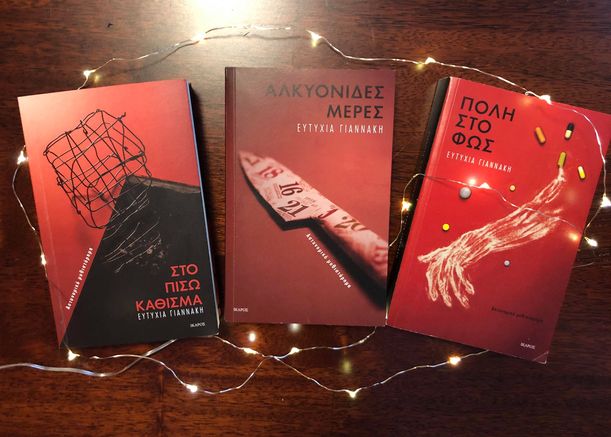
Τα νουάρ Χριστούγεννα του κυρίου Ψιτ | Μια ιστορία από την Ευτυχία Γιαννάκη.
This post is only available in Greek.Διαβάστε παρακάτω τη νουάρ-χριστουγεννιάτικη ιστορία που εμπνεύστηκε η Ευτυχία Γιαννάκη με ήρωα τον κύριο Ψιτ. Η συγγραφέας της αστυνομικής Τριλογίας της Αθήνας μάς εύχεται χρόνια πολλά με τον δικό της ξεχωριστό τρόπο! Γι’ αυτόν δεν ήταν μια συνηθισμένη βόλτα, ήταν η μεγάλη επιστροφή στην πόλη μετά από δέκα χρόνια. Ξεκίνησε νωρίς. Τα κτίρια γύρω του σχημάτιζαν μια παράξενη σπηλιά και τα στενά του κέντρου έναν δαίδαλο στολισμένο με λαμπάκια και φανταχτερές γιρλάντες. Ο ουρανός ήταν βαρύς, χαμηλωμένος λες ελάχιστα μέτρα πάνω από τον μάλλινο σκούφο του. Όπου κι αν έστριβε, όποιον ελιγμό κι αν έκανε, το βλέμμα του κουτούλαγε σε πολυκατοικίες του πενήντα, σε κακότεχνα γκράφιτι που οι δημιουργοί τους κανονικά ήθελαν σκότωμα, σε ξεφλουδισμένες κολόνες και σε τρύπες που οδηγούσαν σε βρόμικες στοές. Μια πόλη μπετόν αρμέ, αμετακίνητη τα δέκα χρόνια που έλειπε, μια σπηλιά που πάλευε δυο μέρες πριν από τα Χριστούγεννα να μοιάζει με φάντη που τη ζέσταιναν τα χνότα αφράτων προβάτων, μα δεν ξεγελούσε κανέναν.Ήταν φανερό ότι το πνεύμα των γιορτών δεν κατάφερνε να τον κυριεύσει, παρόλο που είχε μόλις αγοράσει, από τον δρόμο, ένα χριστουγεννιάτικο δέντρο, αληθινό, όχι πλαστικό, όχι πολύ μεγάλο ούτε πολύ μικρό, όχι πυκνό, μα ούτε αραιό, μέσα σε γλάστρα, ώστε να βγει στο μπαλκόνι μετά τις γιορτές, χωρίς όμως να καταλάβει και όλη τη γωνία δίπλα στο φερ φορζέ, όπως ακριβώς δηλαδή το ζήτησε η μάνα του. Είχε κατέβει από το νησί μόνο για να την δει και όπως όλα έδειχναν για να στολίσει το σαλόνι της. Αν δεν ήταν η μάνα του κι αν δεν ήταν μοναχογιός κι αν δεν ήταν τόσο πονόψυχος κι αν κι αν κι αν δεν θα κατέβαινε ποτέ στην πόλη. Τουλάχιστον στο πατρικό του στο νησί μπορούσε ν’ ανοίγει το παράθυρο και το βλέμμα του να βγαίνει στ’ ανοιχτά, να χάνεται ελεύθερη βαρκούλα στην άκρη του κόσμου. Αναγνώριζε βεβαίως την ειρωνεία ότι για να γλιτώσει από τη μητρική στοργή είχε καταφύγει στο πατρικό του, αλλά τουλάχιστον στο νησί μπορούσε να απολαμβάνει τη μοναχικότητά του γράφοντας τα ποιήματά του με τις ώρες, χωρίς να τον ενοχλεί κανείς. Το πλεονέκτημα ότι μπορούσε να δουλεύει σεζόν και τον μισό χρόνο να μένει συγκεντρωμένος στα γραπτά του ήταν ο κύριος λόγος που τον οδήγησε στο νησί. Πλέον, όχι ο μοναδικός που τον κρατούσε μακριά από την Αθήνα. Αυτόν τον καιρό, κανονικά θα έγραφε. Σκεφτόταν διαρκώς το τελευταίο ποίημά του που το άφησε στη μέση για να κατέβει στην πόλη, με αποτέλεσμα εκείνη τη στιγμή η καρδιά του ποιητή να βρίσκεται φυλακισμένη πίσω απ’ το παρμπρίζ στην κίνηση της Σταδίου.Νωρίτερα, ξάπλωσε το δέντρο με τη γλάστρα του στη σχάρα του αυτοκινήτου και το έδεσε σφιχτά με δυο χοντρά σχοινιά που είχε στο πορτμπαγκάζ. Έμενε μόνο να αγοράσει τις μπάλες, ίδιο χρώμα, ίδιο μέγεθος, από μια τρύπα σ’ έναν πεζόδρομο πίσω από την Παλιά Βουλή, σ’ έναν κάθετο της Ερμού. Κανονικά το κατάστημα πουλούσε κουμπιά, όμως τα Χριστούγεννα έφτιαχνε χειροποίητες μπάλες για να γλιτώσει τον κόσμο από τις κινέζικες πλαστικούρες. Φυσικά, το μυστικό κουμπάδικο μπαλάδικο το υπέδειξε κι αυτό η μάνα του.Για μισή ώρα κυκλοφορούσε με το αυτοκίνητο στο κέντρο με τη γλάστρα πάνω απ’ το κεφάλι του, τσαλαπετεινός με λοφίο, τσαλαπατημένος από τις μητρικές επιταγές, αναζητώντας απεγνωσμένα πάρκινγκ. Το δέντρο ανέμιζε, ο ουρανός χαμήλωνε, θέση δεν υπήρχε ούτε για ζήτω, παρόλο που τα καταστήματα δεν είχαν ανοίξει ακόμη. Τι να έκανε; Σκαρφάλωσε σ’ ένα πεζοδρόμιο αποφασίζοντας να το κόψει στη μέση προκειμένου να πεταχτεί στο κουμπάδικο με τα πόδια.Κατηφορίζοντας την Περικλέους τα μαγαζιά σήκωναν σιγά σιγά ρολά. Τουλάχιστον δεν θα χρειαζόταν να καθυστερήσει περιμένοντας το κουμπάδικο ν’ ανοίξει. Το κρύο έκανε τα μάτια του να δακρύζουν. Έβαλε τα χέρια στις τσέπες ανοίγοντας το βήμα του. Θυμήθηκε ότι μαθητής κι αργότερα φοιτητής όργωνε αυτή την περιοχή. Ανέπτυξε ταχύτητα, άρχισε να βρέχει, γλίστρησε, του φάνηκε ότι και τα κτίρια γλιστρούσαν στο πλάι. Ένας γνώριμος λαβύρινθος στηνόταν γύρω του. Η βροχή δυνάμωσε. Και τότε μια ομίχλη άρχισε να καταλαμβάνει τη σκέψη του, μια ξαφνική θολούρα, ένα μπέρδεμα. Αναρωτιόταν αν θα κατάφερνε να βρει ξανά το αυτοκίνητο εκεί που το είχε παρκάρει. Δεν είχε προσέξει τον δρόμο όταν το άφησε. Ίσως έπρεπε να γυρίσει προς τα πίσω προτού απομακρυνθεί περισσότερο. Πού είχε παρκάρει; Πώς θα το έβρισκε μετά;Δεν έφτασε ποτέ στο κουμπάδικο. Σε μια αιφνίδια αλλαγή σχεδίων βρέθηκε να ανηφορίζει προς τα πίσω. Κοιτούσε δεξιά κι αριστερά αποπροσανατολισμένος. Όλα έμοιαζαν αλλαγμένα. Αναρωτιόταν αν είχε περάσει ξανά από το σημείο. Είχε δει τη βιτρίνα με τους σκίουρους; Το μαγαζί με τα σοκολατάκια; Την είσοδο του ξενοδοχείου; Είχε προσπεράσει τη διχάλα με τα διπλοπαρκαρισμένα μηχανάκια; Όλα πήγαιναν αντίστροφα και όλα έμοιαζαν να προεκτείνονται. Έσκυβε στις γωνίες προσπαθώντας να διαβάσει τα ονόματα των δρόμων. Δοκίμαζε να μπει σε κάποιο στενό για να βρει τα ίχνη του. Μα, είχε περπατήσει τόσο πολύ; Η διαδρομή προς τα πίσω του φαινόταν ατελείωτη. Κοιτούσε το ρολόι του. Πόση ώρα είχε περάσει; Ο χρόνος των κτιρίων, ο μεταλλικός ήχος του νερού που κελάρυζε στις υδρορροές και ο δικός του, ο ανθρώπινος χρόνος, έμοιαζαν να κυνηγιούνται, κάπου να συναντιούνται και κάπου να χάνονται. Οι δρόμοι, τα τετράγωνα, τα κτίρια μεγάλωναν κι αυτός μίκραινε. Το παρελθόν και το μέλλον αγκαλιάζονταν. Θυμήθηκε όταν ήταν παιδί, τότε που φύλαγε τσίλιες στους ίδιους δρόμους για να κάνουν οι άλλοι τα γκράφιτι. Τότε που τον φώναζαν Ψιτ, γιατί μ’ ένα Ψιτ ειδοποιούσε την ομάδα να το βάλει στα πόδια. Κι έτρεχε κι αυτός σε αντίθετη κατεύθυνση. Πώς ήταν δυνατόν να μπερδευτεί στο μέρος που το γνώριζε σαν την παλάμη του χεριού του; Την παλάμη που τώρα έσφιγγε καθώς ίδρωνε στην τσέπη του μπουφάν του.Η αγωνία του δεν κράτησε πολύ. Έστριψε στη Βουλής και το είδε. Ήταν εκεί, παρκαρισμένο, έχοντας κλείσει όλο το πεζοδρόμιο. Μόνο που από τη σχάρα έλειπε πλέον το δέντρο. Μα ήταν δυνατόν; Του το είχαν κλέψει; Πρωί πρωί; Σε τόσο κεντρικό σημείο; Ανέβασε παλμούς. Αν τα έπιανε τα κλεφτρόνια θα έκανε φόνο. Έφτασε στο αυτοκίνητο τρέχοντας. Βουλής 4. Το δέντρο πράγματι είχε κάνει φτερά. Κανένα ίχνος γύρω. Μόνο τα σχοινιά κρέμονταν σαν γιρλάντες στα πλαϊνά τζάμια. Στριμώχτηκε στο πεζοδρόμιο για να καταφέρει να μπει λαχανιασμένος στο κατάστημα που είχε κλείσει με το παράνομο παρκάρισμά του. Ήταν οργισμένος.«Ε, ψιτ», είπε στην κοπέλα στο ταμείο. «Εσείς πήρατε το δέντρο από τη σχάρα μου;»«Βρε, καλώς τον κύριο Ψιτ που θα μας κατηγορήσει κι από πάνω, ενώ είχε το θράσος να κλείσει εδώ και μισή ώρα τη βιτρίνα και την είσοδο του βιβλιοπωλείου μας. Μήπως θα θέλατε να σας κάνουμε λίγο χώρο να βάλετε το αμάξι μέσα;» ακούστηκε μια γυναικεία φωνή από το βάθος.Τότε κοίταξε γύρω του. Πού βρισκόταν; Ένα σωρό βιβλία, οι ποιητές, τα πρόσωπά τους, το βλέμμα τους, τα μαλλιά τους, τον κοιτούσαν μέσα από τα βιβλία, μέσα από τις ασπρόμαυρες φωτογραφίες τους. Ελύτης, Σεφέρης, Σικελιανός, Καβάφης, Εγγονόπουλος, Καρούζος, Δημουλά, ήταν όλοι εκεί και τον κοιτούσαν. Ποιον; Αυτόν, τον κύριο Ψιτ. Είχε ονειρευτεί ότι μια μέρα θα έστελνε τα ποιήματά του στον Ίκαρο και θα περίμενε απάντηση με αγωνία. Τώρα, τι ελπίδα είχε μετά απ’ αυτή τη γνωριμία; Τι ελπίδα είχε ο κύριος Ψιτ με όλους αυτούς γύρω του; Απέστρεψε το βλέμμα του. Κοίταξε τον πάγκο αναζητώντας σωτηρία. Εντόπισε βιαστικά ένα αστυνομικό βιβλίο. Δεν έβγαζαν μόνο ποίηση λοιπόν στον Ίκαρο.«Εμ, συγγνώμη», αναδιπλώθηκε, «θα πάρω αυτό το αστυνομικό», είπε για να τους κατευνάσει κάπως. Αν αγόραζε κάτι, θα ήταν σίγουρα καλύτερα από το να έφευγε με άδεια χέρια. «Δεν είδατε τίποτα, ε;» ψέλλισε για να μην πάρει βεβαίως απάντηση.Πλήρωσε όπως όπως, μπήκε στο αυτοκίνητο κι εξαφανίστηκε. Βγαίνοντας στο Σύνταγμα και μετά στην Πανεπιστημίου ανέπτυξε ταχύτητα. Το αστυνομικό που είχε αγοράσει καθόταν στο πίσω κάθισμα, οι σταγόνες της βροχής έσκαγαν με δύναμη στον ουρανό του αυτοκινήτου, οι ουρανοί είχαν ανοίξει, μα δεν τον ένοιαζε. Χωρίς το δέντρο πάνω από το κεφάλι του, χωρίς τις χειροποίητες μπάλες, μακριά από τη μάνα του, μακριά από το ποίημα που δεν θα τέλειωνε ποτέ, μακριά από το παρελθόν, ένιωσε για πρώτη φορά ελεύθερος. Η πόλη άρχισε να γιορτάζει, να ανοίγει και να αποκτά νέο σχήμα. Σ’ ένα φανάρι είδε το νερό να τρέχει από μια υδρορροή κι ακολούθησε τη διαδρομή του νοητά, αντίστροφα προς την ταράτσα. Το μακρινάρι του ανάποδου χρόνου τον ρούφηξε προς τα πάνω, προς τα πίσω, οδηγώντας τον στο φως, στην αρχή της ιστορίας των ιστοριών, της γέννησης των γεννήσεων, στη μήτρα που όλα τα αλέθει και όλα τα ξαναγεννάει, στο τέλος και στην αρχή κάθε χρόνου. Ίσως έπρεπε να διαβάσει αυτή την αστυνομική ιστορία.Ήταν τα πρώτα νουάρ Χριστούγεννα του κυρίου Ψιτ και ό,τι ήταν να σκοτώσει το είχε σκοτώσει ήδη.Learn more
-
Interviews
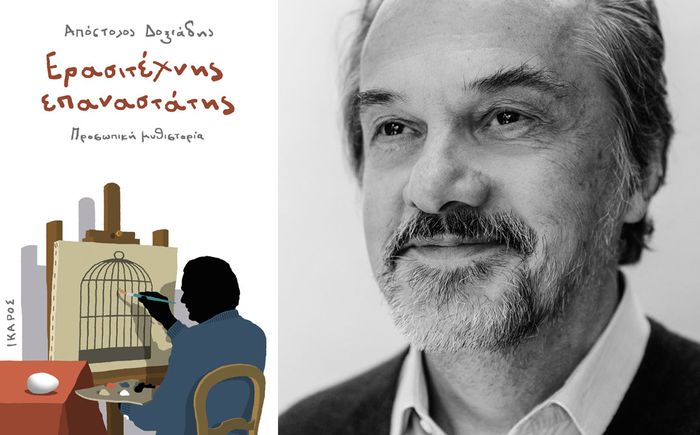
Apostolos Doxiadis as an ‘Amateur Revolutionary’ | Interview with Athens Voice.
Apostolos Doxiadis, to mark the publication of his new book *Amateur Revolutionary: A Personal Novel*, gave an extremely interesting interview to Dimitris Fyssas for *Athens Voice*. You can read it below: Can 1,062 pages of a youthful political autobiography be a breeze to read? They can, when it comes to the self-deprecating, witty writing of Apostolos Doxiadis, which has just been published.The book has a title and a subtitle, each consisting of two words. How are they justified? I shall leave it to the reader to discover the meaning of the title for themselves: to explain a title of this kind, which is ambiguous, seems to me to betray the book, to reduce it to a formula, a simplification. I do not wish to do that, at least not now, so soon after writing it.I can, however, speak about the subtitle, ‘personal history’. The book is personal; that is to say, it speaks mainly of me but always from my own perspective, even if it recounts events that form part of a broader historical context. But that doesn’t make my narrative historical. To tell a life story without sticking to dry facts, to a mere chronology, you have to breathe life into it. And that endeavour in itself leads you to the tools of the storyteller. You need narrative vitality, which you achieve by choosing what to say and what not to say, how and where to place emphasis, how to describe the action and ideas, as well as the relationships between your characters – yourself and others. I used these tools freely in the book. I abandoned the purpose of the storyteller, or if you like, the novelist, in only one respect: I did not invent events. I never consciously tell lies – as for the unconscious, I make no promises. But by filling in the details of memory, I inevitably piece things together, somewhat like witnesses at a crime scene who then work with a police sketch artist to create a likeness of the perpetrator’s face. Inevitably, such a portrait, like my book, is an approach to the truth, consciously subjective. I would say that the defining feature of my narrative freedom—and, if you like, of ‘fiction’—is that in the book I construct normal conversations, as if I were recalling them word for word. Although I have a very good memory, like everyone else I have a brain in my head, not a tape recorder. So I am necessarily inventing, in the dialogues—the main part of the narrative—my involvement and actions during the junta. I am always guided by something that Thucydides also does in his ‘History’: he endeavours to record the dialogues and speeches of his protagonists in words that do not stray from the spirit of what was actually said, yet are almost never verbatim.What period of your life does the book cover? From as far back as I can remember myself until a few months after I turned twenty-one, in the summer of 1974. You leave out, explicitly and from the outset, a number of aspects of your life at that time. Why? I didn’t start by saying what I would leave out, but rather what I would say. My focus – and this is one of the many meanings of the title you asked me about – is on politics. In *The Amateur Revolutionary*, I mainly want to recount my development as a political being, right up to the beginning of my youth. So, from the outset, even though I am talking about a young child, my focus is on how politics entered my life, initially as little stories, then as questions, and later as knowledge and ultimately as action. For this reason, I speak far less about other aspects of my life—aspects that were far more central to me during certain periods I recount—than I would in a narrative intended as a comprehensive autobiography. It is not that I neglect them: it is simply that they are not my main focus in the book. So, for example, I say far less about my intellectual interests as I grew up, as well as about my existential anxieties or my relationships with friends or mentors. I touch on all these things only briefly, just enough to make the development of the central theme—politics—clear. What had no part in it, and which I therefore do not recount at all, is the romantic aspect. Apart from the fact that I would consider it a gross indiscretion towards other people, it is also completely irrelevant to the subject. I knew friends in my early youth whose romantic relationships were part of, or sometimes a continuation of, their political lives. Some changed partners according to ideology or party, or party and ideology according to the partner. For me, for better or worse, this never happened. Politics and romance were separate. Nothing I did or didn’t do in politics bore even a trace of ‘sersé la fam’, as Tsitsanis so beautifully sings.What role do the visual material / poems / references to prose / songs / news items / films etc. inserted into the book play? All the things you mention—poems, songs, news items, films, music – are all part of the fabric of our lives; and so, when I speak of my life, I speak of these things too. Art, in particular, played a decisive role in my story – both in political matters and, given my age and character. But of course, this was also due to the times. How can one speak of a teenager or a very young person in the 1960s and early 1970s without rock music? How can one refer to the passion of militant young people for the myths of the Greek Left without the guerrilla songs? How can one ignore the influence of films and novels on how we shaped and gave form to our thoughts, and sometimes even our arguments? Beyond that, you know, the junta’s censorship, by banning open political dialogue, inevitably gave art—with its metaphors and ellipses—great weight in political expression. Finally, regarding the many illustrations in the book, I should add that my time working on the graphic novel *Logicomix* spoiled me a little: I often found myself thinking of something that I could better convey through an image rather than describe in words.Is the humour in your book a sign of the current Apostolos Doxiadis’s indulgence towards his pre-teen self?I would say that the humour is an expression of Apostolos Doxiadis’s indulgence towards Apostolos Doxiadis: generally speaking, I don’t think it’s very healthy to take ourselves entirely seriously. If we ourselves do not question our own infallibility, it is usually others who pay the price, through no fault of their own, and of course we end up living a deficient life, a life of illusions. Beyond that, it is natural that when someone sees a younger version of themselves – in *The Amateur Revolutionary*, several decades younger – their perspective is unwittingly influenced by the greater self-awareness they have acquired in the meantime. This allows for a greater scope for self-criticism, which is indeed often expressed in the book as humour. What role did your father play in your politicisation? A huge one. Both in terms of principles—belief in freedom and democracy—and, initially, before the dictatorship, in terms of the political sphere, namely the Centre Union. Let’s not forget, however, that a centrist of that era was defined by his distance from both the Right – especially in Greece, and the monarchy – but also the communist Left. This, during the years of the junta, got me into trouble.Did the junta’s arrest of your sister, Kalli Doxiadi, play a significant role in shaping your views? The view that the dictatorship was something evil, an enemy of democracy, existed from the moment of the coup, right from the start. But when, a few months after the coup, they arrested Kalli – then twenty-three years old – and a few months later, when she was released from the General Security Directorate, she described to me what they had done to her, those views were imbued with intense emotion: specifically, hatred. How do you explain that, despite the constant wavering, doubts and concerns, you ultimately joined the Left? Aware that I am doing a disservice to the complexity of the thoughts I describe in *The Amateur Revolutionary*, I will say here that I initially joined the Left through a combination of my passion to do something against the junta and the chance factor that my cousin and close friend, Aristos Doxiadis, was already active there. Everything else, from that point onwards, during the time I remained there, is complex, involving many phases and fluctuations, and again I prefer not to do it an injustice by cutting it short for the sake of an interview. After all, it was partly to make sense of all this that I wrote the book.Aristos, Axel, Achilles, Hercules, Stavros, dominate your narrative. It’s only natural. Unless you’re a hermit, relationships with others play a leading role in any human story. And for me, in a story that aims to focus on politics during the years of the junta, the leading roles are played by my closest comrades from that time. The ones you mentioned. How did you view Greece under the junta when you visited as a student, and how did you act?Most of the time I was forced to mentally align myself with how the overwhelming majority of Greeks saw it, who did not react to the junta except in private, with jokes and sighs. This was clearly a defence mechanism, because if I had given in to my dominant emotion, which was the fear of arrest, I would have been paralysed. This fear became a useful tool when it was consciously transformed into precautions, when I was carrying out illegal activities in Greece, such as meetings or the transport of materials. But unfortunately, sometimes it would visit me uninvited, mainly at night, whether I was asleep or awake, where at every sound on the street, outside my bedroom window, especially around dawn, I thought I could hear the Security Police or the ESA coming to arrest me. How did the Ministry of the Interior react to the Polytechnic occupation? You’re asking for trouble now, let’s get into the difficult stuff! And you’re right to do so, but I too must protect the way I narrate and analyse the occupation, and its consequences, in the book. Today, for better or worse, the Polytechnic is regarded as the defining event of the dictatorship years; indeed, in schools they teach the kids that it was thanks to this that the junta fell. Precisely for this reason, I have devoted a great deal of time and attention to recounting as accurately as possible what happened back then, and the stance taken by the Ministry of the Interior. For more, see ‘The Amateur Revolutionary’… Which figures from the Left that you knew do you still regard positively even now? During the junta, I only knew my comrades, all of them young. Don’t forget that I was the youngest in the organisation, and although I had serious responsibilities, I didn’t make political decisions, nor did I discuss matters with the Party leadership. This was done on behalf of the youth mainly by Valden and Tsakyrakis, and probably others whom I did not know at the time.More generally, however, the faction to which I belonged during the internal disputes within the KKE (Internal) under the junta – the others called us ‘right-wingers’ – was the one later represented by Leonidas Kyrkos. And I would say that I considered his line to be the most serious in the development of the Left after the dictatorship, as expressed by him, Babis Drakopoulos, Kostas Filinis, Angelos Diamantopoulos, and others. I met all of them after the dictatorship, though not in a political context, as I did not remain on the Left. They were, I believe, generally serious people who, as they matured, came to realise that democracy and communism do not go together. But, of course, I now think that everyone else—politicians outside the Left—knew this simple truth anyway. So, I view the figures I mentioned positively today only for reasons similar to those that highlight the prodigal son or the repentant prostitute in the Gospel. In other words, I appreciate the courage of their repentance, which in this context means the change in their views over time. For people politically moulded in the Stalinist mould that had taken shape during the Occupation and the Civil War within the KKE, this is no small matter. But I do not admire anyone in this sphere as a great political figure. I prefer to attribute this quality—rare in any case—to people who have shown greater consistency in their course, in this instance in the struggle for freedom and democracy—principles in which I still believe today.The book ends with the events of the summer of 1974 and with many of your reflections, both past and present. Will there be an autobiographical sequel? I’m not planning one, because my aim in writing the book was not primarily to describe my life for others – except perhaps for my children, initially – but rather to understand a dark part of it, for myself. I wanted to study myself more closely, particularly in relation to politics and especially those years about which I remained full of great questions. From that point onwards, I have a clearer understanding of what happened to me in my life and where I was heading at every stage, for better or for worse. But the years up to my twenty-first, up to 1974, required a great deal of digging. This is expressed mainly in *The Amateur Revolutionary*, with reasoned narration as the primary tool of inquiry.Learn more
-
Interviews
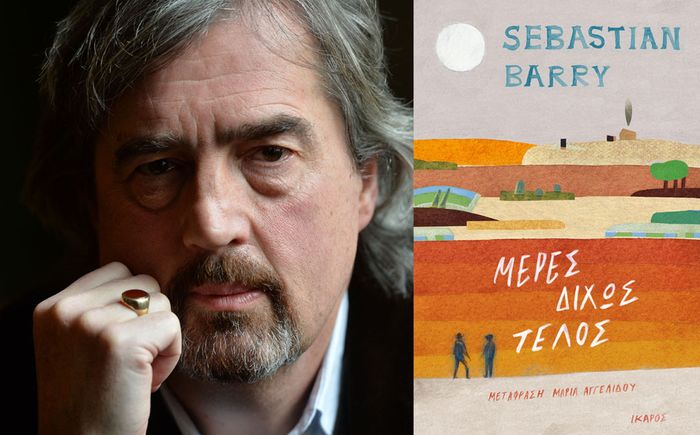
Sebastian Barry: “My religion is supporting my gay son.”
Read below the fascinating interview given by Sebastian Barry to Michalis Mitsos for the newspaper *Ta Nea*, on the occasion of the publication of his novel *Days Without End* (translated by Maria Angelidou).There are some writers who captivate you and leave a lasting impression from the very first moment you encounter them. They won’t let you rest until you’ve finished their book, and all you want to do afterwards is read the next one. I don’t know exactly which category they belong to, but I do know that I feel very close to them. Both them and their heroes. Inias McNulty was my kind of man; it was through his adventures that I began my journey into the world of the Irish author Sebastian Barry. I suffered alongside him when he was hunted by the IRA in the 1920s, after the Irish Civil War. Willy Dun was also one of my own, having fought a few years earlier in the trenches of the First World War: the descriptions of the battles in the pages of *Far, Far Away* are among the most powerful things I have ever read in my life. I naturally felt a close connection to Thomas McNulty too, undoubtedly Inia’s ancestor, who experienced love a few decades earlier, amidst the horrors of the Indian Wars and the American Civil War. Belonging to a sexual minority in times of war makes things even more difficult; we have seen this in recent years in Syria too. ‘I saw a weary traveller, / bedraggled, in rags’: with this motto by the American poet John Matthias, 63-year-old Barry begins his latest book about a great friendship between two boys, which will subsequently develop into a happy family with the addition of a beautiful Indian woman. And as he tells me in the interview that follows, in honour of this couplet he would sing Tsitsanis’s ‘My Jacket Has Worn Out’ if he were to read excerpts from the book in public in Athens.Every child must get up and dance, dance past all the obstacles, dance through the difficult, painful country dance of the end.” Life is a bit harsh, isn’t it? All right, but it’s still a dance. And I’m not even sure if white, middle-class Irish people like me can speak with any authority about poverty. There are many in Ireland who are struggling terribly, including many children, which is disheartening in a recovering economy. Inias McNulty is a fugitive. Willie Dun is a ‘stateless soldier’. Thomas McNulty is a gay immigrant. Is it loneliness that drives you? Or is history written by minorities?There is a useful and beautiful American word that I prefer to ‘loneliness’. It is ‘solitude’, a state of being that even an inanimate object can feel. The universe itself is undoubtedly a manifestly solitary structure. Generally speaking, however, for me as a writer, the character who is constantly forced to leave a place looks back at that place with great intensity and sincerity, and either adores or detests it with a strange precision.What did it mean to be gay in 19th-century America? Certainly not what we mean today. As far as I know, the word didn’t even exist, and if it did, it wasn’t derogatory or abstractly biblical. In that place of new beginnings and fresh starts that was 1850s America, great hardships went hand in hand with great possibilities, something that still seems to define America. One of those great possibilities was the birth of the freedom to be gay – indeed, to be whatever nature and the song of creation make you. One can see this glimmering and flickering through human history – albeit faintly.The Guardian wrote that the fact you managed to fit Irish emigration, gay identity and the creation of Europe into 260 pages is a miracle. Really, how did you manage it? I honestly have no idea! I followed Thomas’s voice with all the devotion and faith I could muster as a human being. All these things are inevitably intertwined in his story, and just as we are compelled to live day by day – ‘Where else are we to live but in the days?’ as Philip Larkin said – so too is a book, thankfully, written page by page; otherwise we would have fled the battlefield in terror.You’ve spoken to the press about the day your son Toby told you he was gay. Since then, you said, he has introduced you to the ‘magic of gay life’. It seems, then, that you did not follow the Pope’s advice, who said that parents should seek psychiatric help for their homosexual children…And just imagine that up until that point we’d had such a high opinion of the Pope in my household – even though it’s a household that’s half agnostic and half Protestant. This simmering zeal of some people to keep saying that there is something wrong with being gay is criminal and has always been criminal. Do the consequences of what they say ever cross their minds? It is as if they are offering a cheap excuse for being homophobic, a shameless passport to hatred. Your country has changed to a striking degree. What is the secret? Extroversion? Modesty? (‘because the clothes are in tatters’, as you say somewhere) Humility? Here are some good reasons! It would be truly interesting to understand the undoubtedly complex and mysterious mathematics of a country’s transformation. And what is certain is that the way the world is made has to do with a whole host of mysterious numbers. Extroversion, modesty, humility – a fine bouquet of words under the name of any democracy. We should adopt them immediately. The big issue of our time is identity. This is clearly evident in ‘Days Without End’. What is your view on the politics of identity? I am the father of a gay son who is now 21 and flourishing as an artist, a student and a human being: that is my only religion. The religion I choose is to support my son. This is what all parents of gay children need to understand. Being gay is an example of human radiance. That is how I feel about it. What have you discovered in the year that has passed since you were honoured with the highest distinction of the Irish Fiction Laureate?During this time, I’ve had the opportunity to visit, with the book club I belong to, places I would never otherwise have been able to enter, such as the Central Psychiatric Hospital, various hospital wards, and the Centre for Successful Ageing in Dublin. I also took part in various online broadcasts with other Irish writers, and was charmed by their open-mindedness, their modesty, humility and kindness towards me. I must admit I was impressed by all of this. How did the financial crisis affect Irish writers? The major change for writers was probably the drastic reduction in advances from publishers, as they anticipated a fall in sales. In Ireland, artists used to be completely exempt from tax. That has now changed and a tax-free allowance has been introduced. That is the practical side of things. I think it’s a bit harsh to say, but I’ll say it anyway: the crisis seemed to particularly encourage Irish writers to make greater efforts and achieve more, with new voices emerging from the murky sea of troubles alongside so many fully-fledged gods – Sally Rooney, Sarah Bom, Aimee McBride, etc., etc. Come to think of it, we could talk for an hour about the best names in new Irish literature and not mention a single man! I’ve just finished ‘Normal People’, Sally Rooney’s new book. An amazing portrayal of the characters, and the author is only 27 years old… Just as she is a brilliant and very interesting person. Completely independent, intelligent and admirable. At first I compared her to Elizabeth Bowen and Maria Edgeworth – now she can only be compared to herself. What does ‘Irishness’ mean in literature? In real life? Now that’s a difficult question. There is a strand of literature that has sought, and continues to seek – sometimes even with a touch of mischief – to constantly enrich the rather limited set of adjectives that once defined Irishness. As someone whose defining adjectives – city-dweller, middle-class, agnostic, etc. – never seemed to convey to others my own sense of an urgent Irishness, I have been striving to do so on my own for forty years. I therefore hope that Irishness in literature will continually tend towards Irishness in so-called real life. Strolling slowly towards Bethlehem… ‘The Odyssey of Inias McNulty’ is the first book of yours I read. Faced with the danger of old wounds reopening in Ireland because of Brexit, would you say that the hero’s adventures are not yet over? That question frightens me. Even for us in the South, the troubles in the North were always there, a violent presence in the back of our minds. And they were a strange and almost surreal echo of the troubles in Ireland during the civil war and afterwards. An unquenchable hatred that not even the power of good could stop. I pray, I pray, that people like Inias may continue to rest in their often unknown and unmarked graves. A few years ago, in an interview with ‘To Vima’, you said that your greatest literary brothers are Joseph Conrad, Thomas Hardy and Cavafy. You also said that you love Tsitsanis, Jacques Tati and Bergman. Do the writers of the new generation have so many points of reference too? Ah, Tsitsanis… I hope so. Perhaps not that specific set of points of reference, because I am 63 years old and a child of a particular era. I first came across Tsitsanis in a small seaside restaurant in Dryos, Paros, because the owners – some wonderful people from Trikala – had stuck those faded photographs on the back wall of the café… They piqued my curiosity. And then I felt that intense fire of his music, which still burns! What did you actually do for a year in Paros? Would you go back to live there? I wanted to go somewhere cheap to write. It was 1980. Back then, if you had a thousand pounds in your pocket, you could live in Greece for a year. Now you can live for three days! My father had been going to Paros since the mid-1970s, so when I arrived on the island I had at least one point of contact. But in reality I didn’t need it. Before the European Union, Naoussa was on the cusp of economic change, although one could sense the major shifts following the horrors of the Second World War and the end of repression under the military dictatorship. What I did not expect, in my innocence, was the onslaught of a kind of beauty that changes your very DNA: the sparkling waters, the ancient modernity. The strong friendships. And the open-heartedness, modesty and sense of hospitality of the people. I was 25 years old and knew only the cold heart of Northern Europe, the indifference of a city like Paris. I changed one letter (Paris – Paros) and found Paradise. I return every now and then, but something of my 25-year-old self always remains there, and goes to Kolymbithres on his battered bicycle, following a dirt track that no longer exists.When you read your books in public, you tend to sing. What would you sing if you were reading ‘Endless Days’ in Athens? Perhaps Tsitsanis’s ‘My Jacket Has Worn Out’, in honour of the novel’s motto. I’d never manage the little trills at the end of the lines, though – like spiral shells. You have to be Greek to sing Greek songs, unfortunately. I could hum it softly, though – tenderly, silently. Learn more