News
News List, News Categories, Events
-
Interviews
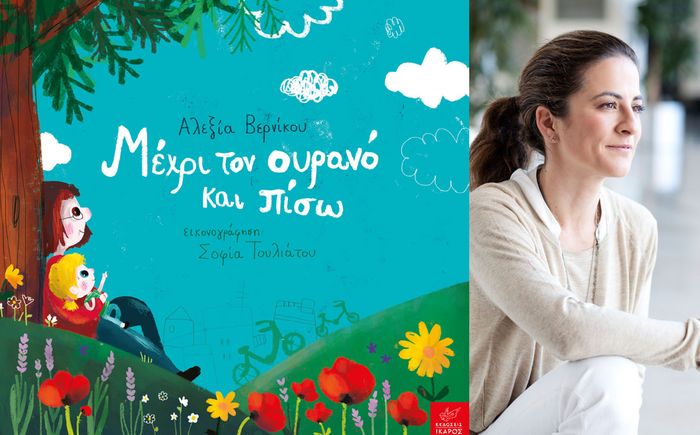
Alexia Vernikou: ‘The good always win’.
To mark the release of her first fairy tale, ‘To the Sky and Back’, Alexia Vernikou gave an extremely interesting interview to Alexandra Papadaki and All You about loss, coming of age and the little moments in life that make it so beautiful.You can read it below: If you have a young child, you’re sure to be familiar with the My Playce pre-school centres co-founded by Alexia Vernikou, and you’ll have read her articles on psychology and parenting advice. The latest venture of this multi-talented mum of two girls is writing, and her first book, *To the Sky and Back*, tackles a difficult subject: loss, which affects us all, parents and non-parents alike. I read your (wonderful) book to my 9-year-old daughter Ioanna and immediately... it went on the shelf and never came off again. She didn’t want to read it again. She just shook her head as if to say, ‘I know, but don’t tell me any more’. Having only two grandmothers, whom she loves ‘to the moon and back and three somersaults’, she refuses to talk about death. It’s a difficult subject. Tell us about it. Clearly, the subject is difficult (perhaps the most difficult) for both children and us adults. Nevertheless, it is part of our lives, and however much we want to avoid it, we cannot. So, as parents, it’s important to give children the chance to ask us questions on the subject without pressuring them. They need their own time and space to process it. So, Ioanna did the right thing by putting it back on the shelf, as she didn’t want to talk about it right now. When she’s in the mood, or when she needs to deal with it, she knows where to find the book and the answers she needs. I get the feeling that although your book is for children, it’s actually aimed at us adults. To us who are growing up now that no one calls us ‘my child’ anymore. Am I wrong? It started out as a children’s book, but along the way I realised it’s a book that really moves adults, precisely because we know how much this loss hurts. The child’s grandmother is our own mum, and in her eyes we are always children. With her passing, our own coming of age usually follows, and that is when nobody calls us ‘my child’ anymore. You were trained in the Merimna programme for managing loss and grief in children and adolescents. At the recent launch of your book, the proceeds from sales supported Merimna’s work. Tell us a little about your relationship with the association and what we should know about it. Merimna is a non-profit organisation that provides support to children and adolescents facing a serious illness or the death of a loved one. It deals with the management of loss and grief, both by supporting families and by training healthcare professionals. It has been operating since 1995 with counselling centres in Athens and Thessaloniki and is the only organisation in our country dedicated so comprehensively to this cause. Grief management is a subject that touches me both personally and professionally, which is why I decided to become a ‘friend’ of Merimna myself and support their work. You are involved in writing articles, so we can now call you an author as well. How did this new chapter in your life begin, and how do you plan to develop it? I’ve loved writing since I was little, so the articles and the book came as a natural progression. I’d like to write more children’s books because I have plenty of ideas, but also a book for parents on topics relating to children.A particular comment you’ve heard or read about your book... I feel lucky because the book was quickly loved, as was evident from the reviews and the emotional response it has generated. The nicest comments, however, have come from the children in the form of questions about Elli and her grandmother, life and love. What did your daughters say to you about the book?Both Nefeli and Amalia were delighted that their mum had written a book. They told me it was ‘a bit sad but also a bit happy’ and they were thrilled with the illustrations. As for the subject matter, it’s something both of them have brought up for discussion, and it seems that the answers they’ve found in the book are (for now) comforting.I remember when I was little and realised that my beloved grandmother was going to die; I avoided seeing her, as if I wanted to rid myself of her sweetness so that the loss would be less painful. How did you cope with your grandmother’s death? We often see this reaction in children, namely avoiding something they know will upset them. It is, after all, a way of protecting themselves, and (fortunately) they know how to do it very well. When I lost my own grandmother, I felt (and still feel) just like Ellie. I was heartbroken, I was angry, and the loss was immense. I missed her terribly and I still do, but I have kept the sweetest place for her in my heart and I carry her with me through all the good times...What prompted you to study Psychology and Art Therapy? When I had to choose what to study, I knew there were two things I loved: children and art. My studies back then and my work today allow me to combine both and enjoy what I do. To become a psychologist and deal thoroughly with other people’s problems, must one first have resolved one’s own? I would say that they need to be at peace with themselves. We humans are a ‘work in progress’, constantly evolving and learning to manage and resolve our problems and difficulties.What are your fondest childhood memories? Summers in Corfu. With those long barefoot days, the carefree atmosphere, the family, the endless children and the sea. You have co-created the MyPlayce pre-school centres. What do you think the children and parents gain from them? A space they trust, where they can get dirty, experiment, dance, climb, cook, share, learn and play. All of this in a way that is creative for them, relaxing for their parents and enjoyable for everyone. In your years of working as a parent counsellor, if you had to single out just one piece of advice for parents, what would it be? I firmly believe that we must tell children the truth. Whatever the question, whatever the subject. Always taking into account their emotional and developmental stage. What is the biggest mistake we make with our children? All parents have made, are making, and will make ‘mistakes’ because we too are growing and learning alongside our children. If I had to single out one thing, I would say that today’s parents struggle to set boundaries. They struggle to say ‘no’ and struggle to remain consistent in what they ask of their children. This confuses them and ultimately causes insecurity in the children. I suppose you’re in high demand among groups of parents because of your role (they ask for advice, tell you their problems, etc.). Or do they perhaps avoid confiding in you, preferring to bury their heads in the sand? I imagine both happen. As parents, we tend to sugar-coat situations, and this may lead us to bury our heads in the sand. However, there are many times when the exact opposite happens, and so I often hear the phrase ‘I’ve got a question for you...’. When should we seek help from a psychologist for ourselves or (and) our children? When and if we feel the need to do so. It’s not compulsory, but it’s important to know that we can if we wish to. A parent’s instinct is very strong, and it’s important to listen to it. Both in matters concerning ourselves and in matters concerning our children. What is the greatest truth you’ve heard from your children, Nefeli and Amalia? That... ‘the good always win and our good deeds make us feel good’. It has pretty much become our family motto. The best moments of the day with your daughters... When they wake up and just before they go to sleep. When we read fairy tales, when they tell me their news from school, when we draw at the easel, when they burst out laughing, when we get up to mischief together, and when they hug each other...Living in a constant hubbub, with lots of people and lots of children’s voices, do you occasionally long for complete isolation? For not even picking up your ringing mobile? Very often. And when I feel the need, I do it. I switch off my mobile, pull down the shutters and find the peace within me. ‘From a young age we learn to lose; loss could be our cradle; you can’t have it all; the first phrase we learn’. Lyrics by Gerasimos Evangelatos, performed by Natasa Bofiliou. Do you find truth in them? Of course. We encounter loss early on, and not just in the form of death. That is why it is important to learn to deal with it. What great thing have you discovered about life so far? That it is beautiful. And that it is all the little moments, which cannot be shared in words, that ultimately make it so beautiful.Learn more
-

Interviews
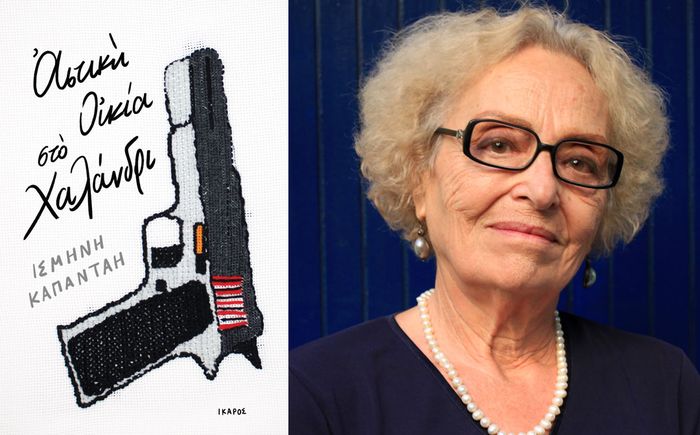
Ismini Kapantai: “Were we turning a blind eye? Were we self-destructive? […] Today we’re simply paying the price, which is greatly inflated, of course. In life, everything—and I mean everything—comes at a cost, and we’d obviously forgotten that.”
To mark the release of her first crime novel, *Asitiki Oikia sto Halandri* (A Townhouse in Halandri), Ismini Kapantai gave an extremely interesting interview to Elpidoforos Intsembelis for diastixo.gr.You can read it below: What inspired you to write the book *Asitiki Oikia sto Halandri*?Recently, I have been trying to understand when and where we went wrong as a society and how we arrived at what we are experiencing today – namely, the crisis, a crisis that is not merely economic, but primarily social. It was only natural, then, to look back to the years that preceded this, the years of false bliss, not so much the 1980s as the 1990s, years during which the certainty had taken root within us that whatever happiness we enjoyed had, and would never have, any cost. At the same time, I should perhaps add that recently I have been rereading, for other reasons of course, the history of the creation of the modern Greek state (Diamantouros, Dertilis, Klog, as well as memoirs of freedom fighters). If one delves into this material, one realises, however unbelievable it may seem, that in so many respects—and these are always the ‘bad’ ones, the negative ones—we remain unchanged in our social behaviour. Experience clearly does not teach us, and we repeat, indeed with passion, the same mistakes. This, I believe, is how the Urban House in Halandri came about.Is the title you chose symbolic, or does it refer to specific people or situations? The title is purely symbolic. From time to time, the issue of social classes in Greece is raised, and specifically the issue of the middle class, sometimes as a question, ‘Does Greece have a middle class?’, and at other times as a definitive conclusion: ‘Greece has never had, nor does it have now, a middle class’. The answer, of course, will eventually be provided by scholars and historians. In *The Bourgeois House* in Halandri, however, some of my fictional characters are, in my view as a writer, a version of the Greek bourgeoisie. In the novel, the main character is Aspasia Arnaouti. Where does she find the strength to assert herself over the whole family?In the Greece of Aspasia Arnaouti’s youth, and whilst gender equality could only exist in the realm of science fiction, it was women who, in essence, ruled their households, and this with the consent of the men. Their roles were, of course, separate and distinct, but the man was always regarded as the head of the household. Let us not forget, however, that during the Ottoman period on many islands, where the seafaring men of the family were away all year round, women took on their roles in all areas of life. This resulted, amongst other things, in the family home being legally bequeathed not to the eldest son, as was the case elsewhere, but to the eldest daughter, also known as the ‘kanakari’. Aspasia is a woman who has fought hard and who knows in advance what lies ahead. Is that enough for her to survive in the business world? Aspasia Arnaouti belongs to a particularly gifted, yet on the other hand terrifying, breed of people, men or women, who have resolved never to be defeated, never to lose, and are, consequently, prepared to pay any price in the game they are playing in order to win, without a second thought. People who do not hesitate to sacrifice everyone and everything – Aspasia in my book not only sacrifices children and grandchildren but, in a sense, by doing so, actually enjoys it. It is the human species that has no inhibitions, the people who, particularly in decadent societies, not only impose themselves but also serve as role models. You are referring to the 1990s. So why did everyone believe that money could buy them everything? Unfortunately, I don’t have an answer to your question. Looking back now, we are all baffled by the naivety that characterised us as a society back then. Were we turning a blind eye? Were we self-destructive? I don’t know, but when we look back, we are astonished to realise how readily we accepted all the positives (the ‘free’ positives) without ever asking ourselves how they came about or why. Today we’re simply paying the price, which is, of course, vastly inflated. In life, everything—and I mean everything—comes at a cost, and we’d obviously forgotten that. You describe harsh situations and, more importantly, the exploitation of people. Is there no justice to punish those who use the weak as pawns to achieve their goal, which is profit? Justice has always existed and continues to exist, but alongside it there is also institutional corruption, which flourishes in periods of social decline. The society in which my characters live is clearly in decline. Mitrodora, or Dori, is playing with fire. Is she perhaps overstepping the boundaries set for her? I wouldn’t say so. Who, after all, sets these specific ‘boundaries’, as you call them, and when? Are they always the same, in every era? Dori grew up and lives in an environment where the only thing that matters is ‘how much you have’, and certainly not how you acquired it. It is a society where the main and primary concern of those who make it up is ostentation. Dori, too, is a member of this society of ‘appearances’, and acts accordingly. The standards were set by others and Dori operates according to them; I would consider her more of a victim, and by no means a perpetrator. Blackmail, underhand dealings, fraud. Do all these things coexist in the daily lives of businesspeople, or do they belong to the realm of fantasy? I consider ‘daily’ to be an exaggeration. Alas, surely in every field there are also the honest, the worthy, those who do not cheat or blackmail to succeed. The successful, yet dishonest, who are accepted without hesitation by society, and in many cases even serve as role models, existed back then and, unfortunately, continue to exist today. A glance at the newspapers, or listening to the radio and watching television, is enough to see this. And then a murder takes place. Is it a consequence of the abuse of society’s unwritten laws? Certainly, and not only of the unwritten laws but also of the written ones. It is not the commandment ‘Thou shalt not kill’ that has prevented us and continues to prevent us from getting rid of anyone who, at any moment, annoys us. There is also the criminal justice system, which, however, is violated with alarming ease by those in power – those with money and access to the so-called ‘deep state’, that is who I mean. On the other hand, we have police officer Christou. What makes him charismatic? Christou is a man of the people who set himself goals early in life. He is intelligent, ambitious, hard-working and methodical, so it is only natural that he succeeds most of the time. Let us not forget, however, the factor of luck, as well as his harmonious working relationship—which is his own choice—both with his superior and with his subordinate, with whom he develops another kind of relationship: a romantic one. At one point you write that Christos reads crime novels. Could something like that happen in real life? Personally, I haven’t yet had the chance in my life to come into contact with people working in that particular field so as to exchange views with them on literature; I cannot, therefore, know whether this is the case, that is, whether police officers enjoy reading crime novels, but why not? I would, in fact, consider it highly likely. After all, we know that crime novels are popular with the reading public, far more so than many other genres. And, as always, the presence of romance. Is this also one of the factors that makes the novel more interesting?In my novel, as you will have seen, there are many characters. They are men, they are women, young or not so young; it would be natural and to be expected, I think, for love to arise between them at some point, just as it does in real life.How do you use suspense to keep the reader hooked and engaged? In a good crime novel, there is always ‘suspense’ and, if you’d like my opinion, I believe there is plenty of it in *The City House*. However, as I am the author and may be biased, we will have to wait for those who read it to provide the answer that really matters to your question. I would, however, like to pose another question here. Is it only the suspense that keeps the reader hooked on a crime novel? My personal view, as a member of the reading public now, is that suspense alone is not enough. You need well-developed characters, above all, and a plot that rings true. Which crime writers do you like? Many, from the classics like Simenon, Conan Doyle, Hammett, James; I’ve also recently read Jo Nesbø, but my favourite remains Agatha Christie with her unsurpassed *And Then There Were None*.Why are so many crime novels being published lately? I believe a publisher would give you the most authoritative answer to that question. However, with the economy in its current state – that is, with the crisis that has literally crushed the market across all sectors – I imagine that publishers prefer them because crime novels have always sold very well and consistently.Learn more
-
Interviews
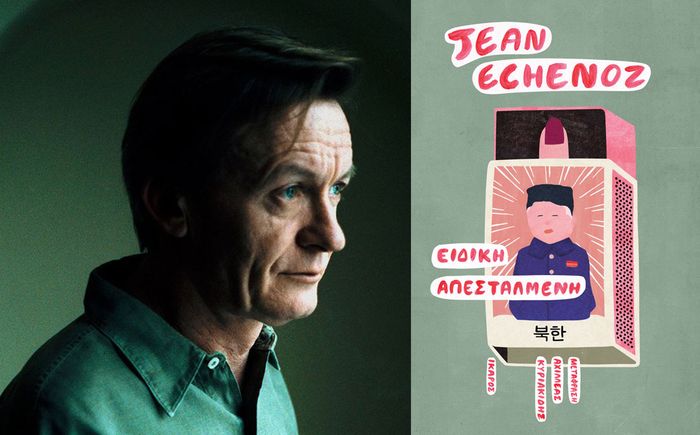
Jean Echenoz: ‘The reader is the inventor of the books they read’
The popular French author, Jean Echenoz, gave an exclusive interview to Bookpress and Dionysis Marinos, on the occasion of the publication of his latest book Special Envoy (translated by Achilleas Kyriakidis). You can read it below:Mr Echenoz, it has already been 38 years since you first came to the fore. Have you changed since then? Are you now a different writer? Although nothing is constant, not much has changed in terms of my writing. However, a great deal has changed in my life. Writing is now not just a part of it, but an essential part, as it has become my profession.How do you write? In what way, or, if you like, with what approach? I seek to explore uncharted areas of writing. I’ve noticed that when I start writing a book, I always want to work against what I’ve written in the past.Could you do something else? Not write again, let’s say? I’m afraid not. I can’t do that. What appeals to you most, the subject matter or the style? You are one of the finest stylists, but plot is not absent from your books.I’m equally interested in both, and that’s because both the subject I want to write about and the way I’m going to write it are interdependent. You know, cinema taught me a lot about how to tell my stories. In the 70s and 80s I watched a great many films. How did the idea for your latest book come to you? North Korea, Kim Jong-un: it’s not easy for anyone to see such subjects as material for fiction.To tell you the truth, I don’t remember very well how the idea came to me. I think that initially I wanted to write a short crime story involving a kidnapping, with the perpetrators demanding a ransom to release the victim. It would have been a story set in Paris, but also in the French countryside. On the other hand, however, I also wanted to write a story in which various spies would play a leading role. So, in the end, I chose to set the story in a ‘dramatic’ region such as North Korea. The novel constantly plays with the reader. You give them the floor. Am I wrong? I wouldn’t say I give them the floor. No, that is not my intention. And I say this because I regard the reader as a receiver. They are an imaginary witness to what they are reading. On the other hand, they are also an inventor of every book. What is certain is that you do not want a passive reader. Your books, by their very nature, demand active reading. I firmly believe that the reader is never passive. On the contrary, they are an actor, a hero of the novel. Just like the heroes found within the text. And if they grow tired of the book they are reading, they are free to put it down, and then they become a catalytic actor. In *The Special Envoy*, you use all genres in a highly successful blend. Politics is intertwined with satire and espionage. I use whatever I need to develop my story. I usually say that a novel doesn’t start with one idea, but with two. That is, with two facts that may be unrelated to each other, but which can somehow come together. This is something that captivates me and compels me to discover it. Are you interested in what’s happening in the world? Do you read newspapers? I read newspapers every day and I’d say there are times when I find good ideas in them. There are, of course, other times when I can’t see anything that grabs me and sparks an idea. Would you write a book featuring Emmanuel Macron or Donald Trump as the main character? I don’t think I would do that at the moment. No, I wouldn’t want to write a book with those two as the protagonists. Do you consider yourself a ‘political’ writer? Honestly, I’m not sure. There are times when I say, yes, I am a political writer, and at others I clearly do not operate on a political level. Therefore, I cannot answer that question with certainty. Are you writing anything at the moment? I’m afraid I cannot answer that with certainty either.Do your awards mean anything to you? You’ve won quite a few. Receiving an award always stirs up strong emotions in me. It means that your work has had an impact on readers. Every time I receive an award, I’m as surprised as the first time, and that’s because every book is a new endeavour. Nothing can be taken for granted.Learn more
-
Interviews
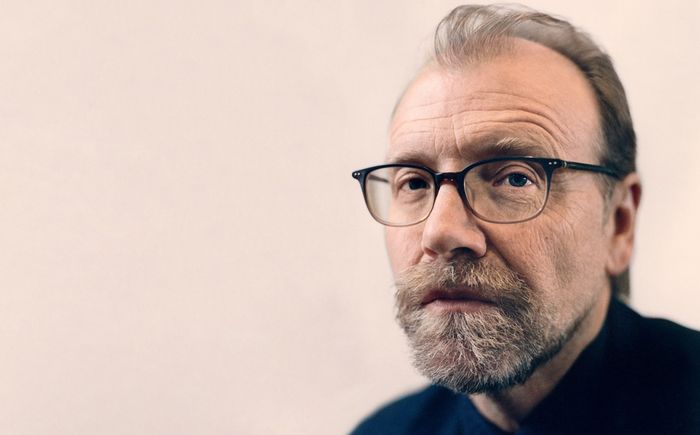
George Saunders on LIFO.gr: ‘We are temporary, celebrate life’.
The popular American author, George Saunders, immediately after his book ‘Forgetfulness and Lincoln’ was awarded the 2017 Booker Prize, gave an exclusive interview to LIFO and Dionysis Marinos. You can read it below: Mr Saunders, are you the same person you were before the Booker? Has the prize changed you in any way?I hope I am the same. My self-admiration is already beginning to wane in a quiet way. What is the real prize for a writer? To develop confidence in his vision. In this way, as you move forward, you can strive with greater intensity to create beautiful things. Is it acceptance, admiration or the struggle with words that drives you to embark on the process of writing a book? Honestly, all of the above. But the moment I’m writing, the moment I’m in the midst of developing a book, those things come last. The most important thing is the feeling that you’re creating a coherent world that emerges from chaos. And it is that feeling that something like this came ‘from’ you and ‘because of’ you. In reality, my self disappears momentarily or is neutralised by the artistic work: that is Paradise. We know you as a short-story writer. You have been accepted as one of the ‘artists’ of the genre in contemporary American literature. What made you write a novel? Every story dictates for itself how it should be written. For a long time I had decided to abandon any attempt to write a novel – I might even say I felt proud of that. I had accepted that I was a fan of the short form. However, I discovered that this particular story was so moving that as soon as I started writing, it was as if a mind (and a DNA) distinct from my own emerged from within it. And now that you’ve completed your first novel, and a successful one at that, will you return to short stories? Yes, I will. That’s where I belong. I love the short form. If another novel comes along in the future, I think it will arrive in the same way this one did – insisting, despite my own objections, that it must expand and become longer. Do you find it easier to write short stories, or is it actually harder given that you have to be precise in such a limited space? Sorry, but do you feel you have to be precise? No, I don’t need to be precise, I don’t think so. On the other hand, perhaps, yes, you do have to be concise. The difficulty with short stories is that they behave like a joke: in the end, they’ve either worked or they haven’t, and only the reader knows. And part of the pleasure lies in the effectiveness of the delivery to the reader. Therefore, I consider the short story to be a very demanding form. I have to ‘burn’ the less interesting scenes and then discard them in favour of the more intense ones – and that takes time and many discarded pages. Speaking of your book Oblivion and Lincoln, the American title includes the word ‘Bardo’. A state between death and rebirth into another form of life. Is that what we are, Mr Saunders? Are we constantly in such a state? Yes, I believe so. The word ‘bardo’ can be used in all transitional states – like the one we are in right now, between birth and death. I suppose we can view every single moment of our lives as a ‘bardo’, with our selves dying and being reborn at every moment. The fact that we carry on basically has to do with a mental construct we create – perhaps for Darwinian reasons, or because we might go mad if we truly realised we are only temporary. Yes, mad, or perhaps with a certain insight. What was the first thought that came to mind when you decided to write the novel? How did it all begin? Many years ago – in the 1990s – I had heard that Lincoln’s beloved son had died whilst he was President of the United States. He was so overcome with grief that he had visited the grave several times to hold his son’s lifeless body in his arms. That idea has stayed with me all these years – it was all so strange, sad, yet beautiful. Mr Saunders, are you a religious writer? What do you think of yourself? I’d like to think I’m a religious person, or at least someone who’s certainly interested in spiritual matters. I mean, if a person is alive, interested and curious, then a certain set of questions arises in their mind. Why are we here? How are we to live, given this mad contradiction: 1) we were made to love one another AND 2) everything we love (especially our precious selves) is entirely temporary. So, if a writer takes these questions on board and incorporates them into their work (or thinks about them every day), are they a religious writer? I would say yes, even if the result—their work—is not ‘religious’ in the traditional and literal sense. Is your book accessible? I mean, what do you think—can it be read by everyone? It certainly won’t appeal to everyone. You can see that if you look at the reviews on Amazon (laughs). My hope is that it isn’t a difficult book for no reason, if you see what I mean. As the difficulty unfolds, it should lead to increasing beauty. So, what I’m trying to say is that the difficulty rewards the reader in the end. I hope the book teaches the reader how to read it, so that by the end, they’re reading in a new and completely mad way. That offers even greater beauty. How strange is it to give a voice to spirits? In your book, the dead speak. It is just as strange as giving a voice to the living. It is difficult. But it brings great joy. I sensed a strong spirit of understanding from you in the book, and I think that is one of the novel’s key ‘strengths’. I hope so. I think that is precisely what literature does so well in a unique way: it allows us to step into another person’s mind and, in doing so, reassures us that we are not so different from one another – we exist within a continuous and, as a result, greater understanding, empathy and comforting action. In theory, we do this by making an effort within the framework of our perception. Let me take you somewhere else. What is your view on Trump and the fear arising from the rise of populism in the US and Europe? I think it is yet another manifestation of a human tendency that has always existed: in difficult times, it is easy and somewhat enjoyable to demonise the Other. It is harder to do what I described earlier (i.e. to live with empathy and understanding) or what I mentioned in my speech when I received the Booker Prize. The great story of human activity (I like to think and believe) is the gradual spread of love. Even with a few steps backwards, we are gradually getting better at realising that understanding and empathy are extremely Darwinian tools that the human species needs in order to survive. In the meantime, did you live in fear? Do you think the world is heading towards madness? No, not at all. It has always been this way. Our world is no crazier than it has always been. I think it is crazier for some people at certain moments. I believe in the theory of the Conservation of Madness. The root of madness is spiritual – it is our deluded belief in our separate existence in this world or in our permanence, which leads us to behave badly, and, suddenly, when we die or make a big mistake or suffer, then we realise that things are impermanent. I think this madness has followed us ever since we lived in caves. And I think it’s important, even when we find ourselves in the midst of crazy times, to remember and celebrate those aspects of life that are neither crazy, nor frightening, nor bad. The simple pleasures, the small actions that truly make up the fabric of life. It is the sun shining. It is that face passing by, smiling, beautiful and in love. To ignore these things is to give despair and evil an unfair advantage. What is the role of literature, of art in general, in all this? I see you’ve saved the most important question for last. I think the best way to answer this is to immerse oneself in a beautiful work of art and see what effect it has within you – to observe the positive changes in your mind and spirit, and how these changes make the hours that follow better and richer. That is the role of art: this pleasure and this transformation.Learn more