News
News List, News Categories, Events
-
Interviews
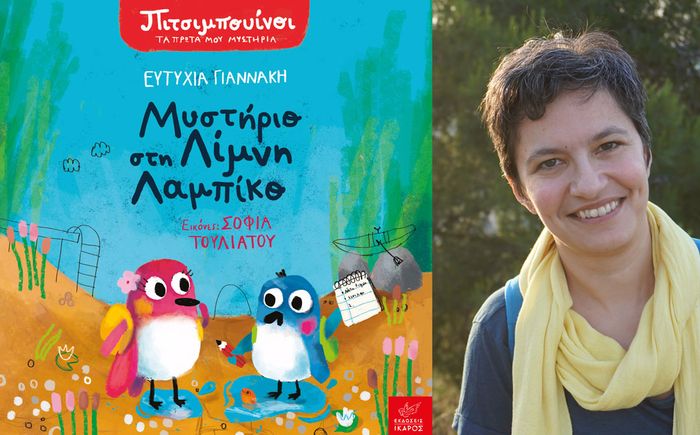
Η Ευτυχία, οι μικροί μπλε και το Πίτσι Πίτσου | Συνέντευξη της Ευτυχίας Γιαννάκη στο Πρώτο Θέμα.
This post is only available in Greek.Διαβάστε παρακάτω τη συνέντευξη που παραχώρησε η Ευτυχία Γιαννάκη στην Ελένη Φωτίου για το Πρώτο Θέμα, με αφορμή την κυκλοφορία του πρώτου της παιδικού βιβλίου Μυστήριο στη Λίμνη Λαμπίκο.Πότε μπήκε το Μυστήριο στη ζωή σου και τι ρόλο παίζει;Το μυστήριο είναι παντού, κατά κάποιο τρόπο μας συνοδεύει από τη στιγμή που ερχόμαστε σε επαφή με τον κόσμο κι επιχειρούμε να καταλάβουμε τι στο καλό συμβαίνει γύρω μας κι εντός μας. Γιατί ας μην ξεχνάμε ότι το μεγαλύτερο μυστήριο, το πιο σκοτεινό κι ακατανόητο, αλλά ταυτόχρονα και το πιο συναρπαστικό βρίσκεται πάντοτε εντός μας και στον τρόπο με τον οποίο επιχειρούμε να ερμηνεύσουμε τον κόσμο μέσα από το μάτια μας. Οπότε θα έλεγα ότι το μυστήριο είναι φυτεμένο μέσα μου από τη στιγμή που αντιλαμβάνομαι την ύπαρξή μου. Συχνά το ταυτίζουμε με τον φόβο ή τον τρόμο του αγνώστου. Για μένα υπήρξε πάντοτε η κινητήρια δύναμη για να αποδεχτώ το άγνωστο, το διαφορετικό και να κατανοήσω όσα εκ πρώτης όψεως έμοιαζαν ξένα. Στην ουσία πρόκειται για ένα εργαλείο που ξεκλειδώνει την διαδικασία κατανόησης και της συμφιλίωσης με το εδώ και το τώρα, το εντός και το εκτός, αλλά και αυτό που προηγήθηκε και όσα έπονται.Αυτή τη σχέση με την επαγωγική λογική, την αποδοχή, το απρόσμενο, το συναρπαστικό κρύβω στον πυρήνα του παιδικού μυστηρίου που έφτιαξα σε συνεργασία με την εικονογράφο Σοφία Τουλιάτου που έδωσε σάρκα και οστά σε αυτή την ιστορία.Ποια ήταν η αφορμή για το «Μυστήριο στη Λίμνη Λαμπίκο»;Ήταν οι αφηγήσεις της μητέρας μου και η ανάγκη μου να φέρω το μυστήριο κοντά σε πολύ μικρούς αναγνώστες. Προκειμένου να χτίσω αυτόν τον φανταστικό κόσμο του Πίτσι Πίτσου, που είναι το πιο μυστήριο, αλλά και το πιο ασφαλές νησί στον κόσμο, χρειάστηκε να επιστρέψω στο συναισθηματικό κουκούλι των αναμνήσεων από την δικιά μου παιδική ηλικία.Η μητέρα μου φώναζε χαϊδευτικά εμένα και τον αδερφό μου Πιτσιμπουίνους όταν ήμαστε μικρά κι έτσι οι πρώτοι κάτοικοι αυτού του φανταστικού κόσμου που τον θυμάμαι με πολύ ζωηρά χρώματα υπήρξαμε οι δυο μας. Κουβαλώντας την εμπειρία της αστυνομικής λογοτεχνίας έφτασε μάλλον ο καιρός να μην είμαστε μόνοι οι δυο μας σε αυτόν τον κόσμο και επινοήσω εκ νέου από τα υλικά του ένα περιβάλλον μυστηρίου, φυτεύοντας του όλα τα σχήματα που είναι παρόντα σε ένα αστυνομικό μυθιστόρημα ενηλίκων, αλλά σε άλλες δόσεις ώστε να εξυπηρετούν τον εύπλαστο κόσμο της παιδικής φαντασίας και το χιούμορ που απαιτεί. Κατά τα λοιπά είναι όλα εκεί και είναι ίδια. Δυνατοί χαρακτήρες, σασπένς, ανατροπές, επαγωγική λογική, ατμόσφαιρα, περιπέτεια και κρυμμένες αναφορές στον κόσμο των πραγματικών Πιγκουίνων.Τα παιδιά υπήρξαν πάντοτε μέρος της ζωής σου. Τι αποκόμισες από την εμπειρία σου στη δευτεροβάθμια εκπαίδευση;Η εμπειρία μου στην εκπαίδευση ήταν πολύτιμη και υπήρξε σημείο αναφοράς κατά το χτίσιμο αυτής της σειράς μυστηρίου, στην οποία το Μυστήριο στη Λίμνη Λαμπίκο που κυκλοφόρησε μόλις από τις Εκδόσεις Ίκαρος, είναι η πρώτη ιστορία σε μια σειρά παιδικού μυστηρίου με πρωταγωνιστές τους Πιτσιμπουίνους και τον μικρό Μπλε σε ρόλο ντετέκτιβ.Η εκπαιδευτική μου εμπειρία έχει δείξει ότι τα παιδιά, ίσως πιο διαισθητικά από τους μεγαλύτερους αναγνώστες, αντιλαμβάνονται και εισπράττουν την αλήθεια και την πρόθεση του δημιουργού, ειδικά όταν πρόκειται για έναν ολόκληρο νέο κόσμο που χτίζεις. Αν υπάρχει λοιπόν αυτός ο πυρήνας της προσωπικής αλήθειας σε αυτόν τον κόσμο, που περνάει βεβαίως μέσα από το λογικό σχήμα, αλλά κυρίως από το συναίσθημα που κουβαλάει η αφήγηση, το πιάνουν στον αέρα και καταφέρνουν να δεθούν με τους ήρωες, το νέο εύπλαστο σύμπαν που τους ανοίγεις για να ταξιδέψουν μαζί με τους ήρωες ή να γίνουν οι ίδιοι ήρωες. Μπορεί το παιδί να ξεχάσει τις λεπτομέρειες μιας ιστορίας, αλλά δεν θα ξεχάσει ποτέ πως το έκανε να νιώσει. Αυτό ισχύει για μικρούς και μεγάλους βεβαίως, τόσο για τις ιστορίες, όσο και για τους ανθρώπους που συναντάμε.Ε, λοιπόν, η εμπειρία μου λέει ότι τα παιδιά σε αυτό είναι απαιτητικοί ατσίδες όσον αφορά το συναίσθημα. Δεν αρκεί απλά να περάσουν την ώρα τους με ένα ενδιαφέρον σχήμα, θέλουν να νιώσουν κι εσύ οφείλεις να είσαι γενναιόδωρος στο συναίσθημα και στο χιούμορ αν θέλεις να συνομιλήσεις μαζί τους για το μυστήριο της ζωής και όχι μόνο.Βλέποντας τα πράγματα πιο αντικειμενικά από εμάς τους γονείς, τι ανάγκες έχεις εντοπίσει ότι έχουν τα παιδιά σήμερα; Η ανάγκη τους για αγάπη και ιστορίες παραμένει πάγια, όσοι κι αν είναι οι διασπαστικοί παράγοντες γύρω τους με τα νέα μέσα ή την πληθώρα των φανταχτερών ερεθισμάτων. Είμαστε συναισθηματικές σφαίρες, είμαστε οι ιστορίες μας, τόσο που τις περισσότερες φορές σημασία δεν έχει τι συνέβη, αλλά τι θυμόμαστε ότι συνέβη, πως νιώσαμε ή πως ερμηνεύσαμε αυτό που συνέβη. Οι ιστορίες μας είναι ακριβώς αυτή η κιβωτός των πολλαπλών εμπειριών μας και των συναισθημάτων μας. Είναι οι ζωές μέσα στη ζωή μας, το συναρπαστικό ταξίδι εντός, εκτός και επί τα αυτά και τα παιδιά διψάνε γι΄ αυτά τα ταξίδια και για να νιώσουν όσα έχει να τους δώσει ο κόσμος ως το μεδούλι του.Στο πρώτο σου αστυνομικό εικονογραφημένο μιλάς για τους Πιτσιμπουίνους και το Πίτσι Πίτσου. Τι συμβολίζουν για σένα τα μικρά μπλε πλάσματα και το φανταστικό μυστήριο μέρος στο οποίο ζουν;Το μπλε παραπέμπει στο νερό, σε αυτό που είναι η πηγή της ζωής, το δροσερό, αυτό που διαρκώς κινείται, αλλάξει, ανανεώνεται και φέρνει το νέο. Είναι σαφές ότι αν στην αστυνομική λογοτεχνία ενηλίκων έπαιξα με το κόκκινο που παραπέμπει στο αίμα, σε αυτό που παίρνει και δίνει τη ζωή, στο παιδικό μυστήριο χρησιμοποιώ το μπλε που παραπέμπει στην ανανεωτική δύναμη της παιδικής ηλικίας. Φυσικά δεν χρειάστηκε να τα φανταστώ όλα, αφού οι Μικροί Μπλε πιγκουίνοι υπάρχουν, είναι όλα στη φύση, αρκεί να σκύψουμε λίγο πιο προσεκτικά πάνω σε όσα απλόχερα μας χαρίζει.Learn more
-

Interviews
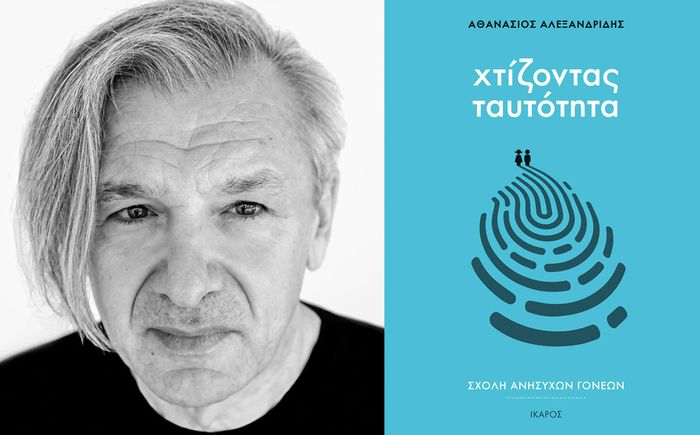
Αθανάσιος Αλεξανδρίδης: «Βασικό έργο κάθε ανθρώπου είναι να δημιουργεί τον εαυτό του».
This post is only available in Greek.Διαβάστε την πολύ ενδιαφέρουσα συνέντευξη που παραχώρησε ο Αθανάσιος Αλεξανδρίδης στον Απόστολο Πάππο για το Elniplex.com, με αφορμή το νέο του βιβλίο Χτίζοντας ταυτότητα, το τρίτο βιβλίο της σειράς «Σχολή ανήσυχων γονέων».Κύριε Αλεξανδρίδη, σας ευχαριστώ θερμά για την τιμή. Ποια είναι τα χαρακτηριστικά ενός ανήσυχου, ενός μη επαναπαυμένου γονέα;Διερωτάται με μέτριο δημιουργικό άγχος για τον ρόλο του ως γονέα μέσα σε μια συνεχώς, τουλάχιστον ως προς φαινόμενα, μεταβαλλόμενη κοινωνική και οικογενειακή κατάσταση. Έχει την ικανότητα να διακρίνει μέσα στην ρευστότητα σταθερά χαρακτηριστικά του ίδιου, του συντρόφου και των παιδιών και επιχειρεί να τα βοηθήσει να εναρμονισθούν με την οικογενειακή δυναμική, το μικροπεριβάλλον του οικογενειακού κύκλου και το κοινωνικό και πολιτισμικό μακροπεριβάλλον. Στην προσπάθεια αυτή αναγνωρίζει τα λάθη του και κυρίως, τα αναλύει, ώστε να μην τα επαναλαμβάνει. Είναι ανοιχτός στο να αναγνωρίζει και στοιχεία του εαυτού του πέρα από το προφανές.Πιστεύετε ότι οι γονείς της τελευταίας 10ετίας-15ετίας διαφέρουν από τους δικούς μας γονείς; Αλλάζουν οι προτεραιότητες, οι προσεγγίσεις, οι βασικές στάσεις έναντι των παιδιών από γονεϊκή γενιά σε γενιά;Εκτιμώ ότι οι αρχές που διαμορφώθηκαν στην μεταπολιτευτική Ελλάδα, όπως η προτεραιότητα στην εκπαίδευση των παιδιών όλων των τάξεων και η ισότιμη θέση των δύο γονέων μέσα στην οικογένεια παραμένουν σταθερές. Η απομάκρυνση από πολύ συντηρητικές απόψεις για την σεξουαλικότητα επιτρέπει την καλύτερη ψυχοσυναισθηματική ανάπτυξη των εφήβων. Επίσης η ελληνική κοινωνία μετακινήθηκε θετικά ως προς τα θέματα του στιγματισμού ανθρώπων με ιδιαιτερότητα ή αναπηρία.Αυτό που παραμένει ως μεγάλο πρόβλημα, και δυστυχώς εντάθηκε από την οικονομική κρίση, είναι η τάση της ελληνικής οικογένειας να συντηρεί την εξάρτηση των παιδιών από τους γονείς για πολύ μεγάλο χρονικό διάστημα, ίσως και για ολόκληρη τη ζωή!Τι θέλατε να επικοινωνήσετε με αυτήν τη σειρά; Τι θέλατε να πείτε στους γονείς, στους ειδικούς της αγωγής αλλά -επιτρέψτε μου- και σε κάθε άνθρωπο;Επιθυμώ να δώσω απλά αλλά όχι απλοϊκά γνώσεις σχετικά με τον ψυχισμό των παιδιών μέσα από την ψυχαναλυτική αναπτυξιακή προοπτική. Επιχειρώ να δείξω πόσο σύνθετο είναι το έργο της δημιουργίας της ταυτότητας του ατόμου και της οικογένειάς του αλλά και πόσο ευχάριστο και δημιουργικό. Αρκεί να καταλάβουμε ότι είναι το βασικό έργο του κάθε ανθρώπου: να δημιουργεί τον εαυτό του!Γιατί επιλέξατε αυτήν την δομή, δηλαδή την απομαγνητοφώνηση βραδινών διαλέξεων με γονείς;Επειδή έχουν το ζωντανό στοιχείο της αναζήτησης μέσα από τον διάλογο. Πιστεύω ότι δεν έχουμε την κουλτούρα του διαλόγου ως κοινωνία αλλά όταν δίνεται αυτή η ευκαιρία, με ένα οργανωμένο πλαίσιο συζήτησης, έναν κατ’ αρχήν αποδεκτό ως «κατέχοντα» κάποια γνώση συντονιστή με σεβασμό στην πολυφωνία, τότε πολλοί άνθρωποι, όπως οι κάποιες εκατοντάδες γονείς που πήραν μέρος σε αυτές τις συναντήσεις τα οκτώ και πλέον χρόνια που πραγματοποιούνται, ενεργοποιούν και ενεργοποιούνται από τη δύναμη του συσκέπτεσθαι. Οι βραδιές αυτές είναι ένα δείγμα ουσιαστικής «φιλίας».Οι φόβοι και οι έρωτες ήταν ο πυρήνας των δύο πρώτων βιβλίων της σειράς. Είναι οι πλέον καθοριστικοί παράγοντες στη ζωή των ανθρώπων αυτοί οι δύο από τους πρώτους μήνες της ζωής μας;Φόβος και αγάπη-έρωτας γεννιόνται μαζί: από την αρχή της ζωής, από την πρώτη στιγμή ενεργοποιούνται για να διατηρηθούν για ολόκληρη τη ζωή συμπλεκόμενοι μέσα σε όλα τα μεγάλα υπαρξιακά θέματα. Για παράδειγμα, ένα νεογέννητο αν δεν το φροντίσει κάποιος εκτίθεται στην αγωνία της αποδιοργάνωσης και του θανάτου.Η φροντίδα του δίνει ένα αίσθημα ύπαρξης και συνέχειας και το βρέφος αρχίζει να αγαπά αυτόν που του την προσφέρει.Έτσι γεννιόνται τα μεγάλα σχήματα του φόβου και της αγάπης, όπου μέσα τους θα μπουν όλα τα μικρά και τα μεγάλα μας θέματα. Η ανάπτυξη και η αυτονόμηση του ατόμου θα μικρύνουν τους φόβους και θα μεγαλώσουν την ικανότητα αγάπης, αλλά αυτό σε κάποιο βαθμό θα εξαρτηθεί από τις εμπειρίες φροντίδας που δεχθήκαμε. Προσωπικά παραμένω συνετά αισιόδοξος και πιστεύω στη δημιουργικότητα του ατόμου να αξιοποιεί ακόμη και πολύ περιορισμένες εμπειρίες φροντίδας και αγάπης!Πώς καταπιέζουμε κατά βάση τον ερωτισμό των παιδιών τραυματίζοντας ενδεχομένως την υγιή μελλοντική του έκφραση;Τα φαινόμενα αυταρχικής σεξουαλικής διαπαιδαγώγησης των παιδιών, όπως για παράδειγμα η απαγόρευση του παιδικού και εφηβικού αυνανισμού και η δαιμονοποίηση της σεξουαλικότητας ως πηγή τρέλας και αμαρτίας έχουν ευτυχώς εκλείψει.Νομίζω ότι σήμερα οι κίνδυνοι προέρχονται κυρίως από την πρόωρη υιοθέτηση έμφυλων «ρόλων» από τα παιδιά που επιδιώκουν ανοήτως κάποιοι «μοντέρνοι» γονείς και υπόπτως η κοινωνία. Έτσι τα παιδιά πρέπει να φέρονται ως μικροί «άνδρες» και «γυναίκες» που είναι «ερωτευμένοι», «έχουν σχέση» και άλλες βλακείες κατά τον τρόπο των μεγάλων.Τα παιδιά είναι ερωτευμένα κυρίως μέσα στο μυαλό τους και θέλουν να ζουν ως παιδιά! Ας το σεβαστούμε!…Και πώς διεγείρουμε τους φόβους τους, από τους αρχετυπικούς μέχρι τους πιο «σύγχρονους»; Κοινώς, ποια είναι τα βασικά λάθη που κάνουμε;Παρουσιάζοντας συνεχώς φόβους παντού, μη εξηγώντας πώς εμείς τους διαχειριζόμαστε και κυρίως μη αναπτύσσοντας την ικανότητα των παιδιών να αντιμετωπίσουν τους φόβους τους σταδιακά μόνα τους. Γενικώς δεν προωθείται η έννοια της αυτονόμησης του ατόμου ούτε από την οικογένεια ούτε από την κοινωνία, παρά τον δήθεν επίσημο λόγο τους περί του αντιθέτου. Οι αρχετυπικοί φόβοι, όπως αυτός του θανάτου, δεν μπορούν παρά να βρουν μια ατομική λύση, οι «σύγχρονοι» φόβοι, όπως για παράδειγμα το ζήτημα της περιβαλλοντικής καταστροφής, δεν μπορούν να λυθούν παρά μόνο συλλογικά.Ας έρθουμε στο νέο βιβλίο της σειράς. Γιατί ήρθε η ταυτότητα στο επίκεντρο του βιβλίου σας αυτού;Μετά την προεργασία που έγινε σχετικά με την ενωτική δύναμη της ενόρμησης της ζωής στο βιβλίο Παιδικοί έρωτες και τη διαλυτική δύναμη της επιθετικότητας στο Παιδικοί φόβοι, ήταν νομίζω απαραίτητο να δείξουμε πώς χτίζεται η ταυτότητα και η προσωπικότητα του ατόμου. Κεντρική ιδέα του βιβλίου είναι ότι η δυναμική της ανάπτυξης της ταυτότητας των παιδιών εξαρτάται από τη δυνατότητα των γονέων τους και αυτής της ίδιας της οικογένειας να εξελίσσονται καθ’ όλη τη διάρκεια της ζωής, παράλληλα και συμπληρωματικά εμπεριέχοντας τις αναπόφευκτες συγκρούσεις.Πόσο σημαντικοί είναι οι ρόλοι μέσα σε μία οικογένεια; Πώς δομούν ένας πατέρας και μία μάνα τον δικό τους ρόλο μέσα στο σπίτι; Είναι ιεραρχική η δομή μιας οικογένειας; Είναι μια «αγέλη» με ρόλους όπου αν αφήσεις το παιδί να αναρριχηθεί στην κορυφή της αγέλης ταρακουνιέται το οικοδόμημα;Οι ρόλοι μέσα στην οικογένεια είναι η «μητρική φροντίδα» και η «πατρική λειτουργία». Το πρώτο δεν χρειάζεται να το εξηγήσω, το δεύτερο σημαίνει την διατύπωση κανόνων λειτουργίας της οικογένειας που να συνάδουν με αυτό που η κοινωνία αναγνωρίζει ως κανονικό. Προσοχή: κανονικό δεν σημαίνει «μέσος όρος»! Οι παραπάνω ρόλοι, στη σύγχρονη οικογένεια, επιτελούνται και από τους δύο γονείς. Με αυτή την λογική η οικογένεια είναι ιεραρχημένη ανάμεσα σε παιδιά και γονείς. Οι γονείς έχουν κυρίαρχο λόγο για τα ουσιαστικά θέματα, όπως ασφάλειας και υγείας, και σταδιακά, εντάσσοντας τα παιδιά στο να σκέφτονται μαζί τους τα άλλα θέματα προωθούν την ανάπτυξη της προσωπικότητάς τους.Η αναρρίχηση των παιδιών στην «εξουσία» είναι ή δείγμα της απόλυτης διάλυσης της οικογένειας λόγω της ανεπάρκειας των γονέων ή δείγμα εξαπάτησης των παιδιών από χειριστικούς αποπλανητικούς γονείς.Πώς θεμελιώνουν οι γονείς την αυτοεκτίμηση του παιδιού;Εμπιστευόμενοι τα παιδιά ως προς τις νοητικές τους ικανότητες, τη δυνατότητα της ψυχικής τους αντοχής, την επιθυμία τους να πλάσουν έναν «δικό» τους εαυτό. Οι γονείς πρέπει με ειλικρίνεια να μιλούν για το δικό τους αίσθημα αυτοεκτίμησης ή υποτίμησης και τα γεγονότα που αντιστοίχως το σημάδεψαν. Επίσης για τις περιπέτειες της οικογένειας καταγωγής. Άλλωστε, για να υπάρχουμε, προερχόμαστε κατά κάποιον τρόπο από survivors! Άρα, κάποια υποδομή για αυτοεκτίμηση υπάρχει ήδη στη γενεαλογία μας που δεν μένει παρά να την αξιοποιήσουμε. Δυστυχώς οι οικογενειακές ιστορίες δεν λέγονται πια αρκετά και οι «παραμυθάδες» παππούδες συχνά χλευάζονται από τα μοντέρνα παιδιά τους!Το σχολείο πώς μπορεί να βοηθήσει στην ψυχική ανθεκτικότητα ενός παιδιού;Δίνοντας χρόνο στο παιδί να σκεφθεί και να βρει το «λάθος» του π.χ. στη γλώσσα ή στα μαθηματικά ενώ θα αντέχει την απροσδιοριστία της σκέψης του. Δίνοντάς του την ευκαιρία να νιώσει ικανότερο από άλλα παιδιά αλλά συγκρατώντας την ματαιοδοξία του, τη δοκιμασία να νιώσει κατώτερο από άλλα παιδιά χωρίς να επέρχεται καταστροφή.Γενικά, δημιουργώντας ευκαιρίες για επιτυχίες και αποτυχίες. Και κυρίως αναπτύσσοντας τη συλλογικότητα. Ποτέ η ψυχική μου ανθεκτικότητα δεν μπορεί να είναι πολύ μεγάλη, αν δεν ανήκω πραγματικά ή συμβολικά σε κάποια συλλογικότητα.Πιστεύετε ότι τα σχολεία, δημόσια ή ιδιωτικά, θα έπρεπε να δημιουργήσουν «σχολές γονέων» όπου θα είχαν τη δυνατότητα να ακούσουν και να συνομιλήσουν με επιστήμονες για τα παιδιά τους και τους ίδιους;Η σειρά έχει και αυτόν τον σκοπό. Να εμπνεύσει και άλλα σχολεία να δημιουργήσουν «σχολές γονέων» και να δώσει «υλικό» και «τρόπο» στους νεότερους συναδέλφους για το πώς να λειτουργήσουν μέσα σε αυτές. Φιλοδοξώ η σειρά «Σχολή ανήσυχων γονέων» να λειτουργήσει όχι μόνο ως δεξαμενή γνώσεων αλλά κυρίως ως «παράδειγμα» ήθους και ύφους για τη συζήτηση.Θα συνεχιστεί η επιτυχημένη αυτή «Σχολή Ανήσυχων Γονέων»; Ποιο θα είναι το κεντρικό θέμα του επόμενου βιβλίου αν το γνωρίζετε ήδη;Η σειρά θα συνεχισθεί με κάποια βιβλία ακόμη για το Σχολείο, την Κοινωνία και τον Πολιτισμό.Σας ευχαριστώ θερμά.Εγώ σας ευχαριστώ για τις καίριες ερωτήσεις.Learn more
-
Interviews
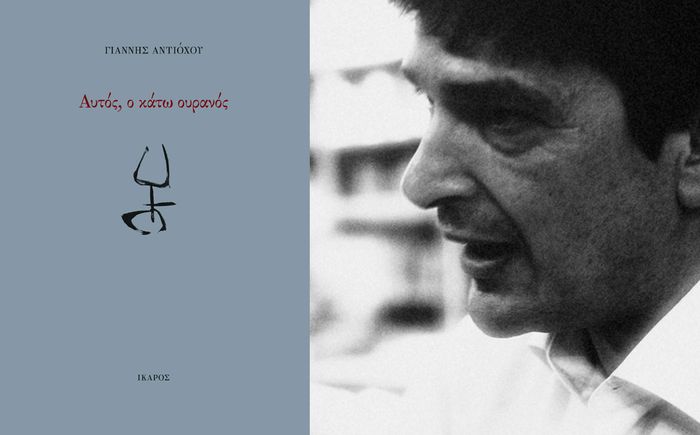
Γιάννης Αντιόχου: «Η ποίηση ανθίζει στην ανθρώπινη ρωγμή για αυτό και είναι τόσο σπάνιο το άνθος της».
This post is only available in Greek.Ο Γιάννης Αντιόχου, με αφορμή την έκδοση του νέου του ποιητικού βιβλίου Αυτός, ο κάτω ουρανός, παραχώρησε μια εξαιρετικά ενδιαφέρουσα συνέντευξη στην Ελένη Γκίκα για τον Φιλελεύθερο. Μπορείτε να τη διαβάσετε παρακάτω:«Υπάρχουν πράγματα που δεν βλέπουμε. Κάποιοι από εμάς συλλαμβάνουν τη ρυθμολογία τους. Όλα κινούνται. Ο μεγάλος ακίνητος είναι ο χρόνος —αυτή η συντριβή. Κανείς δεν μπορεί να υποκριθεί πως αγνοεί. Νομίζω πως δεν υπάρχει άνθρωπος που δεν έχει λάβει στη ζωή του αυτά τα υψηλά που γεννούν τη φιλοσοφία, την επιστήμη, τη θεωρία, τη θρησκεία. Μάθαμε όμως να σωπαίνουμε αφού δεν έχουμε επαρκές γλωσσικό σχήμα να μιλήσουμε για αυτά. Δεν θα σωπάσω ποτέ. Πάντα θα προσπαθώ να φέρω αυτό που συλλαμβάνω από εκεί πάνω ή από εκεί κάτω.»Ο Γιάννης Αντιόχου θεωρείται από τους σημαντικότερους ποιητές της γενιάς του. Κάθε ποιητικός κύκλος του, ποιητικό γεγονός και συζητιέται για καιρό: Ανήλικης νυκτός παρίστιον δέρμα, Romeo and Juliet, Στη γλώσσα του, Curriculum Vitae. Εισπνοές, Εκπνοές, Διάλυσις. Ωστόσο στο πρόσφατο «Αυτός, ο κάτω ουρανός» (εκδ. Ίκαρος και πάλι) μας έβαλε δύσκολα, προσπάθησε να δει ό,τι δεν βλέπουμε, και τα μοιράστηκε μαζί μας. Ας τον διαβάσουμε…-Τι βλέπει ο ποιητής Γιάννης Αντιόχου όταν είναι και γιατρός με εξειδίκευση σε Μονάδες Εντατικής Θεραπείας, κύριε Αντιόχου; Και γιατί- απ’ ότι έχουμε δει οι γιατροί – έτσι κι ασχοληθούν με την ποίηση- γίνονται και καλοί ποιητές;Νομίζω πως πρώτα πρέπει να ξεκαθαρίσω το σκέλος της ερώτησής σας, που με τοποθετεί ανάμεσα στους ιατρούς. Το έχω δηλώσει αρκετές φορές και στο παρελθόν και θα προσπαθήσω εν συντομία να σας πληροφορήσω πως δεν είμαι γιατρός, παρόλες τις μεταπτυχιακές μου σπουδές στην Ιατρική σχολή του ΕΚΠΑ στις Μονάδες Εντατικής Θεραπείας (ΜΕΘ) και στη Διοίκηση Μονάδων Υγείας. Το βασικό μου πτυχίο είναι αυτό της Νοσηλευτικής. Αποφοιτώντας το 1993 συνέβη στη χώρα να οργανώνονται οι πρώτες σύγχρονες δομές υγείας που άλλαξαν καθοριστικά το πλαίσιο της υγειονομικής παροχής. Αυτό σημαίνει πως είχα την τύχη να εργαστώ στο Ωνάσειο, να μετεκπαιδευτώ εξειδικευόμενος στη νεφρολογία, στην παιδιατρική, στα νεογνά, στις μεταμοσχεύσεις γινόμενος ένα «πολυεργαλείο» στην ανατολή τότε της Εντατικής Θεραπείας. Στη συνέχεια οργάνωσα τη μεγαλύτερη ΜΕΘ στο Ερρίκος Ντυνάν και εισχώρησα στο χώρο τεκμηρίωσης της ιατρικής, νοσηλευτικής και διοικητικής πράξης αναπτύσσοντας πρότυπα ποιότητας. Ως υποψήφιος Quality Leader ανέπτυξα ένα σημαντικό ακαδημαϊκό έργο με μια θεωρητική τοποθέτηση που βασίζεται στην αλληγορία της σπηλιάς του Πλάτωνα και σήμερα παράγει ετησίως και αβίαστα 30 papers και citations ισχυροποιώντας το βιογραφικό μου και κατατάσσοντας με στις σελίδες των textbooks των ΗΠΑ. Αυτή η εργασιακή μου πορεία συμπληρώνει το ποιητικό μου βιογραφικό. Ένας άνθρωπος μέσα στις ΜΕΘ τα βλέπει όλα ή σχεδόν όλα, πολεμώντας καθημερινά τον θάνατο με τα ίδια του τα χέρια. Δεν ξέρω αν αυτό με κάνει καλό ποιητή, σίγουρα όμως έχει σκληρύνει και διαφοροποιήσει τη γλώσσα μου ως σώμα.-Κύριε Αντιόχου, θα γράφατε διαφορετικά ποίηση αν δεν ήσασταν μέσα στον υγειονομικό χώρο;Το πιο δύσκολο πράγμα για μένα είναι να φανταστώ πως θα ήμουν αν δεν είχα πολεμήσει με το άρρωστο σώμα. Ξέρετε τι σημαίνει να έχεις ένα βρέφος βάρους 800 γραμμαρίων που από την σωματική του επιφάνεια ξεκινούν ή καταλήγουν τουλάχιστον 20 ενδοφλέβιες γραμμές και ταυτόχρονα βλέπεις την καρδιά του πάλλουσα; Δεν μπορώ να σκεφτώ αν θα έγραφα διαφορετικά ποίηση, αλλά μπορώ να σας βεβαιώσω πως αυτή η ενασχόληση με τη φθορά του σώματος με κάνει να γράφω αλλιώς ποίηση.-Τι έχει «Αυτός, ο κάτω ουρανός» που δεν είχαν οι προηγούμενες ποιητικές συλλογές σας;Σε αυτή την ποιητική συλλογή μπόρεσα να μορφοποιήσω το σώμα ενός βιβλίου που καταργεί την ετερότητα. Κατανόησα ας πούμε τη σελερική εποπτεία που υποστηρίζει: «δεν βλέπω μόνο τα μάτια του άλλου, βλέπω επίσης ότι με κοιτάζει» κι έτσι αφαίρεσα τα μάτια —τα μάτια του Θεού, των αγριμιών και των υποκειμένων —ώστε να μην υπάρξουν δάκρυα, να μην υπάρξει η αναγνώριση του άλλου. Κατήργησα την ετερότητα για να βαδίσω στη ρωγμή που δημιούργησα. Η αλήθεια είναι πως ξεκίνησα μια επανάσταση με απώτερο στόχο να νικήσω την ιερή συνήχηση —τον ίδιο το Θεό που θα πέθαινε αναδιπλωμένος στην κοσμική νύχτα. Ο Θεός όμως είχε ήδη πεθάνει στη νιτσεϊκή αφήγηση του Ζαρατούστρα. Ο Θεός ήταν νεκρός κι εγώ δίχως μάτια τελικά κατασπαράξα τον εαυτό μου στο βιβλίο. Ένα μεταφυσικό δόγμα που εμφανίζεται σαν σπιράλ σε όλα μου τα βιβλία, αλλά στον κάτω ουρανό τελικά μορφοποιείται ως γλωσσικό σώμα.-«Μη με ξημερώσεις/ άπιστο» στη «Ψηλάφιση», κύριε Αντιόχου, εντούτοις λάμπει εκείνο που ακόμα αγνοούμε;Υπάρχουν πράγματα που δεν βλέπουμε. Κάποιοι από εμάς συλλαμβάνουν τη ρυθμολογία τους. Όλα κινούνται. Ο μεγάλος ακίνητος είναι ο χρόνος —αυτή η συντριβή. Κανείς δεν μπορεί να υποκριθεί πως αγνοεί. Νομίζω πως δεν υπάρχει άνθρωπος που δεν έχει λάβει στη ζωή του αυτά τα υψηλά που γεννούν τη φιλοσοφία, την επιστήμη, τη θεωρία, τη θρησκεία. Μάθαμε όμως να σωπαίνουμε αφού δεν έχουμε επαρκές γλωσσικό σχήμα να μιλήσουμε για αυτά. Δεν θα σωπάσω ποτέ. Πάντα θα προσπαθώ να φέρω αυτό που συλλαμβάνω από εκεί πάνω ή από εκεί κάτω.-Τι είναι εκείνο που σας έκανε να στείλετε τον Ποιητή στον Κάτω Ουρανό; Φτιάξατε μια ολόκληρη Πολιτεία!Δεν είχα αρχικά αυτόν τον σκοπό αν και έπρεπε να το έχω κατανοήσει, να το έχω καταλάβει από τη στιγμή σύλληψης του πρώτου ποιήματος. Το εξωτερικό ερέθισμα του κάτω ουρανού ήταν μια χωροχρονική ρωγμή κι ενώ κατάλαβα πως υπεραισθητικά εισερχόμουν σε ένα ανοίκειο χωροχρονικό συνεχές αποφάσισα να το ζήσω από την αρχή μέχρι το τέλος του και να το μορφοποιήσω σε ποιητικό έργο. Τέλος φυσικά δεν υπάρχει. Αυτό που υπάρχει είναι μια αναδίπλωση. Αν μπορούσα να συντάξω μια λογική συσχέτιση, αυτή μπορεί να λυθεί με τις τρεις παρτιτούρες που διαχωρίζουν το βιβλίο και εντός τους έχω κρυπτικά τοποθετήσει συντεταγμένες και ημερομηνίες. Νομίζω πως έχει μεγάλη αξία ο τρόπος που ο Θωμάς Συμεωνίδης, μίλησε για την αρχιτεκτονική τού κάτω ουρανού, εκπλήσσοντας ακόμα και μένα με το κείμενό του που φέρει τον τίτλο: «Σε έναν άνθρωπο που δεν υπάρχει. Για μία αρχιτεκτονική που δεν μπορεί να υπάρξει». Νομίζω πως αυτή ακριβώς η παρατήρησή σας, αυτή «η ολόκληρη Πολιτεία», είναι η μεγάλη διαφορά αυτού του βιβλίου. Είναι η μικρογραφία του σύμπαντος που σφυρηλατώ όσα χρόνια ασχολούμαι με την ποίηση.-Η δουλειά σας, ίσως; Η Ποίηση ή η Ιατρική; Η εποχή μας;Νομίζω πως ευθύνεται η ωρίμανση του γλωσσικού μου σώματος. Μπόρεσα με συντακτικές ακροβασίες ν’ ανοίξω τα σύνορα του αισθητού μου σύμπαντος. Τοποθέτηση το λέω ή επανατοποθέτηση. Πάντως να ξέρετε πως είμαι καλά σ’ αυτόν τον υπερρεαλιστικό κόσμο. Ακόμα δεν έχω βγει ολοκληρωτικά εκτός του ουρανού μου και δεν ξέρω αν είναι η εποχή μας υπεύθυνη για τ’ ότι έχω περιχαρακωθεί εντός.-Ανθίζει η ποίηση σε μια σκληρή εποχή;Ξαναδιαβάζοντας τις Μέρες του Σεφέρη αναγνωρίζω πως υπήρξαν σκληρότερες εποχές. Σήμερα η πολιτική ορθότητα είναι μια μορφή δικτατορίας. Αυτό για μένα που πατάω σε δύο αιώνες είναι πραγματικά πρωτόγνωρο. Παντού οι άνθρωποι αναγνωρίζουν σεξισμό, φασισμό, κ.λ.π. Νομίζω πως γενικά προσπαθούμε να δημιουργήσουμε θεωρητικά σχήματα για να υπάρχουν αυτοί οι λίγοι —είναι λίγοι—-που σπούδασαν πολύ συγκεκριμένα πράγματα στην επιστήμη και με αυτά προσπαθούν να εξηγήσουν την εικόνα του κόσμου. Ανούσια θεωρητικά σχήματα στήνονται προσπαθώντας να επεξηγήσουν την ποίηση χρησιμοποιώντας τους ποιητές για να δημιουργήσουν papers. Η αλήθεια των ανθρώπων πάντα θα βρίσκεται πίσω από τις κλειδωμένες πόρτες των σπιτιών τους, μέσα στις υποφωτισμένες τους κρεβατοκάμαρες. Τι μπορεί να έχει αλλάξει σε μια οικογένεια που φθείρεται από την καθημερινότητα, σ’ ένα ζευγάρι που αγαπιέται; Τι διαφορετικό έχει ένας άντρας ή μια γυναίκα που επιθυμεί; Προσπαθούμε να δηλώσουμε μια άλλη στάση, αλλά η ζωή μας είναι δομημένη στ’ ανθρώπινο πάθος. Απλά η κυριαρχία της εικόνας και η άμεση μετάδοσή της μας κάνει να συνειδητοποιούμε αυτό που ήταν κάποτε ασύλληπτο. Τα τραγικά γεγονότα πολλαπλασιάζονται γιατί πλέον μεταδίδονται γρήγορα και σωρευτικά απ’ όλον τον πλανήτη. Η εποχή μας είναι το ίδιο σκληρή όπως όλες οι εποχές του ανθρώπου.-Πού ανθίζει η ποίηση;Η ποίηση ανθίζει στην ανθρώπινη ρωγμή για αυτό και είναι τόσο σπάνιο το άνθος της. Όλοι ραγίζουμε αλλά προσπαθούμε να μην δείχνουμε τις ρωγμές μας.-Είναι επικίνδυνο πράγμα η ποίηση;Αν δεν ήταν, ο Πλάτωνας δεν θα εξόριζε τους ποιητές από την Πολιτεία του. Για μένα είναι ένας διαρκής πόνος και ο τρόπος του πόνου µου πρέπει ν’ αποκαλυφθεί πως είναι κατάτι «καλλιτεχνικός». Συντηρώ την πληγή µου όπως τα µικρά παιδιά ξύνουν τα κάπαλα στα γόνατά τους — εκείνα τα παιδικά γδαρσίµατα— η ηδονή να σκαλίζεις µε τα νύχια σου την κρούστα από αίµα και πλάσµα· τώρα όµως, πάνω στην καρδιά µου. Ματώνω τόσο, όσο να καθαρίσει το µυαλό µου —µήπως και γράψω κάτι νέο, κάτι διαφορετικό. Είναι ένα είδος αυτισµού, αλλά νοµίζω πως έχω κατανοήσει τον τρόπο: πως κάποιος κάνει το ατοµικό συλλογικό, αφαιρώντας τον συγκεκριµένο χώρο και χρόνο. Δεν είµαι µοναδικός, όλο και κάποιος που πονάει θα παρασυρθεί και θα γίνει δικός µου. Πάντα µ’ ενδιέφερε ο έρωτας του αναγνώστη. Αυτή είναι η επικινδυνότητα της ποίησης.-Τι έχει η εποχή μας που δεν είχε καμία άλλη εποχή;Νομίζω πως είναι μια εποχή χωρίς γνώση. Η εποχή μας είναι η πληροφορία. Πληροφορία δεν σημαίνει γνώση. Το ότι ενημερώνομαι από τριάντα λέξεις για όλα τα θέματα μέσω του κινητού μου τηλεφώνου δεν σημαίνει πως τα γνωρίζω. Για αυτό και πιθανά κάποιοι πιστεύουμε άκριτα πολιτικούς ηγέτες που ξέρουν λίγο απ’ όλα —ηγέτες τσαρλατάνους.– Και πώς αντέχεται; (η εποχή)Ο άνθρωπος υπομένει τα πάντα, αρκεί να κατανοήσει την αλληλεγγύη σε μικρή κλίμακα και όχι αυτό το υποκριτικό πράγμα ας πούμε της σημερινής Ευρώπης που επιβάλλει την ιδιότυπη αλληλεγγύη της στις χώρες της Αφρικής που τους τελευταίους τρεις αιώνες κατασπατάλησε τον πλούτο τους. Πόσο υποκριτικό είναι να δοξάζουμε τους Ευρωπαίους φιλοσόφους που αποτελούν μέρος αυτών που απομύζησαν την Αφρική και όλοι μαζί προτείνουν την αλληλεγγύη; Αυτό δεν αντέχεται. Ας βοηθήσουμε τον διπλανό μας πρώτα δίχως να τρέξουμε να κλειδωθούμε στο διαμέρισμά μας όταν τυχαίνει να ακούσουμε τα κλειδιά του ενοικιαστή του πάνω ορόφου.– Υπάρχουν βιβλία, ποιητές στους οποίους καταφεύγετε στα δύσκολα ξανά και ξανά;Ναι υπάρχει ο Σεφέρης, ο Έλιοτ, ο Άγιος Διονύσιος Σολωμός και ο Ρεμπώ.-Βγήκατε πιο δυνατός από την εποχή, τον Κάτω Ουρανό, ή πιο μόνος;Το πιο σημαντικό είναι πως βγήκα ολόκληρος. Σαφώς και έχουν υπάρξει πια δομικές αλλαγές εντός μου αλλά κατανόησα ένα μέρος από το σκοτεινό μου εγώ. Ο ποιητής είναι μονήρης άνθρωπος. Το πρώτο του μέλημα είναι το ποίημα. Πάντα μόνος ήμουνα. Στο συγκεκριμένο βιβλίο υλοποίησα και τις σκιές μου. Άρα βγήκα μόνος με τις σκιές μου.-Δεν ξέρω γιατί ο Κάτω Ουρανός με παραπέμπει σε Γράμματα Γενεθλίων… Μακάρι, η γενέθλια ημερομηνία να είναι η ημερομηνία θανάτου, εσείς, μάθατε;Παρατηρώ πως στον κάτω ουρανό έχω ενσωματώσει ίσως κάτι από την απολογητική τεχνική του Τεντ Χιουζ στα «Γράμματα Γενεθλίων» που μετέφρασα το 2005. Βέβαια ελπίζω να κάνετε λάθος, γιατί αν είναι γράμματα γενεθλίων ως άνθρωπος αδύναμος θα συνεχίσω να γράφω κι άλλα γράμματα γενεθλίων και δεν έχω κουράγιο πια. Θεωρώ πως το υποκείμενο του κάτω ουρανού μου, το οποίο γίνεται αναγνωστικά αντικείμενο ήταν πάντα νεκρό. Ανάσανε στην προσέγγιση μου και ξεψύχησε στην αποκοπή μου. Όφειλα να μοιραστώ με τους αναγνώστες αυτή την εμπειρία.– Τι μάθατε τελειώνοντας «Αυτός, ο κάτω ουρανός»;Έμαθα πως η μνήμη δεν έχει ζέση και ο λοιμός του χρόνου σωπαίνει το σώμα. Τώρα πια βάρυνε όλη μου η ύπαρξη. Γράφω για όταν θα ’χω πεθάνει. Μα πάλι σκέφτομαι θαρθεί καιρός που η μνήμη μου θα ’χει απαλείψει μικρές λεπτομέρειες που ’χουν αξία —τις παύσεις του μυαλού, που σκύβω και τις σκάβω με τα νύχια, εξορύσσοντας όσα μικρά και καθημερινά πράγματα ζει ένας άνθρωπος· κι όταν τα βγάζω στο φως —σχεδόν πάντα— είναι κάτι αλήθειες αστραφτερές που με τυφλώνουν. Γι’ αυτό καλύτερα να μην βάζω πρόγραμμα ανάσχεσης, αφού δεν τα πολυκαταφέρνω να κρατηθώ μακριά από τη γραφή.-Θα μάθουμε κάτι βγαίνοντας απ’ την κρίση;Τρέφω μια ελπίδα πως ίσως επιλέξουμε ξανά πιο απλά πράγματα και πιο αισθητικά. Συναστρεφόμενος με τους νέους που έρχονται να με συμβουλευτούν στην ποίηση, παρατηρώ μια μεγάλη διαφορά με τη δική μου γενιά. Δεν έχουν την όρεξη ν’ αγωνιστούν. Περιμένουν όλα να τους συμβούν με μια λογική αλληλουχία δίχως κόπο. Μου φαίνονται τόσο ολιγαρκείς, ενώ στην ηλικία τους ήθελα τον κόσμο ολόκληρο. Κάθε κάστρο πολιορκείται, αλλά η μάχη έχει κανόνες. Ούτε τους κανόνες κατανοούν. Για να ξεπεράσει κάποιος κάτι πρέπει να το γνωρίσει σε βάθος. Η κρίση έγινε ένα ψυχολογικό τραγούδι που ξεπλένει τα πάντα κι αυτό μια ύποπτη νέα συνθήκη.Φωτογραφίες: Βάσω ΜαραγκουδάκηLearn more
-
Interviews
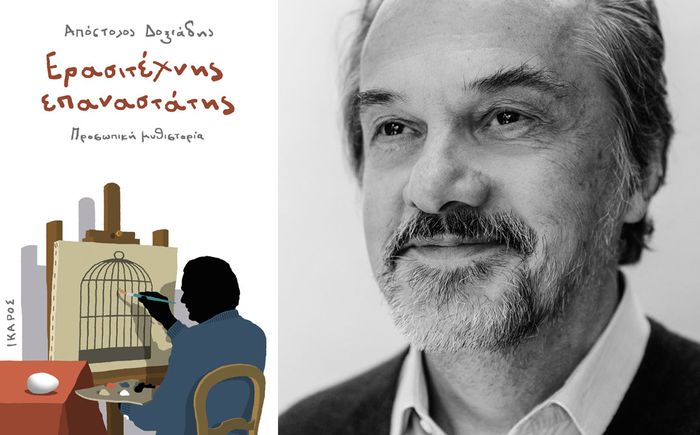
Apostolos Doxiadis as an ‘Amateur Revolutionary’ | Interview with Athens Voice.
Apostolos Doxiadis, to mark the publication of his new book *Amateur Revolutionary: A Personal Novel*, gave an extremely interesting interview to Dimitris Fyssas for *Athens Voice*. You can read it below: Can 1,062 pages of a youthful political autobiography be a breeze to read? They can, when it comes to the self-deprecating, witty writing of Apostolos Doxiadis, which has just been published.The book has a title and a subtitle, each consisting of two words. How are they justified? I shall leave it to the reader to discover the meaning of the title for themselves: to explain a title of this kind, which is ambiguous, seems to me to betray the book, to reduce it to a formula, a simplification. I do not wish to do that, at least not now, so soon after writing it.I can, however, speak about the subtitle, ‘personal history’. The book is personal; that is to say, it speaks mainly of me but always from my own perspective, even if it recounts events that form part of a broader historical context. But that doesn’t make my narrative historical. To tell a life story without sticking to dry facts, to a mere chronology, you have to breathe life into it. And that endeavour in itself leads you to the tools of the storyteller. You need narrative vitality, which you achieve by choosing what to say and what not to say, how and where to place emphasis, how to describe the action and ideas, as well as the relationships between your characters – yourself and others. I used these tools freely in the book. I abandoned the purpose of the storyteller, or if you like, the novelist, in only one respect: I did not invent events. I never consciously tell lies – as for the unconscious, I make no promises. But by filling in the details of memory, I inevitably piece things together, somewhat like witnesses at a crime scene who then work with a police sketch artist to create a likeness of the perpetrator’s face. Inevitably, such a portrait, like my book, is an approach to the truth, consciously subjective. I would say that the defining feature of my narrative freedom—and, if you like, of ‘fiction’—is that in the book I construct normal conversations, as if I were recalling them word for word. Although I have a very good memory, like everyone else I have a brain in my head, not a tape recorder. So I am necessarily inventing, in the dialogues—the main part of the narrative—my involvement and actions during the junta. I am always guided by something that Thucydides also does in his ‘History’: he endeavours to record the dialogues and speeches of his protagonists in words that do not stray from the spirit of what was actually said, yet are almost never verbatim.What period of your life does the book cover? From as far back as I can remember myself until a few months after I turned twenty-one, in the summer of 1974. You leave out, explicitly and from the outset, a number of aspects of your life at that time. Why? I didn’t start by saying what I would leave out, but rather what I would say. My focus – and this is one of the many meanings of the title you asked me about – is on politics. In *The Amateur Revolutionary*, I mainly want to recount my development as a political being, right up to the beginning of my youth. So, from the outset, even though I am talking about a young child, my focus is on how politics entered my life, initially as little stories, then as questions, and later as knowledge and ultimately as action. For this reason, I speak far less about other aspects of my life—aspects that were far more central to me during certain periods I recount—than I would in a narrative intended as a comprehensive autobiography. It is not that I neglect them: it is simply that they are not my main focus in the book. So, for example, I say far less about my intellectual interests as I grew up, as well as about my existential anxieties or my relationships with friends or mentors. I touch on all these things only briefly, just enough to make the development of the central theme—politics—clear. What had no part in it, and which I therefore do not recount at all, is the romantic aspect. Apart from the fact that I would consider it a gross indiscretion towards other people, it is also completely irrelevant to the subject. I knew friends in my early youth whose romantic relationships were part of, or sometimes a continuation of, their political lives. Some changed partners according to ideology or party, or party and ideology according to the partner. For me, for better or worse, this never happened. Politics and romance were separate. Nothing I did or didn’t do in politics bore even a trace of ‘sersé la fam’, as Tsitsanis so beautifully sings.What role do the visual material / poems / references to prose / songs / news items / films etc. inserted into the book play? All the things you mention—poems, songs, news items, films, music – are all part of the fabric of our lives; and so, when I speak of my life, I speak of these things too. Art, in particular, played a decisive role in my story – both in political matters and, given my age and character. But of course, this was also due to the times. How can one speak of a teenager or a very young person in the 1960s and early 1970s without rock music? How can one refer to the passion of militant young people for the myths of the Greek Left without the guerrilla songs? How can one ignore the influence of films and novels on how we shaped and gave form to our thoughts, and sometimes even our arguments? Beyond that, you know, the junta’s censorship, by banning open political dialogue, inevitably gave art—with its metaphors and ellipses—great weight in political expression. Finally, regarding the many illustrations in the book, I should add that my time working on the graphic novel *Logicomix* spoiled me a little: I often found myself thinking of something that I could better convey through an image rather than describe in words.Is the humour in your book a sign of the current Apostolos Doxiadis’s indulgence towards his pre-teen self?I would say that the humour is an expression of Apostolos Doxiadis’s indulgence towards Apostolos Doxiadis: generally speaking, I don’t think it’s very healthy to take ourselves entirely seriously. If we ourselves do not question our own infallibility, it is usually others who pay the price, through no fault of their own, and of course we end up living a deficient life, a life of illusions. Beyond that, it is natural that when someone sees a younger version of themselves – in *The Amateur Revolutionary*, several decades younger – their perspective is unwittingly influenced by the greater self-awareness they have acquired in the meantime. This allows for a greater scope for self-criticism, which is indeed often expressed in the book as humour. What role did your father play in your politicisation? A huge one. Both in terms of principles—belief in freedom and democracy—and, initially, before the dictatorship, in terms of the political sphere, namely the Centre Union. Let’s not forget, however, that a centrist of that era was defined by his distance from both the Right – especially in Greece, and the monarchy – but also the communist Left. This, during the years of the junta, got me into trouble.Did the junta’s arrest of your sister, Kalli Doxiadi, play a significant role in shaping your views? The view that the dictatorship was something evil, an enemy of democracy, existed from the moment of the coup, right from the start. But when, a few months after the coup, they arrested Kalli – then twenty-three years old – and a few months later, when she was released from the General Security Directorate, she described to me what they had done to her, those views were imbued with intense emotion: specifically, hatred. How do you explain that, despite the constant wavering, doubts and concerns, you ultimately joined the Left? Aware that I am doing a disservice to the complexity of the thoughts I describe in *The Amateur Revolutionary*, I will say here that I initially joined the Left through a combination of my passion to do something against the junta and the chance factor that my cousin and close friend, Aristos Doxiadis, was already active there. Everything else, from that point onwards, during the time I remained there, is complex, involving many phases and fluctuations, and again I prefer not to do it an injustice by cutting it short for the sake of an interview. After all, it was partly to make sense of all this that I wrote the book.Aristos, Axel, Achilles, Hercules, Stavros, dominate your narrative. It’s only natural. Unless you’re a hermit, relationships with others play a leading role in any human story. And for me, in a story that aims to focus on politics during the years of the junta, the leading roles are played by my closest comrades from that time. The ones you mentioned. How did you view Greece under the junta when you visited as a student, and how did you act?Most of the time I was forced to mentally align myself with how the overwhelming majority of Greeks saw it, who did not react to the junta except in private, with jokes and sighs. This was clearly a defence mechanism, because if I had given in to my dominant emotion, which was the fear of arrest, I would have been paralysed. This fear became a useful tool when it was consciously transformed into precautions, when I was carrying out illegal activities in Greece, such as meetings or the transport of materials. But unfortunately, sometimes it would visit me uninvited, mainly at night, whether I was asleep or awake, where at every sound on the street, outside my bedroom window, especially around dawn, I thought I could hear the Security Police or the ESA coming to arrest me. How did the Ministry of the Interior react to the Polytechnic occupation? You’re asking for trouble now, let’s get into the difficult stuff! And you’re right to do so, but I too must protect the way I narrate and analyse the occupation, and its consequences, in the book. Today, for better or worse, the Polytechnic is regarded as the defining event of the dictatorship years; indeed, in schools they teach the kids that it was thanks to this that the junta fell. Precisely for this reason, I have devoted a great deal of time and attention to recounting as accurately as possible what happened back then, and the stance taken by the Ministry of the Interior. For more, see ‘The Amateur Revolutionary’… Which figures from the Left that you knew do you still regard positively even now? During the junta, I only knew my comrades, all of them young. Don’t forget that I was the youngest in the organisation, and although I had serious responsibilities, I didn’t make political decisions, nor did I discuss matters with the Party leadership. This was done on behalf of the youth mainly by Valden and Tsakyrakis, and probably others whom I did not know at the time.More generally, however, the faction to which I belonged during the internal disputes within the KKE (Internal) under the junta – the others called us ‘right-wingers’ – was the one later represented by Leonidas Kyrkos. And I would say that I considered his line to be the most serious in the development of the Left after the dictatorship, as expressed by him, Babis Drakopoulos, Kostas Filinis, Angelos Diamantopoulos, and others. I met all of them after the dictatorship, though not in a political context, as I did not remain on the Left. They were, I believe, generally serious people who, as they matured, came to realise that democracy and communism do not go together. But, of course, I now think that everyone else—politicians outside the Left—knew this simple truth anyway. So, I view the figures I mentioned positively today only for reasons similar to those that highlight the prodigal son or the repentant prostitute in the Gospel. In other words, I appreciate the courage of their repentance, which in this context means the change in their views over time. For people politically moulded in the Stalinist mould that had taken shape during the Occupation and the Civil War within the KKE, this is no small matter. But I do not admire anyone in this sphere as a great political figure. I prefer to attribute this quality—rare in any case—to people who have shown greater consistency in their course, in this instance in the struggle for freedom and democracy—principles in which I still believe today.The book ends with the events of the summer of 1974 and with many of your reflections, both past and present. Will there be an autobiographical sequel? I’m not planning one, because my aim in writing the book was not primarily to describe my life for others – except perhaps for my children, initially – but rather to understand a dark part of it, for myself. I wanted to study myself more closely, particularly in relation to politics and especially those years about which I remained full of great questions. From that point onwards, I have a clearer understanding of what happened to me in my life and where I was heading at every stage, for better or for worse. But the years up to my twenty-first, up to 1974, required a great deal of digging. This is expressed mainly in *The Amateur Revolutionary*, with reasoned narration as the primary tool of inquiry.Learn more