Arthur Rimbaud
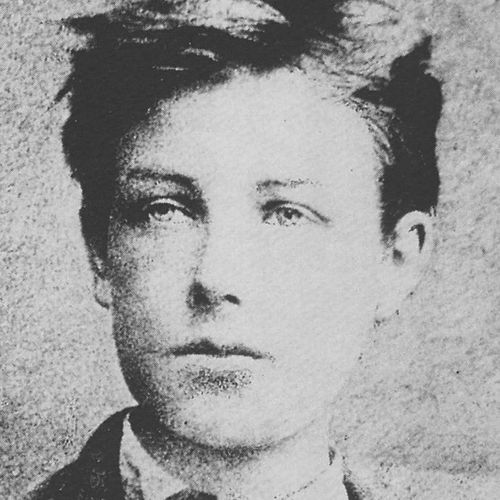
AuthorArthur Rimbaud was born on 20 October 1854 in Charleville, near the Belgian border. From a young age, he displayed a maturity rare for his years; at just ten years old, he wrote the text ‘The sun was still warm...’. At around fourteen, he composed perfect verses in Latin, which were published and won awards. In 1869, he wrote his first poem in French, ‘The Orphans’ New Year’s Gifts’, which was published in a magazine.
In 1870, he wrote many poems in verse, which aroused great interest among the well-known poets of the time. In the summer of that year, he ran away from home to Paris, hoping to witness the fall of Napoleon III at first hand; on the train he is arrested for failing to pay his fare and is imprisoned. A few days later he returns home, from where he immediately sets off again on foot for Belgium, wishing to work as a journalist. He reaches Brussels, but, disillusioned with journalism, he gives it up. During this time, he writes some of his best poems. In 1871, he reads books on magic and socialist writings. Third escape: to Paris, where he wanders for fifteen days. He drafts a communist constitution, the manuscript of which has been lost. In the spring of that year, he sets out his revolutionary ideas on poetry in two letters to friends.
He goes through a period of intense anti-Christian sentiment. He begins to write prose poems. That year (1871), he writes *Les Déserts de l’amour* (The Deserts of Love), which contains only three pieces. In September 1871, Verlaine invites him to stay with him in Paris, and the fifteen-year-old poet arrives, bringing his poems with him; among them is ‘The Drunken Boat’, which he has just written. He stays at his house for a while. The two poets became close; their relationship was turbulent. In March 1872, Rimbaud returned to Charleville, where he wrote his last poems in verse; in July, he left for Belgium and Verlaine followed him, abandoning his wife. In December, Rimbaud returned to his family home. Scholars disagree on the dating of the collection *Illuminations*. According to Verlaine, who first published it in 1886, it was written between 1873 and 1875. According to Ernest Delahaye, between 1872 and 1873, before the collection *A Season in Hell*; according to a third view (Gustave Kahn), part of it was written before and the rest afterwards. The title “Illuminations” is attributed by Verlaine to Rimbaud, but in the manuscript it is not written in the poet’s own hand.
In July 1873, in Brussels, Rimbaud tells Verlaine that he wishes to end their relationship; Verlaine shoots him, wounding him slightly, and is sentenced to two years in prison. The collection *A Season in Hell* was written between April and August 1873. It was printed in Brussels that same year in a run of 500 copies. The poet was sent a few copies, which he gave to his friends, and because he did not pay the printing costs, the rest remained at the printers. They were discovered in 1901 and caused a great stir, as it was rumoured that the poet himself had burned them. Rimbaud no longer writes. He travels from Cyprus to Aden and from the Scandinavian countries to Abyssinia; he takes on all sorts of jobs, from labourer to arms dealer. He is the first European to reach Bubassa in East Africa and to explore the surrounding regions of Somalia.
In 1883, the French Geographical Society published his discoveries. Crossing Abyssinia, he reached Harrar in 1887, providing significant details of his explorations. After continuous adventures, hardships and privations, a tumour appeared on his right leg and he returned to France, seriously ill. He died on 10 November 1891, aged thirty-seven.